Often described as an important/landmark novel, the story of members of the Morel family is a fascinating expose of period industrial working class life, made even more compelling through the author’s examination of the main character’s relationships. Lawrence consistently critiques social convention in his works and in this book covers the historic taboo of adultery and unmarried sex, but more importantly sheds light on the roles of women in society, juxtaposed with the male dominance of the period, born of paid work. Indeed the three central women in the novel – Mrs Morel (mother), Miriam and Clara (two lovers) are the stronger characters, albeit fatefully attached to the respective men in their lives. Still, their influence is testament to the dependence conferred upon son and lover. There is perhaps a suggestion that the emotional attachment of the female characters makes them potentially vulnerable to the whims of their male counterparts. However, in the most moving scenes, when Mrs Morel has to cope with the tragic loss of her eldest son, it is the contrasting ineptitude and emotional confusion of her husband that elevates the matriarchal figure to new heights of superiority and dominance. Overall a wonderfully thought-provoking read, which rightly sits among a select collection of books that might be labelled as ‘important’.
Any contemporary story set (even partly) in Afghanistan runs the risk of appearing bleak, at least to western eyes. However, in spite of a sobering glimpse of life under the talaiban, it is Hosseini’s examination of a series of overlapping relationships, which reveals the frailty of man and the attendant capacity for tragedy.
At the outset, the narrator, Amir, is aged just twelve and has a close relationship with Hassan, the son of his father’s servant. The characters are all subject to a social structure which ensures they know their respective places (Pashtun are the dominant tribe locally, while the Hassari are commonly regarded as inferior) but privately such boundaries are blurred. That is, until an incident witnessed by Amir challenges his ability to openly support his erstwhile friend. Amir and his ‘Baba’ are members of an elite class, but following the death of his mother, giving him birth, Amir grows up feeling distant from his father and desperate for his affection. However, he is no ‘chip off the old block’. Baba is charismatic and courageous, a stalwart of Afghan society and Amir’s sense of inadequacy is fuelled by the very positive attributes shown by Hassan and admired by his father.
Kite flying, we learn, is an important pastime in Kabul culture and offers an interesting metaphor for life in the differing strata, contrasting the fliers with those subject to gravity, scrabbling for victory among the ‘also rans’. Ironically, it is with Hassan’s encouragement and help, Amir is able to excel at flying and inspire pride in his father. In a touching show of loyalty, Hassan even seeks to run down the last defeated kite in a kite-battling festival, to seal a memorable triumph for his friend. Yet, the euphoria is short-lived.
In an impulsive and childish act, Amir deliberately sweeps Hassan aside, but in so doing unleashes a lifelong sense of personal guilt, magnified by the dignified self-sacrifice of his victim. In spite of everything, Hassan, by fluke of birth a member of the lowly Hassari tribe, demonstrates a superior magnanimity and notwithstanding the consequent prospect of destitution, stoically accepts the betrayal.
Fast forward, and the overthrow of the royal family by the forces of extreme Islam and with it the social order that has secured their privileged positions, sees Baba and Amir flee Afghanistan.
In the USA, notwithstanding their attendant poverty, Baba exhibits the drive to start again, though father and son are sustained by the cultural traditions preserved in the local Afghan community. Still, there is an inevitability in the need for Amir, the young man, to be confronted with circumstances in which he must return to his birthplace and seek to atone.
This book is clearly well written and offers an interesting insight into Afghan society , both home and abroad. However, there is also the troubling spectre of child abuse, which is explicitly referenced and to my mind, diminishes the narrative. Not because it challenges some taboo, but rather it adds little value to the story and gives the impression that it has been included for gratuitous shock impact. Moreover, in the context of the book, such behaviour only occurs on foreign soil and could be construed as symptomatic of an inferior society, which given western trials of recent years, seems more than a little hypocritical. I acknowledge it could be argued that this may be a courageous addition on the part of the author, but on balance, for me, it detracts from an otherwise compelling read.
The classic meanderings of Bertie Wooster and his long-suffering manservant Jeeves are so quintessentially English and laugh-out-loud funny that every library should own one. P.G.Wodehouse’s iconic creations are so creatively intertwined and the language so florid that the stories evoke a wondrously different era of gentlemen, gentlemen’s clubs and formidable matriarchs. Wotto Bertie!!
This rather eclectic collection of Chatwin’s writings is simply a great read and a suitable homage to his craft. The breadth of his travel and experience is made to seem almost ordinary, when clearly the writer was anything but. This was my first reading of Chatwin and was purely by chance that the book came my way, but what a feast of language to savour. Must be serendipity.
A thoroughly interesting read this was my first dip into the work of Paul Dolan and though it was consistent with what I might have anticipated from a professor at one of our leading academic institutions (assiduously researched and referenced), it was also written in an engaging style that kept the readers attention. Offering some fascinating insights into the components of ‘happiness’, this book enables an individual audit of one’s own happiness and a means to attend more effectively to what matters. At the very least, Dolan encourages reflection on one’s ‘happiness production process’ and suggests that we have the potential to self-promote a greater sense of happiness. A substantial claim, but worth the investment of the time to read and make up one’s own mind.
This was one of my course books at school and we pored over the adventures of ‘Fiver’ and ‘Bigwig’, et al and the underlying social systems of the respective burrows. It was one of those classroom unknowns, but discussed at length, whether it was the author’s intention to provide a critique of democracy vs authoritarian rule, or simply a children’s adventure book to be enjoyed. It was not until my thirties that I was able to get a definitive answer from the author, Richard Adams. I was lucky enough to live for a time in the same village, not far from the legendary down and was invited round for tea. Of course, I had to satisfy my curiosity, but it was quite a relief to learn that it can be enjoyed as simply a classic piece of fiction and the news did not diminish it one jot!
An utterly absorbing tale, which sparkles in its creativity and reaches young and older readers alike, with the quality of Pulman’s writing. The characterization is exceptional, the plot intriguing and the pace superb. A modern classic series which really does deserve the description, page-turner.
This was my first introduction to Jack London’s work and I thoroughly enjoyed it. The storyline was gritty and very in keeping with the period and the tough life for pioneers in the wilderness of north america. But, it was also gripping and offered a really satisfying read. On the strength of this book, I aim to read more from this author.
Just after midnight, a snowstorm stops the Orient Express dead in its tracks in the middle of Yugoslavia. The luxurious train is surprisingly full for this time of year. But by morning there is one passenger less. A ‘respectable American gentleman’ lies dead in his compartment, stabbed a dozen times, his door locked from the inside . . . Hercule Poirot is also aboard, having arrived in the nick of time to claim a second-class compartment — and the most astounding case of his illustrious career.
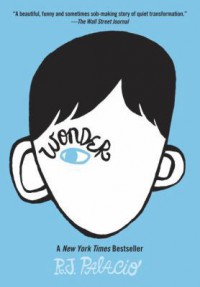
I picked this up while browsing a charity shop’s offerings and notwithstanding my son’s obervation that he had noticed it in the teen section of a nearby bookshop, stuck with it. And I’m glad I did. A good story can afterall be compelling, irrespective of the ‘target audience’ and in August Pullman, Palacio developed a very unlikely, but wonderful hero. The story is cleverly related from a number of different perspectives and engagingly ripples outward from August to family, classmates and wider community and the respective challenges faced by the protagonists. Indeed, the book confronts the discomfort experienced by individuals and in some cases the surrendering to ugly bigotry and crude discrimination. The central theme relates to the judging of books by their covers, but encourages the reader to look beyond the superficial. Moreover, any book that can draw a reader to empathise and contemplate what s/he might do in a given situation and provoke soul-searching is worth the effort. I thoroughly enjoyed reading ‘Wonder’, the language is straightforward and the message is simple. Doing the right thing is sometimes hard, yet as R.J Palacio describes, it can be uplifting. Want a lift – read this study in positive action!