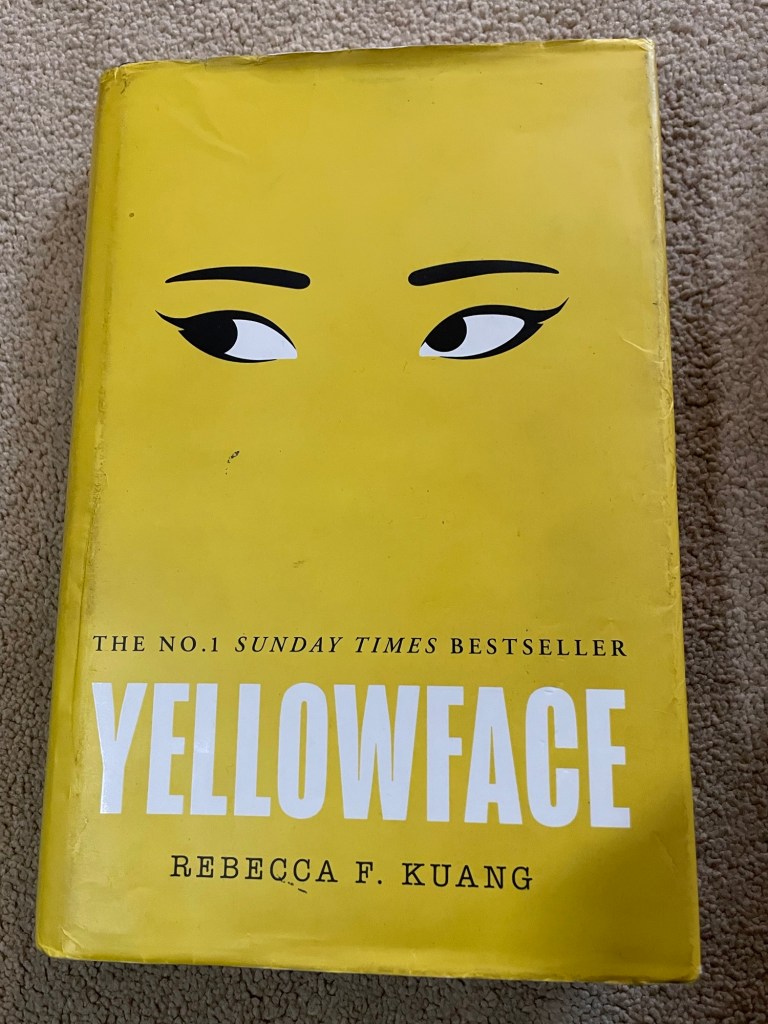
In her published acknowledgements, author Rebecca F. Kuang describes her novel as “in large part, a horror story about loneliness in a fiercely competitive industry”, which is perhaps modest, but maybe also just a tad too reductive. Others have alighted on the satirical treatment of publishing, racial inequalities and the pernicious nature of social media. Certainly the tale is set within the intensely combative arena of fiction writing/publishing and a continuum which encompasses best-selling novelists to aspiring wannabes. That some ‘make it’, while other talented writers languish undiscovered may be arbitrary, but as the book implies, may also be subject to conscious bias and begs the question, how far will the characters go to inveigle the trappings of ‘success’? What constitutes a legitimate opportunity and how does one calibrate an acceptable level of ruthlessness?
Athena Liu and June Haywood both attended Yale and a prestigious MFA course, yet their trajectories have been very different, though their superficial friendship endured. One, the hottest new prodigy (book deals, award nominations and now a TV deal), beautiful and exotically cool, the other with a debut novel that sank without trace, making ends meet through educational support for the kids of wealthy aspirational parents. Jealousy though feels more like fear at June’s sense of comparative inadequacy. Until, in a whiskey-fuelled catch-up at her lavish apartment, Athena dies and June encounters her friend’s newly completed manuscript. It’s an ‘opportunity’ with the capacity to transform June’s life, dependent on the decisions she makes and the inner rationale she can sell to her conscience, to excise the guilt.
The reader is swept along with the paradox confronting June (rebranded Juniper Song) as she tastes the life she intended, but ‘what goes around, comes around’ and the almost fateful journey experienced by the main character is skilfully managed by the author. Tragedy and success intimately interwoven in a plot that perhaps cautions against achievements benchmarked by others, which may reward monstrous behaviour. Yet, given the angst accompanying the deployment of AI, the book may also be timely and point toward future challenges around the complex appropriation of intellectual property.
Already a bestselling author, in this novel Ms Kuang has described a fictional industry unencumbered by scruples. The experience for the reader may partially hinge on the moral lens through which the book is viewed, but it’s a glorious tangle. I’d hesitate to ascribe to the ‘horror story’ suggestion, but it is a satisfying read and I’m sure we will hear much more from this author in future, industry willing…


