250th Birthday Celebration in ‘A Promised Land’….

img_1831

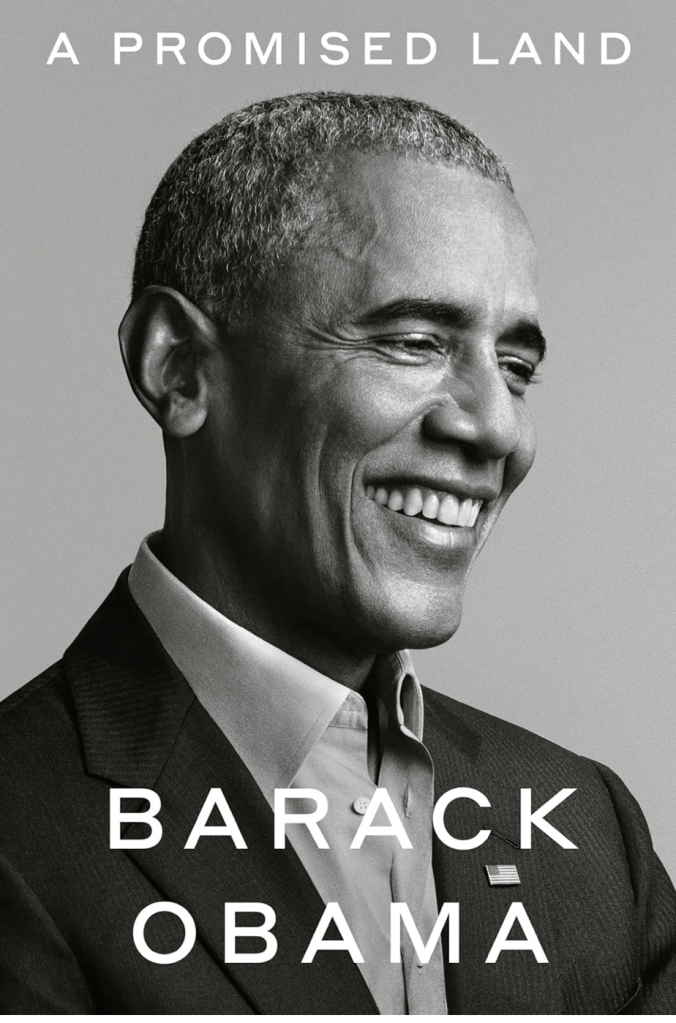
Being a man of a certain age, I can recall 1976 and the bi-centennial celebrations to mark the 200th ‘birthday’ of the USA. Gerald Ford was president and as part of the celebrations, more than 10,000 people were naturalised as citizens in mass ceremonies held in Chicago, Detroit and Miami. While in New York, tall ships formed a flotilla with hundreds of smaller vessels. It was quite the party! Fast forward 50 years (which seems scarcely possible) and I felt I should mark the latest milestone in similarly lavish fashion.And thus I settled down to the audiobook version of ‘A Promised Land’ by Barack Obama. This first volume of the former president’s memoirs is quite a tome (I have a hard copy on my TBR shelf) and yet the prospect of a presidential address lasting 29 hours 10 minutes felt like the kind of extreme indulgence, as befits the occasion.

There’s no question the author can write and tell a compelling story (even one we’ve lived through) and there are plenty of sobering plot-lines (Covid; the financial crisis; Iraq; Afghanistan; racial and gender inequality), some well known villains, but also a large cast of good people, who are credited with some seismic achievements, as Obama tentatively lifts the veil on the machinations of the American political establishment. Indeed, for a curious outsider, having the unique perspective of the POTUS to walk the reader/listener through a series of international challenges, political frictions, electoral battles and attendant risks was fascinating, made all the more profound laid alongside the domestic considerations that also attend a young husband and father, trying to maintain a sense of balance and stay grounded, in the rarified atmosphere of the White House.

What I liked most about the account was the sense of having a ringside seat for history in the making. Albeit a retrospective view, to hear the competing factors to be weighed, compromises to be made and the tactical nouse necessary to advance any policy is mind boggling and there are no easy hits. Foreign or domestic policies, fiscal and budgetary constraints, health, defence, education, each arena fraught with partisan loyalties and the need to keep even loyalists onside. The sheer breadth of the President’s field of vision, even allowing for specialist advisers, is truly remarkable.

And yet, in the face of the many challenges eventually to be confronted by the 44th President, what also came across was the humanity of the man. From humble background, to senator, to leader of the western world. A family man, with a love of basketball and the occasional cigarette, able to connect with his closest staff, as well as national leaders, a gifted communicator that from this side of the pond appears to be a tough act to follow.

I shall look forward to the second volume with interest, but this first instalment is well worth the investment in time and narrated by the author the audiobook was definitely enriched. The main advantage of the hardcopy is access to some tremendous photographs and a detailed index. I don’t review many non-fiction books here, but this one is quite insightful and enabled me to look back at a pandemic, war and a serious financial crisis, if not with nostalgia, at least with satisfaction for the leadership shouldering a succession of crises.

Rating: 4.5 out of 5.

Killing the Dream…

13th December 2020 (13:18)

I was drawn to this book due in part to the setting (Northern Ireland during ‘the Troubles’), with which I’m quite familiar and the ambition implied by using as the main backdrop to the novel, 21st July 1972 – ‘Bloody Friday’. For those unfamiliar, this was the name given to a series of bombings in Belfast perpetrated by the Provisional Irish Republican Army. At least twenty bombs exploded in the space of eighty minutes, culminating in 9 deaths and 130 casualties (the even more notorious ‘Bloody Sunday’ occurred in January of the same year). Yet, within this real-life sectarian horror, David Hough has founded an intriguing story replete with love, guilt, violent anger, regret and potential redemption.

Sorcha Mulveny is imprisoned in Armagh gaol for murders committed during that turbulent period, but the narrator of the book is an anonymous journalist seeking to piece together the sequence of events leading up to her original trial. The intervening eight years might offer the benefit of hindsight, but as he discovers the legacy of physical and mental scarring is long-lived and remains all too real. Everyone it seems is carrying baggage.

The journalistic endeavour, which will inform a non-fiction book, takes place over months and is a useful device with which to synthesize the multiple perspectives reflecting on that fateful day. The terrorists, the terrorized and the police, seeking to marshal the factions and uphold a common law, are represented through serial interviews with Sorcha, her protestant boyfriend (Martin) and a former detective sergeant (Will Evans). Their respective recollections are painstakingly pieced together, enabling a satisfying overview that the reader can stand back and admire. In a sense, the author methodically assembles the pieces of a complex jigsaw and fits them together for a fascinating slow reveal. Each of the key characters explain, through their disparate experiences, how they were personally affected, but inevitably it is where their networks overlap and spheres of influence collide that the drama arises.

This novel offers a sobering, fictional commentary on the catastrophe of communities at war and the many victims of the attendant crossfire. On a more philosophical note the author also calls into question the price of ‘belonging’ and the irrational choices sometimes made in the name of ‘loyalty’. A cleverly constructed moral maze, which challenges the reader, but also suggests the possibility of a different, better outcome, this book is well worth reading.

Rating: 4 out of 5.


The Hostess, the Actress and the Duchess…

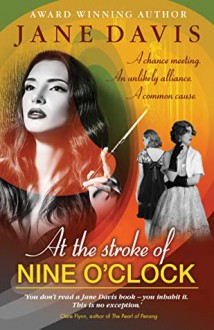
Another triumph from indie author Jane Davis in this gloriously gritty novel that engages head-on with a post-war London struggling to re-boot itself and wider society, amid ongoing privations. Against this authentic backdrop, the dawning realisation that Britain needed to change and to challenge former ingrained inequalities (particularly the structural disadvantage of women) is deftly explored by the author, through the lived experiences of three fictional women in the 1950s. Moreover the reader discovers that Caroline, Ursula and Patrice are each held hostage by their very different respective circumstances and perceptions of duty to family (parents, children, husband). Such traditional values are also cleverly juxtaposed with the tragic real-life story of Ruth Ellis, the last woman to be hanged in the UK. The sensationalised accounts of her crime carried in the press at the time (Ellis shot her lover, killing him) succeeded in vilifying Ellis, but drew a veil over the scandalous and violent behaviour of the ‘innocent’ male victim.

The format of the book reflects multiple points of view and rotates between the key characters’ perspectives. Indeed, it sounds like the start of a joke, ‘the hostess, the actress and the duchess’, but despite the disparity in their social positions, their common experience of abuse (financial, emotional and physical) at the hands of men, is something of a leveller. But for quirks of chance, all three might not be so far removed from the fate awaiting Ruth Ellis, yet they are drawn inexorably together, bonded by a shared sense of being social misfits. The intertwining of their journeys also offers touching examples of support, without judgement.

Far from being a tale of ‘doom and gloom’, the writing is sumptuous and though perhaps not intended as a feminist commentary on the period, the author has provided the reader with a genuine depiction of a society in transition and three strong and courageous female characters equal to their time. 

Indeed, time, as measured for the nation by the iconic notes of ‘Big Ben’, provides a wonderful symmetry to this book. From August 1949, when the bongs failed to appear on cue, to July 1955 when sections of London held their collective breath in anticipation of the nine o’clock salvo, the author locates each of the women and enables the reader to follow their discrete but convergent journeys. It is true there are no male role models to speak of, which perhaps begs the question whether the period also presided over the demise of ‘gentlemanly’ conduct, or leastways diminished capacity to do the ‘right’ thing? But, the dilemmas the book exposes and the moral conundrums posed make for a fascinating and stimulating read, irrespective of the reader’s gender.

Rating: 4.5 out of 5.