250th Birthday Celebration in ‘A Promised Land’….

img_1831

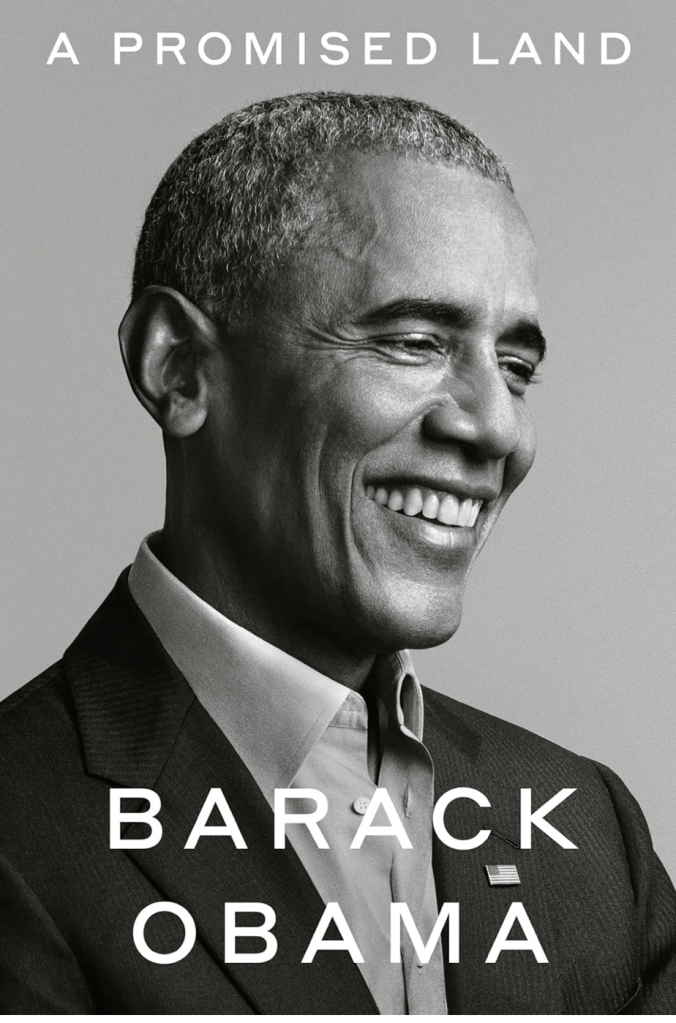
Being a man of a certain age, I can recall 1976 and the bi-centennial celebrations to mark the 200th ‘birthday’ of the USA. Gerald Ford was president and as part of the celebrations, more than 10,000 people were naturalised as citizens in mass ceremonies held in Chicago, Detroit and Miami. While in New York, tall ships formed a flotilla with hundreds of smaller vessels. It was quite the party! Fast forward 50 years (which seems scarcely possible) and I felt I should mark the latest milestone in similarly lavish fashion.And thus I settled down to the audiobook version of ‘A Promised Land’ by Barack Obama. This first volume of the former president’s memoirs is quite a tome (I have a hard copy on my TBR shelf) and yet the prospect of a presidential address lasting 29 hours 10 minutes felt like the kind of extreme indulgence, as befits the occasion.

There’s no question the author can write and tell a compelling story (even one we’ve lived through) and there are plenty of sobering plot-lines (Covid; the financial crisis; Iraq; Afghanistan; racial and gender inequality), some well known villains, but also a large cast of good people, who are credited with some seismic achievements, as Obama tentatively lifts the veil on the machinations of the American political establishment. Indeed, for a curious outsider, having the unique perspective of the POTUS to walk the reader/listener through a series of international challenges, political frictions, electoral battles and attendant risks was fascinating, made all the more profound laid alongside the domestic considerations that also attend a young husband and father, trying to maintain a sense of balance and stay grounded, in the rarified atmosphere of the White House.

What I liked most about the account was the sense of having a ringside seat for history in the making. Albeit a retrospective view, to hear the competing factors to be weighed, compromises to be made and the tactical nouse necessary to advance any policy is mind boggling and there are no easy hits. Foreign or domestic policies, fiscal and budgetary constraints, health, defence, education, each arena fraught with partisan loyalties and the need to keep even loyalists onside. The sheer breadth of the President’s field of vision, even allowing for specialist advisers, is truly remarkable.

And yet, in the face of the many challenges eventually to be confronted by the 44th President, what also came across was the humanity of the man. From humble background, to senator, to leader of the western world. A family man, with a love of basketball and the occasional cigarette, able to connect with his closest staff, as well as national leaders, a gifted communicator that from this side of the pond appears to be a tough act to follow.

I shall look forward to the second volume with interest, but this first instalment is well worth the investment in time and narrated by the author the audiobook was definitely enriched. The main advantage of the hardcopy is access to some tremendous photographs and a detailed index. I don’t review many non-fiction books here, but this one is quite insightful and enabled me to look back at a pandemic, war and a serious financial crisis, if not with nostalgia, at least with satisfaction for the leadership shouldering a succession of crises.

Rating: 4.5 out of 5.

Political Theory

12:14 AM 24 SEPTEMBER 2016

A seminal work, which offers an interesting, if dated, critique of capitalism and an alternative way of perceiving the world’s dominant system of social organization. Certainly the thoughts expressed by Marx and Engels lays bare the assumptions which accompany our embrace of capitalism, but its longevity may owe much to the absence of a workable alternative to date (the subsequent attempts at the implementation of communism being largely discredited).  

SOURCE: HTTP://WWW.GOODREADS.COM/REVIEW/SHOW/1521144565

Rating: 3 out of 5.

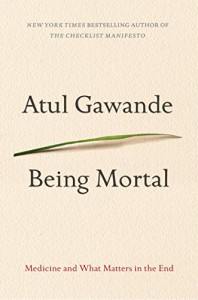
Profound look at good endings…

8:44 PM 28 AUGUST 2016

Working as I do in an integrated Health & Social Care environment, ostensibly geared to working with older citizens, this book had a resounding resonance with my own professional experience. The loss of my grandparents in recent years also bore some of the hallmarks of the tensions alluded to by Gawande, between the expectations and aspirations of people faced with the additional years, which for many, modern science has made possible and systems which may be subverted towards longevity as a destination in itself, without recourse to the ‘quality of life’ issues, with which they are inevitably bound.
Gawande makes a very cogent case for considering the role of western medicine in contemporary society and the potential for Drs to collude with patient’s assumed desire for survival, because treatments are possible, rather than initiate ‘difficult conversations’ which establish ‘what matters’ to the individual. The author describes common examples of clinicians instinctive leaning towards the exhaustion of a catalogue of possible interventions, without necessarily relating decision-making to what the patient is seeking to achieve through treatment. The book may thus be seen as a rallying cry to clinicians to rebalance the power differential which has evolved between the professional and the patient. However, there is also an implied criticism of societies that have become distanced from the reality of death. In the past, families and individuals were arguably more exposed to the experience and consequences of ageing and dying. In contrast to today, when such decline is frequently behind hospital doors, managed by professionals, the sanitizing of the process may have resulted in societies less equipped emotionally and practically to procure and recognize a ‘good’ death. For example, the author contrasts the experience of many with the often enlightened approach adopted by the hospice movement, which could inform much of ‘mainstream’ medical ‘end-of-life pathways’.
In his quite profound book, Gwawande’s sensitive writing style invites overdue reflection on how we have come to the current state of affairs. Given the ageing populations of most western nations, he has also perhaps rendered us a great service, initiating a wake-up call to all of us, to consider how we would want the last stages of our lives to look like (and equally pressing – not look like) and to have the courage to ensure our nearest and dearest are aware of our wishes. Abdicating responsibility for defining a ‘good death’ in our own terms, potentially leaves the decision-making, when the time comes, in the hapless hands of those without the clarity of ‘knowing’. For those of us in a position to initiate such difficult conversations, the reward of short-term discomfort may be surprising responses, but also understanding and knowledge with which to advocate the most appropriate outcome. A really thought-provoking read.

SOURCE: HTTP://WWW.GOODREADS.COM/REVIEW/SHOW/1521155649

Rating: 5 out of 5.

May-be more than cars

8:21 PM 28 AUGUST 2016

James May rambles through a profound century of life-changing inventions with interesting observations and no small amount of humour. Ardent viewers of ‘Top Gear’ will be aware of the disparaging treatment of May by the other presenters and yet here the ‘geeky one’ reaches out to those of us with a similar appreciation of man’s technical advances, in a terrific homage to human ingenuity.

SOURCE: HTTP://WWW.GOODREADS.COM/REVIEW/SHOW/1521161112

Rating: 4 out of 5.

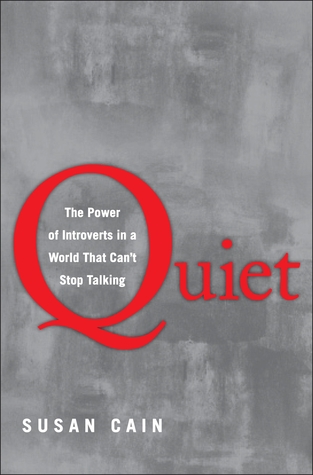
Quiet, please!

We all have talents, this seems self-evident, but in a world apparently possessed by a clamouring for celebrity culture and the reward of extrovert behaviour, there is a risk that we trade charisma for depth and push ‘quiet’ souls to the margins. This book makes a compelling case for re-evaluating the contribution of the introverted and examines why the range of human personalities exists, what are the implications for those who fall to the introverted end of that continuum and for those successful in overcoming such a potential disadvantage, how did they do it?
Naturally there is an obvious attraction in this book for introverts everywhere (though western culture appears to offer the greatest challenge) and there is a warming validation in Susan Cain’s explanation that it’s OK to be ‘quiet’. The cerebral-leaning are not to be pitied, the ‘geeky’, the ‘shy’ are capable of making profound contributions in work and social life and this book offers some real insight for those seeking to understand how best to relate. The book also offers strategies for the introvert not wanting to be held hostage to their natural self. I found it gratifying to find that introverts don’t need to move to China to be appreciated, but awareness of approaches that might oil the wheels of relationships were thought-provoking. This book reaffirms that ‘it takes all sorts’, but my favourite quote appears in the conclusion, “The secret to life is to put yourself in the right lighting.For some it’s a Broadway spotlight; for others, a lamplit desk”. Thank goodness for that!

SOURCE: HTTP://WWW.GOODREADS.COM/BOOK/SHOW/18006972-QUIET

Rating: 5 out of 5.