World Book Night pick 2013

7:26 PM 3 SEPTEMBER 2016

Selected on the list for World Book Night 2013, I picked up the e-edition, complete with alternative ending, which Blackman wrote for the occasion. The story centres on teenagers Callum and Sephie, growing up in a society split along racial faultlines and the experiences of their respective families. It is a romantic/tragic tale of young love stifled by societal tensions, which the author explores sensitively. The first in a series of novels, the plotline was developed well and with pace. A very enjoyable read. 

SOURCE: HTTP://WWW.GOODREADS.COM/REVIEW/SHOW/1521148423

Rating: 3 out of 5.

College mayhem

7:01 PM 3 SEPTEMBER 2016

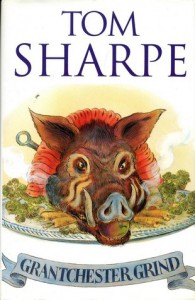
A chronicle of Porterhouse College, Cambridge, the acidly-Sharpe humour served up by the author is as sumptuous as a fellows feast. Dripping with hysterical characters, the book plots the chaotic attempts to spare the ancient institution from financial ruin, led by a coterie of dysfunctional men marooned in a glorious past, which is slowly and painfully being eroded. The Master (Skullion), formerly the Head Porter, the Dean, Senior Tutor, Bursar and Praelector conspire and scheme and cross metaphorical swords with a media magnate and gangster for the greater good of Porterhouse. The Machiavellian plot twists unstintingly with laugh-out-loud moments sprinkled throughout. Tom Sharpe is rightly regarded as a great post-Waugh humorist and guardian of the national funny bone. Very highly recommended.A chronicle of Porterhouse College, Cambridge, the acidly-Sharpe humour served up by the author is as sumptuous as a fellows feast. Dripping with hysterical characters, the book plots the chaotic attempts to spare the ancient institution from financial ruin, led by a coterie of dysfunctional men marooned in a glorious past, which is slowly and painfully being eroded. The Master (Skullion), formerly the Head Porter, the Dean, Senior Tutor, Bursar and Praelector conspire and scheme and cross metaphorical swords with a media magnate and gangster for the greater good of Porterhouse. The Machiavellian plot twists unstintingly with laugh-out-loud moments sprinkled throughout. Tom Sharpe is rightly regarded as a great post-Waugh humorist and guardian of the national funny bone. Very highly recommended.

A chronicle of Porterhouse College, Cambridge, the acidly-Sharpe humour served up by the author is as sumptuous as a fellows feast. Dripping with hysterical characters, the book plots the chaotic attempts to spare the ancient institution from financial ruin, led by a coterie of dysfunctional men marooned in a glorious past, which is slowly and painfully being eroded. The Master (Skullion), formerly the Head Porter, the Dean, Senior Tutor, Bursar and Praelector conspire and scheme and cross metaphorical swords with a media magnate and gangster for the greater good of Porterhouse. The Machiavellian plot twists unstintingly with laugh-out-loud moments sprinkled throughout. Tom Sharpe is rightly regarded as a great post-Waugh humorist and guardian of the national funny bone. Very highly recommended.

Rating: 4 out of 5.

Granada’s grandeur

4:03 PM 3 SEPTEMBER 2016

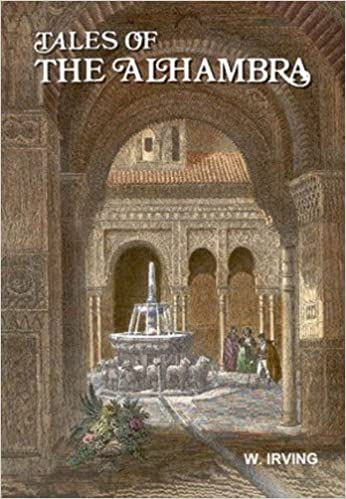
Extracts from Washington’s book are used in the audio guide for contemporary visitors to the Alhambra and it was the emotive prose which inspired me to seek out a copy. The grandeur of the palace complex is beautifully reflected in the author’s description and related legends and alludes to the almost mystical influences of Spanish and Moorish inhabitants.

SOURCE: HTTP://WWW.GOODREADS.COM/REVIEW/SHOW/1521151018

Rating: 4 out of 5.

The first of many…

3:48 PM 3 SEPTEMBER 2016


I am generally a fan of John Grisham, whose books can be relied upon to be well paced, and tap-in to a common curiosity about courtroom dramas. Grisham also seems to often offer a critique of the US legal system, which makes for interesting observations, albeit woven into storylines that frequently hinge on broad social themes, about which he also provides compelling commentary. In this instance the fault-lines between black and white Americans in the southern US forms the backdrop. It is also worth reflecting on the fact that this was Grisham’s first novel. By his own admission there are elements of autobiography here and it is possible to discern a certain rawness to his talent that perhaps becomes polished in the following 20+ books. In “A Time to Kill” though, there is a simmering exploration of justice weighed against an understandable and perhaps instinctive desire for revenge, which is ultimately tested before a jury of fellow citizens. By the end I’m sure most of us know which way we’d vote.

SOURCE: HTTP://WWW.GOODREADS.COM/REVIEW/SHOW/1521153895

Rating: 4 out of 5.
  1. Drew's avatar

    I appreciate the honesty and thoughtful analysis presented in your review.

  2. kroughrenley's avatar
  3. baritorlo's avatar
  4. Michelle's avatar
  5. Lunio HQ's avatar

Simply sublime

3:39 PM 3 SEPTEMBER 2016

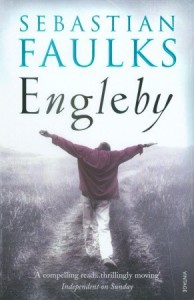
A truly weighty novel, which engages empathetically with one man’s experience of mental distress and the ramifications for his relationships and place in society. Wonderfully written, although very dark, this is Faulks at the peak of his powers. 

SOURCE: HTTP://WWW.GOODREADS.COM/REVIEW/SHOW/1521153918

Rating: 5 out of 5.

Is it me?…..

3:21 PM 3 SEPTEMBER 2016

This was my first book by Kate Atkinson and though clearly a capable writer, I was disappointed by the book, which seemed to me rather jumbled. The storyline, perhaps deliberately, is confusing and the characters forgettable, culminating in an uninteresting read. I know Atkinson has a very good reputation, so perhaps I have just alighted on the ‘wrong’ book?

SOURCE: HTTP://WWW.GOODREADS.COM/REVIEW/SHOW/1521155132?

Rating: 2 out of 5.

Classic swashbuckler!

12:03 PM 3 SEPTEMBER 2016

The term ‘classic’ is heard often, but this famed tale, first published in 1883, must bear the rubric as well as any. I confess I am very late coming to ‘Treasure Island’, the book, and can see why so many suggest it and recall it fondly from a childhood reading list (myself, I recall the 1950 Disney film version played out at Saturday morning pictures). Still, rarely has a fictional literary character been so profoundly absorbed into the national consciousness as Long John Silver. Moreover, on belatedly reading the book, one realizes the challenge of trying to capture, in moving pictures, the sheer scale of this much-beloved adventure and the pale nature of the many attempts.

As an island nation, I suspect we have a particular fascination with the sea, but Stevenson’s use of a maritime backdrop taps into the lifeblood of nineteenth century Britain, from the evocative description of bustling Bristol, steeped in trade, to the skills of the seamen who enabled such trade to flourish. Little wonder perhaps that such men should assume heroic status among landlubbers, nor that sea-faring legends should prove such fertile ground for the anti-hero.

In the main, the story is narrated by Jim Hawkins, young son of an inn-keeper, who is by chance drawn into a dark plot involving the pirate fraternity and the search for the late Captain Flint’s plundered loot. The contrast between the leading protagonists is stark, from the stoic, cultured Captain Smollett, Dr Livesey and Squire Trelawney, of the gentrified classes to the deformed, drunken and duplicitous pirates including Pew, Israel Hands and Long John, although it is the latter ‘have nots’ that display the more intriguing characters. Indeed, Stevenson describes the comic ‘lower’ classes in quite disparaging terms, the worse off for their inferior intellect and a weakness for drink, but on board ship the value of sailors in their ‘natural’ environment proves quite the leveller.  Woven throughout is the majestic schooner, ‘Hispaniola’, which sails under the Union Jack and Jolly Roger in the course of the book and provides the means of safe passage across the oceans for the would-be adventurers and a triumphant return.

The book is fairly short and the pages slip past under a full-sail assault on the senses, in which the reader can almost taste the salty air, luxuriate in the warmth of a secluded lagoon and hear the rigging creaking in the mainsail. Only Long John Silver’s irreverant parrot to break the atmosphere…..”pieces of eight!” 

Well over a hundred years after its original appearance, Treasure Island remains a wonderful tribute to the adventure genre, replete with a reputation undiminished by the intervening years. Young or old, for sheer escapism, this book can muster a place on most shelves. 

Rating: 4 out of 5.

Nation-building

11:21 PM 29 AUGUST 2016

I read this with my teenage son and it says much for the late Pratchett’s ability to speak to a broad audience that this story was immediately hailed as “the best book ever….well so far”. So what was it that resonated so notably with that most challenging of all readers – the adolescent male? Clearly a pacy storyline helps, but the Pratchett brand of humour effortlessly underpinned some complex concepts and successfully held the readers attention, able to empathise with a choice of hero/heroines.

The novel centres on the story of two survivors – ‘Mau’, an islander undergoing a right of passage to manhood, interrupted by a cataclysmic tsunami, which destroys his society and ‘Daphne’, whose boat, borne on the same monstrous wave, crash lands in the rainforest. With echoes of Tarzan meets Jane, Pratchett compares and contrasts the disparate cultures and beliefs upon which Mao and Daphne’s respective views of the world are founded and blends their different knowledge and skills to combat their vulnerability and attendant dangers. It’s a thrilling adventure. Babies to be birthed, raiders to be repelled, food to be chewed for the toothless. Indeed, part of the book’s appeal is possibly this Dahl-esque indulgence in the unexpected, the violent, the gross. But, it is also touching in parts and even the burgeoning relationship between the two main characters was tolerated in all its subtle sensitivity.

In many ways this is a ‘right of passage’ book and the emergence of the two young adults, stepping out into their prescribed futures, forever bonded by their experience, is quite uplifting.

The idea that, on this small island at least, it might be possible to erase a history and start again, or perhaps we are each a summary of our preceding generations, so that we are rarely a blank canvas. Certainly the encroachment of the ‘outside’ world into an isolated island community must change it forever, if not for the better, but individual contributions do matter.

Helpfully, in his ‘Author’s Note’, Pratchett plays the “great big multiple universes get-out-of-jail-free card”, to explain any anomalies in the plot. And about ‘Thinking’, he also belatedly warns the reader that “this book contains some”!

It is perhaps a measure of the writer that though aimed at the ‘young adult’ reader, ‘Nation’ has much to commend it to a wider audience. Leastways, son and I are committed to further exploration of TP’s lengthy book list. Bring it on!

Rating: 4 out of 5.

Jungle drum

9:18 PM 28 AUGUST 2016

This was my first taste of Paul Theroux, but I tend to love the orange-spined Penguin books and the Sunday Times byline on the cover suggesting the author “is as cool as Maugham”, just had to be tested.

Set in Malawi, the book follows the antics of American, Calvin Mullet, sent by his company ‘Homemakers International’, to establish the use of insurance on the continent and European, ‘Marais’, a wannabe revolutionary leader, seeking to ignite a popular uprising against the incumbent dictator (‘Osbong’). The interplay between their disparate paths and the buffeting of the respective ambitions, lends itself to a satirical examination of a paternalistic brand of imperialism. But, the impact of capitalism, in the guise of a local brothel just piles on the irony, as the author casts an empathetic, quizzical eye over the insincere and ill-informed fumblings of the ‘developed’ world and the assumed vulnerability of the ‘developing’. Throw in the stereotypical British ex-pat, Major Beaglehole and the scope for political incorrectness is huge. However, read as a book of its time (1970s), the caricatures are cleverly assembled and instantly recognizable.

A very entertaining read, I’m not sure I would put Theroux in the same bracket as Maugham, but he does have an impressive back catalogue  and I shall look forward to sampling some more. 

Rating: 3 out of 5.

Profound look at good endings…

8:44 PM 28 AUGUST 2016

Working as I do in an integrated Health & Social Care environment, ostensibly geared to working with older citizens, this book had a resounding resonance with my own professional experience. The loss of my grandparents in recent years also bore some of the hallmarks of the tensions alluded to by Gawande, between the expectations and aspirations of people faced with the additional years, which for many, modern science has made possible and systems which may be subverted towards longevity as a destination in itself, without recourse to the ‘quality of life’ issues, with which they are inevitably bound.
Gawande makes a very cogent case for considering the role of western medicine in contemporary society and the potential for Drs to collude with patient’s assumed desire for survival, because treatments are possible, rather than initiate ‘difficult conversations’ which establish ‘what matters’ to the individual. The author describes common examples of clinicians instinctive leaning towards the exhaustion of a catalogue of possible interventions, without necessarily relating decision-making to what the patient is seeking to achieve through treatment. The book may thus be seen as a rallying cry to clinicians to rebalance the power differential which has evolved between the professional and the patient. However, there is also an implied criticism of societies that have become distanced from the reality of death. In the past, families and individuals were arguably more exposed to the experience and consequences of ageing and dying. In contrast to today, when such decline is frequently behind hospital doors, managed by professionals, the sanitizing of the process may have resulted in societies less equipped emotionally and practically to procure and recognize a ‘good’ death. For example, the author contrasts the experience of many with the often enlightened approach adopted by the hospice movement, which could inform much of ‘mainstream’ medical ‘end-of-life pathways’.
In his quite profound book, Gwawande’s sensitive writing style invites overdue reflection on how we have come to the current state of affairs. Given the ageing populations of most western nations, he has also perhaps rendered us a great service, initiating a wake-up call to all of us, to consider how we would want the last stages of our lives to look like (and equally pressing – not look like) and to have the courage to ensure our nearest and dearest are aware of our wishes. Abdicating responsibility for defining a ‘good death’ in our own terms, potentially leaves the decision-making, when the time comes, in the hapless hands of those without the clarity of ‘knowing’. For those of us in a position to initiate such difficult conversations, the reward of short-term discomfort may be surprising responses, but also understanding and knowledge with which to advocate the most appropriate outcome. A really thought-provoking read.

SOURCE: HTTP://WWW.GOODREADS.COM/REVIEW/SHOW/1521155649

Rating: 5 out of 5.