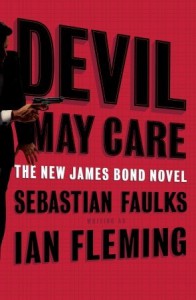
The 100th anniversary of the birth of Ian Fleming is as good a reason as any for commissioning a ‘continuation novel’ for his most famous creation – James Bond. And who better to write it than one of the most popular British authors of the contemporary crop, Sebastian Faulks? As an avid Faulks fan, it was an intriguing thought, but one not without risk for this most eponymous of spy franchises and perhaps also for the author. Though I needn’t have worried. As early as the opening chapter, the reassuring velvety panache of Faulks was grafted onto the gritty style of Fleming, in a typically grisly, action-packed episode.
A global threat posited by a maniacal power broker bent on the destruction of west, in particular this time the UK, the ‘baddie’ is strikingly familiar, right down to a physical deformity and a penchant for cruelty, which in due course must surely get its comeuppance.
Also present, the romantic entanglement with a beautiful, tragic woman, which is as much a necessity for Bond, as his trusty Walther PPK.
A light read, the book moves along at a break-neck pace and is unadulterated escapism, but worthy of one of the nation’s favourite literary heroes and we continue to be lucky to have him.
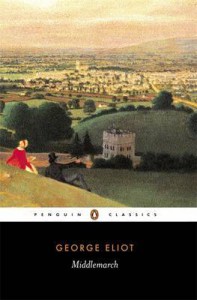
This was my first reading of George Eliot, but this glorious observation of nineteenth century provincial life is has been an absolute treat. A novel of its time, the language is sumptuously expansive ( I benefited from the in-built Kindle dictionary function) threaded through the eighty seven chapters, which I have imbibed with due relish. In particular, the means by which the central families and community reinforced an established set of common values and commensurate societal norms and behaviours was both intriguing and a fascinating backdrop to the novel. Certainly the sense of what constitutes ‘honourable’ behaviour was calibrated rather differently to the contemporary world and yet the underlying questions of Eliot’s narrative resonate strongly with today’s anguish around the distribution of wealth, power and the ‘right’ by which they are wielded. The ‘elite’ in the case of Middlemarch include those connected by traditional familial ties to the land-owning gentry, the church, a wealthy banker (ever the weak link it seems), professionals and those with business interests. But, while the pivotal positions are occupied largely by men, it is the influence of the strong female characters, which provides the light and shade and confers real texture in this book. The mercurial nature of fate and the accompanying deposit of fortune and none on the guilty and the guileless make for compelling reading. Yet, Eliot also challenges ‘black and white’ judgements of what it means to ‘do the right thing’ and as in the case of Dorothea, the central heroine, the surrender of duty and position for personal happiness seems a very positive trade, with which the reader has every sympathy. It is interesting to speculate on whether the author’s personal experience of public condemnation, for her rejection of the social norms of her day influenced the writing of ‘Middlemarch’ (Mary Ann Evans – her real name – was vilified for openly living with a married man, George Henry Lewes, between 1855 – 78). Still, whatever the truth, among her legacies is this extraordinary Victorian novel, published in 1871, which is rightly revered and cherished.
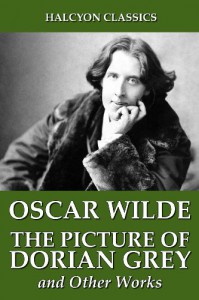
Oscar Wilde has long been lauded for his inventive use of English and his mastery of the one-liner and such skill is wonderfully paraded through his most celebrated book, “The Picture of Dorian Gray”, published in 1891.
“I can stand brute force, but brute reason is quite unbearable. There is something unfair about its use. It is hitting below the intellect.”
And yet the decadent nature of this tale is an unlikely vehicle for such humour, as it grapples with weighty issues of morality and the hypocritical persuasion of Victorian society.
Dorian Gray is a beautiful human specimen befriended by an artist (Basil Hallward) and socialite, Lord Henry Wotton, both of whom are besotted by their young protege’s physical appearance. Indeed, Dorian inspires the artist to create an exceptional portrait capturing his youthful perfection, though acknowledging the reality that the subject must age and deteriorate, while the painting will preserve his revered looks. Stung by the realization, Dorian’s wish to be spared the ravages of growing old is mysteriously granted and instead it is the painting that begins to change and reflect the deterioration in Dorian’s face and conscience. Thus, the picture comes to represent Dorian’s soul, upon which the toll of his indulgent and increasingly debauched life is visited.
Influenced by Lord Henry’s belief that the pursuit of pleasure, via a sating of the senses, was legitimate, Dorian lacks the maturing effects of ageing on his emotions and thinking, such that his disinhibited behaviour proves corrosively ugly and is ultimately the source of his ruin.
An interesting book, the reader can but be impressed by the guile and artfulness of Oscar Wilde, but the themes may also resonate today, with the contemporary obsession with image and the dominance of ‘beautiful’ people in popular culture.
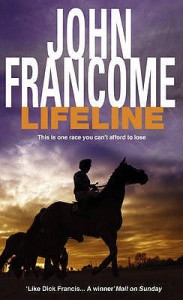
The adage that writers should stick to what they know has been assiduously followed by former National Hunt Champion Jockey, John Francome. Mining the rich seam that accompanies the elite world of horse racing, the author assembles the well-worn ingredients of wealth, corruption, murder, sex and conflict against the genteel backdrop of Lambourn and the horsey set. In some respects, the book has the feel of a formula, the cast of characters, including police investigators, stereotypes equally recognizable in other contexts. Only the presence and mystique of thoroughbred horses and the sub-plots of their racing careers mark out this book among the shelves of ‘thrillers’. Still, as with the best of the genre, I did burn through the pages quickly and the fast-moving action did ‘gallop’ along. As I’m on holiday, it also felt like a light foray into a new hedonistic field for me. I think I shall have to pick up a Dick Francis novel to see if Francome, the padawan, is yet neck and neck with the acclaimed master of this particular turf.
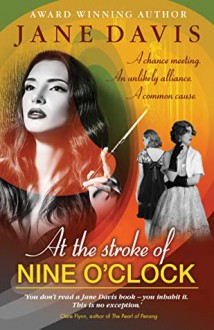
Another triumph from indie author Jane Davis in this gloriously gritty novel that engages head-on with a post-war London struggling to re-boot itself and wider society, amid ongoing privations. Against this authentic backdrop, the dawning realisation that Britain needed to change and to challenge former ingrained inequalities (particularly the structural disadvantage of women) is deftly explored by the author, through the lived experiences of three fictional women in the 1950s. Moreover the reader discovers that Caroline, Ursula and Patrice are each held hostage by their very different respective circumstances and perceptions of duty to family (parents, children, husband). Such traditional values are also cleverly juxtaposed with the tragic real-life story of Ruth Ellis, the last woman to be hanged in the UK. The sensationalised accounts of her crime carried in the press at the time (Ellis shot her lover, killing him) succeeded in vilifying Ellis, but drew a veil over the scandalous and violent behaviour of the ‘innocent’ male victim.
The format of the book reflects multiple points of view and rotates between the key characters’ perspectives. Indeed, it sounds like the start of a joke, ‘the hostess, the actress and the duchess’, but despite the disparity in their social positions, their common experience of abuse (financial, emotional and physical) at the hands of men, is something of a leveller. But for quirks of chance, all three might not be so far removed from the fate awaiting Ruth Ellis, yet they are drawn inexorably together, bonded by a shared sense of being social misfits. The intertwining of their journeys also offers touching examples of support, without judgement.
Far from being a tale of ‘doom and gloom’, the writing is sumptuous and though perhaps not intended as a feminist commentary on the period, the author has provided the reader with a genuine depiction of a society in transition and three strong and courageous female characters equal to their time.
Indeed, time, as measured for the nation by the iconic notes of ‘Big Ben’, provides a wonderful symmetry to this book. From August 1949, when the bongs failed to appear on cue, to July 1955 when sections of London held their collective breath in anticipation of the nine o’clock salvo, the author locates each of the women and enables the reader to follow their discrete but convergent journeys. It is true there are no male role models to speak of, which perhaps begs the question whether the period also presided over the demise of ‘gentlemanly’ conduct, or leastways diminished capacity to do the ‘right’ thing? But, the dilemmas the book exposes and the moral conundrums posed make for a fascinating and stimulating read, irrespective of the reader’s gender.
This book was listed for World Book Night 2016 and though an unusual storyline (at fist glance recovery from teenage mental illness may not seem fertile territory for humour), Holly Bourne has successfully woven together a really positive ‘rite of passage’ novel, which reinforces the notion that a diagnosed condition need not define the person. In this instance the sixteen year old person is Evie and the start of a new college offers the prospect of a chance to re-boot her adolescent life, no longer identified as ‘that girl who went crazy’. Still, in her efforts to re-invent herself with new girl friends and prospective boyfriends, Evie is cautious about how much she reveals about the past, or even her experience of the present. By contrast, her family have lived with Evie the darkest lows and with her psychologist, try to help navigate the return to ‘normal’.
Indeed, the book is something of a roller-coaster from emotional highs to poignant lows, the reader follows the central character’s progress and setbacks in her burgeoning relationships and ongoing mental health challenges, but the author deftly avoids any mawkish tendencies. Alongside some laugh-out-loud moments, Bourne also explores interesting insights and manages to balance the interplay between the potentially crushing effects of illness, with the shared ‘madness’ that so often characterizes the human condition. A thoroughly enjoyable and compelling read, it turns out we are all a unique version of ‘normal’, just moving along our respective paths. If we are lucky, there are people who care alongside us on the journey.
I’m passing my copy on, fully endorsing the World Book Night listing as a genuine celebration of reading and books in all its diversity. Remember the name. Holly Bourne is a very promising young writer.
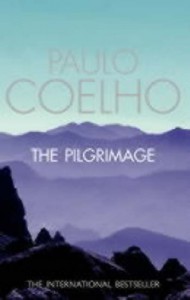
‘The Pilgrimage’ has the distinction of being Paulo Coelho’s first major book and relates his extraordinary and at times mystical quest along the medieval route to San Tiago de Compostela. The mental and physical trials the author experiences and the insight he derives from this challenge are perhaps deliberately obscure, but also makes this a challenging read in parts. Complex metaphors wrapped around the enigmatic author and his strange guide (Petrus) give the impression that this book is multi-layered and yet I’m not convinced that careful unwrapping is necessarily worthy of the implied effort.
Certainly there were some interesting concepts introduced, such a ‘agape’ – total love. “…the love that consumes the person who experiences it… the highest form of love”. Moreover, enthusiasm is considered as “agape directed at a particular idea or a specific thing”. Still, Coelho postulates the ultimate challenge for each of us is how to harness these underpinnings of faith and happiness on our respective journeys. Invoking a term coined by St. Paul, the author examines what it means, “to fight the good fight”.
What should we be seeking to achieve with this wonderful gift of life and the talents we each possess? This is philosophical stuff and encapsulating the ‘bigger picture’ within the boundaries of a walk, albeit a very long one, was interesting, though somewhat dull. Rather than lift a veil on the meaning of life, Coelho has perhaps suggested we are each on a pilgrimage of sorts, to discover our own meaning and purpose. Still, my personal search for happiness is likely to include fewer such weighty or prophetic books. Life is afterall rather short.
‘Life of Pi’ made the World Book Night list for 2011 and rightly so. Martel has created a modern masterpiece, which is beautifully written. The storyline is unusual and all the more absorbing for it. The ending too is intriguing and though the movie interpretation is good, it can’t do full justice to a wonderful book.
Notwithstanding the general assumption of the superiority of the human race, the author holds up an interesting mirror for the reader, which reflects man’s inherent, but potentially ugly, animalistic desire for survival.
I was honoured to be given the opportunity to give this book, as part of the World Book Night 2012. This was my first choice and enabled me to wax lyrical about this deceptively simple story, which explores in detail the reflections and experiences of a butler, Stevens, as he contemplates his life in service and the relevance of a life spent in service at a time of profound social change. Empathetically written, Ishiguro’s prose is a sheer delight and his attention to detail and fine emotional expression is quite touching. Certainly not a thriller, yet I feel the intentionally pedestrian pace merely accentuates the absolute quality of the writing. A truly exceptional read!
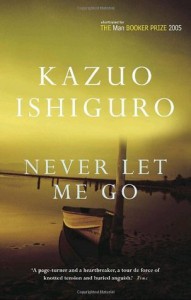
I was so impressed by The Remains of the Day that I was inspired to move on to this book by the same author. Admittedly it was also shortlisted for the Man Booker prize, but the quality of the writing was nonetheless similarly beguiling. Ishiguro has created another thought-provoking novel, which tackles some quite profound issues around what it is to be human, the tyranny of a new form of slavery and the ethics of a system prepared to sacrifice the few for the good of the many. Albeit a fictitious social framework, it nonetheless invites critique around other man-made discrimination, which cast some people as powerless, or ‘undeserving’. Brilliant book, the nuances of which were not fully captured (in my view), by the movie interpretation.



 BurfoBookish