10:18 AM 23 FEBRUARY 2019
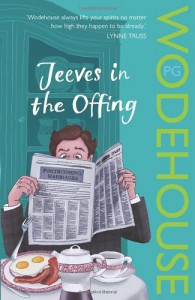
This slim volume was first published in 1960 and appears three quarters of the way down the lengthy list of Wodehouse novels featuring the inestimable Jeeves. In fact, in this episode the celebrated gentleman’s valet quickly departs for a holiday in Herne Bay, Kent and helps decide Bertie Wooster to accept a summons to his Aunt Dahlia’s ‘rural lair’. Ordinarily one of the highlights of the series is the interplay between the two main characters, however, with Jeeves absent for most of the tale, Bertie is without his customary foil, which at times feels like just half of a double act. The plot works though and the other characters aid the comic moments, but Bertie, unprotected by the attentive Jeeves, does feel somehow incomplete.
While her husband (Uncle Tom) has gone away to schmooze a wealthy business partner and get an important deal over the line, Aunt Dahlia must host the other abandoned spouse (Mrs Cream) and her son (Wilbert), ensuring that nothing is done to jeopardise the deal from afar. Joining the group for the weekend at ‘Brinkley’ is Lady Wickham’s daughter (Roberta), whose reputation as a prankster precedes her; Aubrey Upjohn, former headmaster at Wooster’s preparatory school; and Upjohn’s stepdaughter (Phyllis). But for Jeeves absence, Bertie would have avoided such a toxic brew, but consoled by his journalist friend, ‘Kipper’ Herring and reminded that at least the party would enjoy the delights of Chef Anatole’s kitchen, he relents. Still, ahead of his departure, Bertie gets a call from a distraught Lady Wickham, who has discovered in ‘The Times’ the announcement of her daughter’s engagement to Bertie. Intriguingly this is also news to Bertie. Yet, since his former proposals of marriage to Bobby Wickham were so unceremoniously rejected, Bertie rightly deduces that a game is afoot.
As usual, the rather pleasant-but-dim Bertie is cast as an important cog in the machinations of others, in which he is destined to be the weak link. The final outcome, of course, being the culmination of unintended consequences and a belated intervention by Jeeves.
Poking fun at the aristocratic classes, masterfully manipulated by their intellectual superior in Jeeves, remains a rich seam, well mined by Wodehouse. However, it is the interplay between beloved characters, the past era of gentry and intricate plotting, which the author satirizes so mercilessly. For the reader, this familiar though ridiculous portrayal of a bygone age remains a glorious example of English farce.
 BurfoBookish