At the going down of the sun…

3:49 PM 21 APRIL 2019

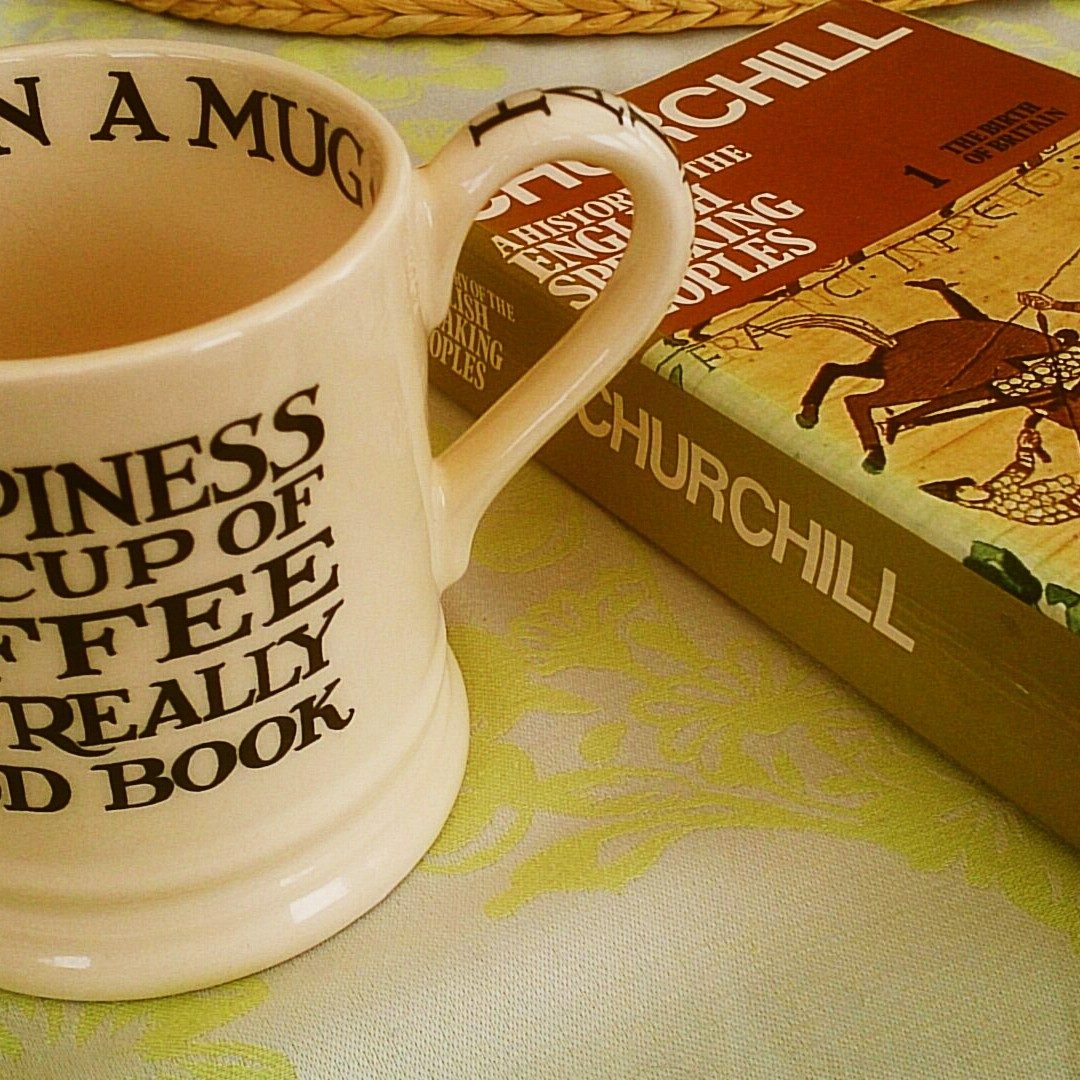
The passing of the one hundredth Remembrance Day since the end of the Great War 1914-18, last November, gave good reason (if it was needed) to revisit some of the written records of that gloomy period of European history. Often poignant, the poetry, letters and tragic lists of the fallen offer reminders, lest we forget, of the sacrifice of a generation. However, given the colossal loss of life, what sometimes appears absent from contemporary accounts is a view from the non-commissioned ranks, a ‘Tommy’s’ experience from the trenches of the front lines. As such, this memoir by Cpl Sam Sutcliffe, collated/edited by his son Phillip, offers a telling insight into the chaos of conflict visited on so many and the mind-set of those so often cast as ‘cannon-fodder’. Even allowing for the retrospective writing of this lengthy book, the vivid descriptions created by the author and the accompanying endnotes, cross-referencing a wide range of confirmatory material, make this a sobering but compelling read.
The title of the book gives an immediate flavour of the self-effacing humility of the author and yet he goes on to describe joining up aged just sixteen, with his older brother (Ted) and friends (in fact, Sam lied about his age, as the youngest recruit allowed was 19). The swell of public patriotic fervour in 1912 and the casual acceptance of the need to do ‘one’s duty’, in hindsight, seems naive. Moreover, the apparent absence of apprehension suggests a misunderstanding of the carnage of war. The phlegmatic acceptance of Sutcliffe’s parents to their young son’s decision also perhaps an echo of the national willingness to tolerate sacrifice. Though later, conscription became necessary and through his journey the author develops a certain cynicism about those who avoided service altogether and those who sought to distance themselves from the trenches at the front line, tempered only by the psychological breakdowns he witnessed there.


Subsequently Sutcliffe’s tender age did confer a temporary reprieve. Still not eighteen, the author had already fought in the ill-fated Gallipoli campaign and the first battle of the Somme, rising to the rank of acting Sergeant, when he was plucked briefly to safety until 1917 (when he became nineteen) and could be returned to the western front, in time for the anticipated Spring offensive. Captured during that monumental effort by Germany to end the war, Sutcliffe relates his subsequent experience as a prisoner-of-war and an equally challenging personal struggle to just stay alive and survive the attendant risk of disease and privation.


This book is an extraordinary account of a teenager’s experience of a brutal conflict that culminated in a vast body count. After Gallipoli (wherein having been evacuated his unit was returned to cover the withdrawal of the foremost positions), the author laments the decimation of his original battalion of volunteers from London, culled from a thousand men to around just two hundred. Indeed the scale of this loss appears to haunt Sutcliffe throughout his account and his perspective clearly changes regarding the veneer of national pride, which he sees laid bare amid such abject failure.


At times the book reads like a novel. For example, the author is separated from his brother early on, but their paths cross several times in the course of the war. Yet, there is no disguising the sense of relief when the siblings both survive, albeit Ted’s exposure to gas in the trenches had a lasting effect. No commentary on the strategic mistakes pored over by historians in subsequent decades, nor criticism of the class system which conferred leadership roles on some ill-equipped to inspire others, though Sutcliffe does single out a couple of officers revered for their compassionate and resilient example, who did indeed lead from the front. Nonetheless, the reader is left with the distinct impression that notwithstanding his protestations to the contrary, Sam Sutcliffe’s contribution was indeed heroic and it is the collective efforts of many such ‘nobodies’ and a preparedness to do their ‘bit’ that ultimately made the crucial difference. We shall remember them…
Rating: 4 out of 5.

Blunt, Heads & Laughter in Gloomwood!

14:04, 8 November 2020

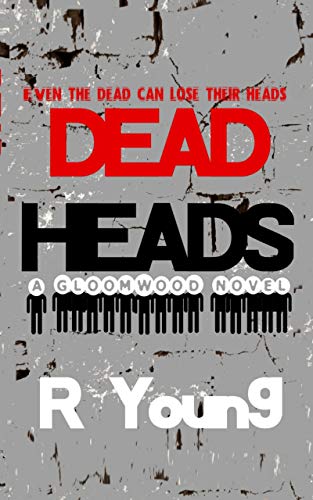
For Twitter followers of Ross Young (@InkDisregardit) it may be unsurprising to learn that his debut novel, “Dead Heads” is an irreverent comedy. Notwithstanding the contested nature of the afterlife, the author’s depiction of ‘Gloomwood’ (a city located somewhere beyond the living sphere) is a far cry from the common expectations of paradise. Yet, it is perhaps consistent with a realm overseen by the Grim Reaper – grey, depressing….grim.

Still, though populated by the dead, when members of the great and the good start being mysteriously decapitated, the city administrators look to the newly-arrived Detective Augustan Blunt to stop the carnage and unravel the strange ethereal events. Such a surreal premise might discourage some readers of contemporary urban fantasy, but the characters are well-drawn and the world constructed by the author is fascinating in all its detailed weirdness. However, it is the dialogue and crisp one-liners that give full rein to the author’s dry humour and the inventive nature of his story-telling. For example, I just love the idea of being collected from the ‘deathport’ by a reaper in a hoodie!

Ross Young is an unfamiliar indie writer to me, but this outing has fuelled my curiosity and this first Gloomwood novel is a promising platform for future stories and the further development of a funny cast of characters. Somehow this book just seemed to resonate with the surreality of our time and laughter born of dark humour may be our best antidote in the face of the COVID tragedy, at least for now.

Rating: 4 out of 5.

Chinese Whispers…

10:52 PM 14 JANUARY 2019

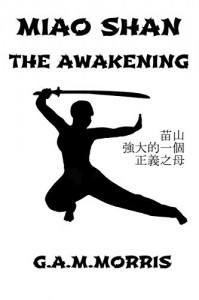
Ahead of the publishing of “Mia Shan, The Awakening” (15/1/19), I was given the opportunity for early access, in return for an honest review. The book is not easy to pigeonhole, bearing traits of various fantasy subgenres – historical, dark, paranormal and urban. However, I suspect the prominence of Chinese martial arts and the attendant violence is likely to have a greater bearing on the readership, than some notional category. I am not a fantasy buff by any means, but neither does the reader need to be, to engage with this interesting saga, which opens in Hong Kong at the end of the nineteenth century.


The narrative follows the development and exploits of Chow Lei, aged ten at the outset, who is orphaned and raised by her grandmother (PoPo), above the family’s thriving noodle shop. The family matriarch worships Guan Yin, the bodhisattva of compassion and mercy and is relying on the venerated idol to keep her granddaughter safe, but though Lei discovers an exceptional ability to master martial arts, compassion is not one of her strengths. Still, in spite of her PoPo’s reticence, Lei is sent to the Shaolin Temple at Seng Shan to be admitted as a novice nun, to continue her training.


For those of us brought up on David Carradine playing Kwai Chang Caine in the seventies TV series ‘Kung Fu’ and more recently the critically-acclaimed movie “Crouching Tiger, Hidden Dragon”, there are familiar archetypes, which unless handled carefully run the risk of appearing a little tired. The superhuman qualities typically conferred on the protagonist are also expected, but need to be plausible. The author neatly avoids these traps by suggesting Lei might be the prophesied Bodhisattva of Justice. Certainly to master the eighteen fighting styles in two years is unique, but Lei’s ongoing absence of compassion for her adversaries, alongside a very definite view of right and wrong, continues to worry her Shaolin Master (Shi Suxi). Indeed, in a very Star Wars-esque moment, he exhorts Lei, “You must know the void and be one with the void. You must know how to avoid the dark ways and follow the path of enlightenment….”


Now re-named Miao Shan and equipped to address injustice head-on, Lei returns to her city, a mighty sword-carrying bulwark against powerful criminal evil-doers.
It’s a familiar formula, but on the whole, the author has created an entertaining novel, which has scope for sequels. What it lacks in characterization, it certainly makes up for in the action department and for fans of kung fu that doubtless helps the readers’ appreciation.

Rating: 3 out of 5.

Thought-provoking, Challenging, Uncomfortably Good

3:19 PM 18 FEBRUARY 2018

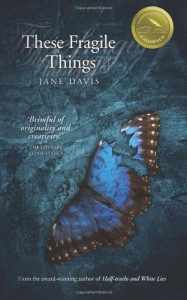
Having recently enjoyed ‘A Funeral for an Owl’ by indie author Jane Davis (see review dated 2 Jan 2018), I dived further into her back catalogue and found this book (first published in 2012) and I’m delighted to report that the author’s accessible writing style again made for a really enjoyable read.

In particular, Davis does have a wonderful knack for developing interesting teenage characters and in this offering the central protagonist (Judy Jones) is recovering from a deliberately mundane, yet life-changing incident, in which a wall collapses on her. In fact her survival is positively miraculous. Still, the wall is a very effective metaphor for other constructs around self-image, relationships, indeed life and the book explores how susceptible to collapse these things can also be when buffeted by external, or self-made pressures. The stress-test that the human experience places on individuals, families and communities can be profound and the mechanisms created to defend one’s well-being can be elaborate, or at times blindingly simple. Though not meant to be a commentary on faith, Davis does at least invite the question whether spiritual faith and/or faith in each other aids the character’s ability to cope and navigate the unexpected, or whether the key is our shared humanity and the capacity for random acts of kindness.

For those readers with children, especially teenagers, there are interesting moments for reflection at the shifting nature of the parental relationship, but also a potentially visceral empathy with Judy’s parents and the impact of the kind of news for which we all live in a state of dread. But, if subsequently the child then purports to experience visions, how does one react to that?

At its core the book focuses on the experience of loss – of health, identity, belonging, an anticipated future – and the attendant bereavement. The interlacing of aspects of the characters’ individual and collective journeys is cleverly handled by the author, though for me the slightly bizarre departure from the rails of Elaine Jones (Judy’s Mum) was an unnecessary distraction. Yet, all-in-all a fascinating and thoughtful novel, which does emphasize the potential corrosion of loneliness, however it may be imposed.

Rating: 4 out of 5.