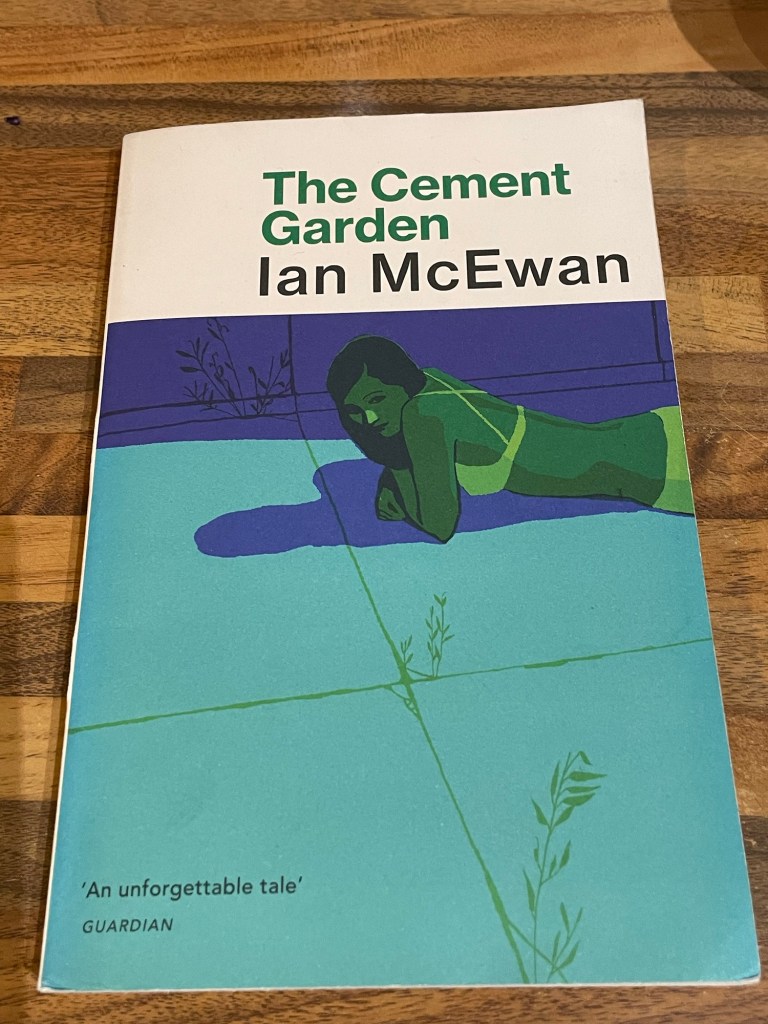
This first novel by Ian McEwan, first published in 1978, is short (just 152 pages), but in common with much of the author’s work, it packs a disproportionate punch and is deliberately disturbing.
The story relates the experiences of four siblings, Jack (13) – the narrator, Julie (17), Sue (12) and Tom (6), who are forced to adapt when they find themselves orphaned by the unexpected deaths of their father and mother in fairly quick succession. Mindful that they needed to avoid the attention of the authorities, but ill-equipped to cope with the mundane expectations of the adult world, their respective struggles reflect the characters’ disparate ages and natures. Yet, their collectively grim existence is lightened only by the the macabre unfolding of the kids’ latent vulnerability and the attendant black humour, which staves off, at times, the fear threatening to engulf them all.
There are perhaps faint echoes of ‘Lord of the Flies’ (1954), but the reader’s unease stems in part from the worryingly plausible actions of the teenagers, drawn into a parentless world with no safeguards to deter some guileless decisions. What has subsequently become the trademark flourish of McEwan’s use of language is in evidence in this debut novel and marked him out as an author to watch. Some seventeen novels and six nominations for the Booker prize (to date) later, the author rarely disappoints.
Moreover, in this example, the titular ‘cement garden’ offers a metaphorical legacy of the main characters’ late father, a brutally minimalist approach designed to blanket the natural outside space, but also inadvertently incarcerating the children’s lives within.
 BurfoBookish