Morse bows out…

9:23 AM 25 AUGUST 2017

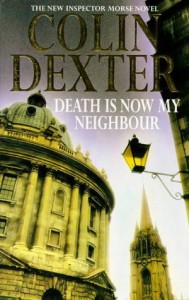
The final book (13/13), in the series of crime novels featuring Chief Inspector Morse and a bravura performance from the great detective (and his creator), on which to bring down the curtain. For all his foibles and personality flaws, the irascible Morse stands tall among the pantheon of fictional sleuths and in spite of deteriorating health, he remains the best that Thames Valley CID can put in the field. And, in this tale, a particular focus is shone on the respective relationships between Morse, DS Lewis and Chief Superintendent Strange, which only adds to the feeling of a finale.


The unsolved murder of nurse, Yvonne Harrison, the previous year is a source of bitter regret for Strange and with his retirement looming, he would dearly like to leave a clean slate. However, notwithstanding the determined coercion of his superior officer, Morse is reluctant to take the case, to the point of outright insubordination. Lewis, suspecting that Morse perhaps had an historic entanglement with the victim, gets the re-opened investigation underway, but finds Morse popping up ‘unofficially’, usually ahead of his own inquiries.


Between the family members (husband, daughter, son), a series of lovers and the closed ranks of the local village, the list of suspects is lengthy. However, it is gratifying to see Lewis, unaccustomed to leading proceedings, take up the mantle, as the continued deterioration in Morse’s health hampers his involvement.


Reflections from each of the policemen are also poignant. For example, Lewis observes that “his own service in the CID had been enriched immeasurably because of his close association, over so many years now, with his curmudgeonly, miserly, oddly vulnerable chief”. In his turn, Morse takes to writing down his latest thoughts on the case, almost as a premonition or at least an insurance against his unpredictable health concerns. In the event, the case is chased to an elaborate conclusion, with the author twisting and turning to the last, but the loss of Morse, by comparison, overshadows a rather mundane and tawdry outcome.


For a brief moment, even Lewis has cause to consider the ethics of his hero’s apparent actions, but happily Morse’s reputation for authentic leadership emerges untainted. Moreover, it may speak volumes that as a reader, I also mourn his passing. Still, while television indulges in imagined sequels and prequels, the series of books crafted by Colin Dexter remains the undisputed origin of a truly exceptional literary character. May they both rest in peace.

Rating: 4.5 out of 5.

Colin Dexter still at his peak!

12:13 PM 18 AUGUST 2017

Book 12/13 and the penultimate novel in the series of murder mysteries confronted by Chief Inspector Morse of Thames Valley Police. And after the sombre tone of “The Daughters of Cain”, a more emollient and less emburdened Morse takes to the fray, centred on the race to succeed Sir Clixby Bream, retiring Master of Lonsdale College, Oxford.


There is something immediately intriguing about peering behind the dense curtain surrounding such elites and for the reader it is unsurprising to learn that superficial impressions will prove as important as academic substance. Indeed, for the only two candidates (Julian Storrs and Denis Cornford) the stakes could scarcely be higher, a once-in-a-lifetime opportunity for elevation and preferment expected to culminate in a knighthood. But, for such a prize, ambition and even ruthlessness may be required, to burnish reputations, curry favour with the electorate and suppress unhelpful information.
Both contenders also have the dedicated support of a wife, but a crude ‘SWOT’ analysis might conclude that the ‘strengths’ and ‘opportunities’ conferred by their respective partners are at least balanced by the attendant ‘weaknesses’ and ‘threats’. Certainly the vulnerability to be exploited from past mistakes/experiences looms large in this tale, extending even to Morse. However, notwithstanding the opprobrium directed at ‘blackmailers’, as abusers of power, there is also a dearth of sympathy for the disempowered ‘victim’, or the manipulated.


What endears Morse to the reader is his candid, but paradoxical unwillingness to defer to authority figures and yet clinging to his own superior status. Only DS Lewis, intermittently coveted as a friend, is thus protected, in spite of outbursts of insubordination and frank observations, intolerable from any other quarter. In this book, Morse also continues to experience deteriorating health and the two detectives are inexorably drawn closer together and in the ultimate, touching confirmation of Lewis’ favoured status, the enigmatic Morse shares his Christian name (via correspondence, of course).


Along the way there is the customary flawed hypothesizing, analysis, building and rejigging of the facts, before the final puzzle is expertly revealed. My favourite analogy of Morse’s thought process was of a train passing through a station, too fast to read the nameplate, but as the carriage slows the location may hove into view.
Again, Dexter has deftly juxtaposed the traditional façade of high academic establishment with base human behaviour. That the privileged miscreant can be humbled before the law is reassuring, even satisfying. Still, even Morse has limitations to his moral authority and contemptible characters slip through the net, but at least he makes a positive difference.


Notwithstanding the CWA daggers liberally awarded throughout this series of books, I think this may yet be my most enjoyable read. Perhaps, not the most complex or devious puzzle, but more for the development of the main characters and the masterful set up for the final book. Bring it on!

Rating: 5 out of 5.

‘The Hours’ well spent

9:24 PM 8 AUGUST 2017

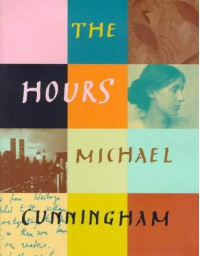
This short book was winner of the Pulitzer Prize for fiction in 1999 and takes as its start point the graphic suicide of Virginia Woolf. The tragic loss of one of the leading lights of the ‘Bloomsbury Group’ in 1941, finally succumbing to the fatal depths of recurrent depression at the age of just 59, conferred a profound loss on the cultural health of a nation, yet posterity has rightly lauded the author’s legacy. In his homage to Woolf, Michael Cunningham interweaves the thoughts and experiences of three female characters: Mrs Woolf (Virginia), Mrs Brown (Laura) and Mrs Dalloway (Clarissa), Located in 1923 London, 1949 L.A. and 1990s New York , respectively. Virginia is mulling over ideas for the fictional character yet to inhabit her most famous novel, while Clarissa and Laura are spending a day in preparation for a celebration in their respective times and place. Successive chapters rotate between the discrete storylines  culminating in an unusual cross-over in the end, but the snapshots also draw on some common themes, which beset each of the protagonists, irrespective of the prevailing social norms in ‘their’ time.

What rescues the book from a sense of cerebral indulgence on the part of the writer though, is the moving beauty of the language and as the reader quaffs down the pages like a smooth, warming liqueur, it is good to savour the interplay of quite sumptuous tones. It also remains consistent with the ‘stream of consciousness’ storytelling deployed by Woolf in ‘Mrs Dalloway’ (published 1925), albeit this example is not entirely satisfying, given its fragmentary nature and slightly bitter aftertaste

Still, the takeaway theme for me from this book is the individual capacity, indeed responsibility, to create and shape one’s life, within the context of the prevailing time and to weigh the personal sacrifices and gains that attend our choices. Some of the metaphors were also interesting, for example, some mistakes such as cake-making are retrievable, others require stoicism to deal with the consequences, but when it comes down to it, life and love is fundamentally fragile…and fickle.

Rating: 4 out of 5.

Hell hath no fury….

1:08 PM 30 JULY 2017

Book 11/13 of the crime novels involving Chief Inspector Morse and as the great detective contemplates retirement with his boss (Superintendent Strange), we are faced with the prospect of an illustrious career running into the buffers. Certainly this investigation, which starts with the murder of Dr Felix McClure, has a familiar level of complexity, but it also seems to lack the dynamism of earlier challenges. The case passes belatedly to Morse and Lewis, when the wife of the incumbent detective, Inspector Phillotson, falls ill. Typically cynical, an underwhelmed Morse wonders whether the withdrawal of his colleague has more to do with Phillotson’s competence than the health of his partner. Still, the subsequent death of Mrs Phillotson pricks Morse’s conscience and perhaps connecting with a sense of his own mortality, he discreetly contacts the bereaved in an unusual demonstration of empathy. Indeed, the book is tinged with a sombre tone throughout, as Morse simultaneously navigates the murder inquiry and his own dip in health, even provoking unlikely, though short-lived, attempts to curtail smoking and drinking!

As always, the loyal and diligent DS Lewis anchors Morse in mundane reality.

“Lewis said nothing. He knew well where his duties lay in circumstances such as these: to do the donkey-work; to look through everything, without much purpose, and often without much hope.” 

Yet, when Morse shares his intention to retire the following autumn, the sadness experienced by Lewis is magnified by an impending sense of loss and the realization that a dimming of his brightest days must also follow. Lewis is conscious that his function is largely a supporting role, to undertake the ‘heavy lifting’ that enables the divaesque Morse to give vent to his exceptional powers of deduction, but Lewis is also a dedicated cheerleader and his undoubted optimism in his hero’s capacity is endearing.

Given Morse’s lustful tendencies towards the fairer sex, it is perhaps poignant that this latest case should centre on three female suspects. Amid the bewildering convergence of murder, drugs, prostitution and theft, Lewis echoes the thoughts of the reader when he observes, “Morse nearly always got things hopelessly, ridiculously wrong at the start of every case”, but we can also share Lewis’s expectation that the ability of Morse to unlock the presenting puzzle, will culminate in the similarly predictable resolution.

I have commented previously on the implausibility of Morse’s dalliance with beautiful protagonists (sometimes suspects) and again in this book his Achilles heel is exposed. Still, as the character ages and becomes more physically frail, there is something mildly pathetic and sad, as Morse succumbs to his own vulnerability, as well as dicing with that of another bruised soul. However, there is something intriguing about flawed genius and this book is as absorbing as those which have gone before, but perhaps I share a touch of Lewis’s foreboding and disappointment at the inexorable dimming of such brilliance. Just two book left in the series…

Rating: 3.5 out of 5.

Go Wild!

10:25 PM 21 JULY 2017

This was my first experience of work by Canadian author, Jeffrey Moore and perhaps to the author’s credit ‘The Extinction Club” isn’t easily pidgeon-holed. It’s certainly thrilling, but there are also elements of brutal crime, a key character (Celeste) is a teenager, but it’s not really a ‘young adult’ novel, at one point crumbs even seemed to be leading down the path of a ghost/monster story, but no. What does stand out is the use of the book as a brash exposé of the abject capacity of man for cruelty and the depraved abuse of wild animals, as well as their own kind. Designed to be hard-hitting, in parts the book adopts the tenor of a documentary and yet the tension builds from the classic clash of good and evil.

Nile Nightingale is an unlikely hero. Hiding out in the Laurentian mountains of Quebec, from a series of stateside misdemeanors and a litigious ex-partner with designs on his inheritance, the recovering alcoholic is in poor shape. However, when he rescues a discarded burlap sack from sinking into marshland, he discovers inside 14 year-old Celeste, beaten and stabbed. Both damaged by their respective experiences. Nile and Celeste contrive to rehabilitate each other and rediscover the spirit to not be cowed, but rather to find the courage to stand up for what it right.

For Nile especially, the adventure smacks of a chance for redemption, but brimming with challenge, the temptation to take the path of least resistance is palpable. In describing the burgeoning connection of the main characters the book is also touching and ultimately demonstrates that humankind is simultaneously capable of great virtue and altruism, which can set the species apart.

Thus, by casting a light on the dichotomy between the hunted and the hunters, Moore alludes to the possibility that the abuse of power is the greatest weakness of all. Still, for all the uncompromising wildlife protection zeal, Moore’s inclusion of wacky cameos, such as Welshman Myles Llewellyn, at least confers a little lightness to the barbarous gloom. Bore da! 

Rating: 3.5 out of 5.

Morse goes temporarily missing…

3:55 PM 15 JULY 2017

Book 10/13 of the crime novels involving Chief Inspector Morse and I think on balance this is my favourite so far. Clearly, the fact that it won Colin Dexter the CWA Gold Dagger (again) in 1992, for the best crime novel of that year confers a gilt-edged pedigree, but within such an impressive series of high quality works of fiction (one might even call them ‘bodies of work’), this example stands tall.

On a rather random whim, Morse decides to take a holiday and notwithstanding his negative past experiences of such ventures, he books into The Bay Hotel, Lyme Regis, Dorset. The absence allows time for Morse to ponder a riddle spotted in ‘The Times’, apparently concerning the year-long police investigation into a ‘Swedish maiden’, missing in Oxford and follow the subsequent responses of editors and readers in the correspondence columns. At home, when the media starts asking questions, the absence of his star detective also confirms Superintendent Strange’s determination to place Morse in charge of the stalled investigation upon his return, even tasking DS Lewis with trying to entice Morse back early. And thus, amid such expectations the detective duo are back in harness.

In common with the other books in the series, Morse manages to lust over and make lasting impressions upon several interesting female characters. But, we also get to see more of the ‘below-the-waterline’ complexity of Morse in his self-imposed emotional isolation. This is particularly true when Morse hurries to see his colleague Max, in the hospital, but also in the unaccustomed warmth, which DS Lewis alone seems to rekindle. Indeed, once again it is Lewis who is the “catalytic factor in the curious chemistry of Morse’s mind.”

This book also introduces pathologist, Dr Laura Robson, for the first time. A feisty Geordie, the fair Laura quickly takes to verbal duelling with Morse, but the instant respect she has commanded also bodes well for how her relationship with the Chief Inspector (arch sceptic of the forensic sciences) will play out in the remaining volumes.

One of the interesting traits of Dexter’s work is the genteel veneer through which he filters the attendant brutality of violent crime. Morse rarely casts judgement, simply assembles the facts and dispassionately solves the presenting puzzle. In fact, what I regard as the ‘Oxford effect’, often gentrifies quite sordid circumstances and occasionally leaves Morse and his unrefined proclivities seeming quite tawdry by comparison. Still, in this novel, Morse seems more relaxed (perhaps an expression of holiday fever, or the reminder of his own mortality) and openly closer to Lewis. For example, Morse even entrusts his sergeant to interview the missing girl’s mother, dispatching Lewis to Stockholm. Albeit such delegation pragmatically side-stepped the Chief Inspector’s fear of flying, the decision also highlighted his dependence on the dogged efforts and boundless support of Lewis.

Again, Morse confidently posits a hypothesis based on the seemingly impenetrable array of facts, which in turn is dismantled by the developing evidence, only to be adapted anew as Morse sculpts out the truth, until the final explanation is revealed. In this case a very satisfying conclusion and the usual acknowledgement that you have to hand it to Morse – he is clever!

Rating: 4 out of 5.

A Plum Novel

12:31 AM 7 JULY 2017

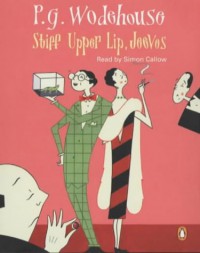
Few writers can raise a smile to the lips after just one paragraph and have me snortling by the end of the first page. But then, P.G.Wodehouse remains an exceptional talent and in Wooster & Jeeves he created a rare literary tonic. Described by the Society (UK) bearing his name as “the greatest humourist of the twentieth century”, Sir Pelham Grenville Wodehouse (affectionately elided to ‘Plum’ by friends and family) has also retained the capacity to lift spirits into the new millennium. Clearly he was a writer of his time, replete with well-defined British social strata of the 1920’s and 30’s, but it is surely his ability to lampoon the elite classes and etch caricatures such as Bertie Wooster and Aunt Dahlia into the national consciousness, which is his greatest legacy.

In this short novel, against his better judgement, Wooster is lured to Totleigh Towers, Gloucestershire, home of Sir Watkyn Bassett, to rescue the faltering engagement of long-term friends ‘Gussie’ Fink-Nottle and the daughter of the host – Madeline. This is not entirely an altruistic act, since Bertie has every reason to believe that should the betrothal not be realized, he may be expected to step into the breach in Madeline’s marital prospects. This is consequently a matter of paramount concern to Bertie, dwarfed only by the abject horror such a turn of events would visit upon Sir Watkyn!

Thus, the familiar entourage is transported to the country, where ‘Gussie’, ‘Stinker’ Pinker, Roderisk Spode, ‘Stiffy’ Byng, Emerald Stoker, et al proceed to dispense the farcical social carnage, which generally accompanies their ludicrous interactions. And once again it falls to that paragon of calm, Jeeves (Bertie’s valet) to divine a course to preserve his employer’s bachelor status and simultaneously settle a whole series of potential disruptions. A wondrous spin through something akin to the Hatter’s tea party, but what a great time is to be had in this company!

Rating: 4.5 out of 5.

Revenge – a dish best served cold…

12:26 AM 1 JULY 2017

Book 9/13 relating the mysterious work of Chief Inspector Morse and his colleague DS Lewis. On this occasion, Oxford and three of the city’s copious academics are playing host to a busload of swanky American tourists, billeted in the splendid 5* Randolph Hotel. However, the visit is more significant than belied by the group’s local itinerary. One of the tourists is due to donate a jewel encrusted artefact, owned by her late husband that will be rejoined with the famous ‘Wolvercote Tongue’, housed in the Ashmolean Museum, for the first time in centuries. That is, until the benefactor dies suddenly and the valuable buckle goes missing. Only Morse is keen to delve into the apparent coincidence of a tragic, but natural death and stolen property. When two days later a naked, battered body is fished out of the River Cherwell, it seems Morse may have been right to be sceptical about such apparently random events, but establishing the connections is a complex and daunting puzzle.

Intriguingly the famous red MkII Jaguar driven by Morse and emblem of the TV adaption starring John Thaw, in reality gets its first mention in Chapter 18 of the ninth book. Until this point, Morse had driven a rather less iconic and more inconspicuous Lancia. Somehow it felt like it should be a watershed moment, but it is after all, just a set of wheels.

Appearing as it does between two CWA Gold Dagger-winning books (‘The Wench is Dead’, 1989 and ‘The Way Through the Woods’, 1992), this 1991 novel clearly stemmed from a rich vein of form for Colin Dexter. Certainly, ‘The Jewel That was Ours’ is a potent blend of intricate plot, imbued with lavishly dramatic characters, inhabiting the complementary elite domains of academics and the wealthy. Both in their turn foster hypocrisy and arrogance, but the reader sits safely in the knowledge that, in time, Morse will expose the pretentious and the guilty. Not that Morse isn’t equally endowed with such human frailties, but with Lewis alongside, to keep him honest, the Chief Inspector is able to give full rein to his deductive powers.

In another cameo appearance, the pathologist (Max) continues to antagonise Morse, while also denying him any tangible forensic advantage. The gallows humour between them and the exasperation effected by Morse is quite comical and yet they share an undercurrent of mutual respect, which is also quite touching between these heavyweight doyens. 

Overall this is one of the more satisfying volumes in the set and the descriptions of parts of Oxford made it all the more compelling.

Rating: 4 out of 5.

Truth has no ‘Best Before’ date…..

11:00 PM 18 JUNE 2017

8/13 of the series of mysteries involving Chief Inspector Morse and I was looking forward to this book, safe in the knowledge that it had secured for Colin Dexter the CWA Gold Dagger, for ‘Best Crime Novel of the Year’ (1989). Certainly the storyline was something of a departure, in that Morse deploys his formidable cerebral resources to solve a murder reportedly committed in 1859 and for which two men were hanged. Moreover, for the most part, Morse is hospitalised for treatment of a perforated ulcer and yet, this enables his faculties to be given full rein, albeit he also enlists the help of DS Lewis and a visitor who works at the Bodleian Library to undertake the leg work.

The John Radcliffe Hospital proves a fertile territory for Morse to fantasize about the nursing fraternity and flirt with several women ensnared by his blue eyes, though youthful nurses and faltering health do also bring the Chief Inspector uncomfortably before the realization that he is getting older, with a diminishing future.

The book is shorter than most in the series, but the pace of the story is well maintained and the crime took place on the Oxford Canal, when narrow-boats remained crucial to the lifeblood of commerce, giving the plot an additional curiosity value. The fact that two boatmen had also been found guilty of the murder of Joanna Franks, an attractive passenger on the Pickford & Co.’s express (or ‘fly’), non-stop boat-ride to London and been sentenced to death, while a third was subject to transportation, simply added to a frisson of suspense. As Morse sought to critique the original investigation at a distance of more than 150 years, the reader bears witness to a consummate puzzle-solver, revelling in the mental challenge! This may be the most vulnerable that we have seen Morse so far and yet, in this tale, he is also at his most perceptive and most likable. 

Rating: 4 out of 5.

When the Honeymoon is Over…

7:37 PM 16 JUNE 2017

I have been an admirer of Ian McEwan’s writing style since my introduction to ‘Atonement’ (see earlier review) and when The Times listed him among “The 50 greatest British writers since 1945”, I can plainly see why. By comparison, I was less enamoured by ‘Solar’ (also previously reviewed), but my latest dip into the McEwan listings, the novella, ‘On Chesil Beach’, is in many ways a quite remarkable piece of writing. 

Firstly, the book, comprising just 166 pages, split into five parts, is exquisitely crafted. The author’s use of language is concise, but sumptuous and though short, the book packs a complex emotional punch, which the reader shares with newly weds Edward and Florence. From undiluted joy to excruciating despair, the couple’s developing insights are naive and poignant in equal measure and McEwan tackles head-on the nature of intimacy and passion as they nudge towards the consummation of their marriage.

For the bulk of the book, the author succeeds in slowing time, launching back from the wedding day in successive reflections that map the couple’s respective journeys. Each from very different backgrounds, Edward and Florence have managed to rise above the shortcomings of their parentage and by some quirk of serendipity, to find each other, which is of itself heart-warming. Yet, the book exposes potential flaws in the superficial 1960’s courtship ritual and the brittle, untested facade, which they have contrived to create. There is little doubt that they love one another, but is it enough and can they fashion a workable compromise, on which to build a life together?

Perhaps some matches are made in heaven, but to succeed they have to be made to work at the human level. In this frank and at times crude exploration of ‘need’, it seems clear that we can be a fickle bunch, and even among the well-educated, sometimes held hostage to irrational base instincts. 

Rating: 4.5 out of 5.