At the going down of the sun…

3:49 PM 21 APRIL 2019

The passing of the one hundredth Remembrance Day since the end of the Great War 1914-18, last November, gave good reason (if it was needed) to revisit some of the written records of that gloomy period of European history. Often poignant, the poetry, letters and tragic lists of the fallen offer reminders, lest we forget, of the sacrifice of a generation. However, given the colossal loss of life, what sometimes appears absent from contemporary accounts is a view from the non-commissioned ranks, a ‘Tommy’s’ experience from the trenches of the front lines. As such, this memoir by Cpl Sam Sutcliffe, collated/edited by his son Phillip, offers a telling insight into the chaos of conflict visited on so many and the mind-set of those so often cast as ‘cannon-fodder’. Even allowing for the retrospective writing of this lengthy book, the vivid descriptions created by the author and the accompanying endnotes, cross-referencing a wide range of confirmatory material, make this a sobering but compelling read.
The title of the book gives an immediate flavour of the self-effacing humility of the author and yet he goes on to describe joining up aged just sixteen, with his older brother (Ted) and friends (in fact, Sam lied about his age, as the youngest recruit allowed was 19). The swell of public patriotic fervour in 1912 and the casual acceptance of the need to do ‘one’s duty’, in hindsight, seems naive. Moreover, the apparent absence of apprehension suggests a misunderstanding of the carnage of war. The phlegmatic acceptance of Sutcliffe’s parents to their young son’s decision also perhaps an echo of the national willingness to tolerate sacrifice. Though later, conscription became necessary and through his journey the author develops a certain cynicism about those who avoided service altogether and those who sought to distance themselves from the trenches at the front line, tempered only by the psychological breakdowns he witnessed there.


Subsequently Sutcliffe’s tender age did confer a temporary reprieve. Still not eighteen, the author had already fought in the ill-fated Gallipoli campaign and the first battle of the Somme, rising to the rank of acting Sergeant, when he was plucked briefly to safety until 1917 (when he became nineteen) and could be returned to the western front, in time for the anticipated Spring offensive. Captured during that monumental effort by Germany to end the war, Sutcliffe relates his subsequent experience as a prisoner-of-war and an equally challenging personal struggle to just stay alive and survive the attendant risk of disease and privation.


This book is an extraordinary account of a teenager’s experience of a brutal conflict that culminated in a vast body count. After Gallipoli (wherein having been evacuated his unit was returned to cover the withdrawal of the foremost positions), the author laments the decimation of his original battalion of volunteers from London, culled from a thousand men to around just two hundred. Indeed the scale of this loss appears to haunt Sutcliffe throughout his account and his perspective clearly changes regarding the veneer of national pride, which he sees laid bare amid such abject failure.


At times the book reads like a novel. For example, the author is separated from his brother early on, but their paths cross several times in the course of the war. Yet, there is no disguising the sense of relief when the siblings both survive, albeit Ted’s exposure to gas in the trenches had a lasting effect. No commentary on the strategic mistakes pored over by historians in subsequent decades, nor criticism of the class system which conferred leadership roles on some ill-equipped to inspire others, though Sutcliffe does single out a couple of officers revered for their compassionate and resilient example, who did indeed lead from the front. Nonetheless, the reader is left with the distinct impression that notwithstanding his protestations to the contrary, Sam Sutcliffe’s contribution was indeed heroic and it is the collective efforts of many such ‘nobodies’ and a preparedness to do their ‘bit’ that ultimately made the crucial difference. We shall remember them…

Rating: 4 out of 5.

The “Darling” Days

2:01 PM 7 APRIL 2019

This proved a curious novella, from a writer unfamiliar to me, with echoes of those black and white Ealing Studio movies, where the British cast spoke in plummy tones and the criminal classes were still referred to as ‘rascals’ and ‘scoundrels’. Less surprising when the reader realises that Henry Cecil is the pseudonym of Judge Henry Cecil Leon (born 1902), yet the humour coursing through this charming tale does make it satisfying, albeit in a rather nostalgic way.


Cambridge-educated, Cecil was called to the bar in 1923 and post-World War II was appointed a County Court Judge in 1949. Still, it is unusual that such a pillar of the establishment should expose some of the potential absurdities of the law and how it might play out within the vagaries of ordinary lives.


In this example, the reader is introduced to Mrs Harriet Hunt, who was successfully married to her husband (Graham) for twenty years, when without warning, he disappeared. That was seven years ago. Having experienced the predictable gamut of emotions, Harriet might have reasonably assumed Graham was dead, when he did not return home or make contact. However, the arrival of a mysterious cheque for £100 every month since, from a firm of solicitors, lent probability to her husband’s survival and increased the likelihood that he had in fact run off with another woman. Harriet continued to be perplexed by such a scenario, when she felt certain they had been happily married, but she was also hurt by the possibility that Graham might have ‘pensioned her off’ in this way. Still, in the light of the prevailing evidence she reluctantly accepts the need to settle the future and having been pursued assiduously by the couple’s former friend, the gentle George, seeks to petition the court for a divorce.


Stage set and having sealed the legal argument with an agreement to go to bed with George later that evening to consummate their relationship (to be followed by supper), Harriet returns home to find Graham has also returned, just as suddenly as he departed.


In his mild and comical approach to this story, Cecil almost imperceptibly weighs complex issues, such as the disparity between the moral and legal status of marriage, the expectations of men, women and society and the meaning of ‘love’. For the contemporary reader it might appear dated and yet I suspect, if one cares to settle down with a ‘whisky and a splash’, this is a funny, short, but welcome glimpse of a mythically  halcyon era.

Rating: 3 out of 5.

Short but Sharply Provocative Masterpiece!

1:40 AM 17 MARCH 2019

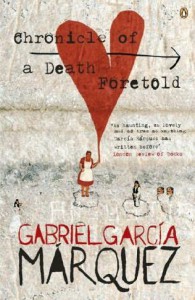
Gabriel Garcia Márquez was awarded the Nobel Prize for Literature in 1982, following “Chronicle of a Death Foretold”, which was published the year before. This short novella (122 pages) was generally lauded as a masterpiece and translated from the original Spanish, it is clearly a complex literary exploration of individual and collectively-held values and the moral standards underpinning them.


Set in a small, diverse Caribbean community, the opening sentence immediately peaks the readers curiosity:–
“On the day they were going to kill him, Santiago Nasar got up at five-thirty in the morning to wait for the boat the bishop was coming on.”


Notwithstanding the proximity of ‘the church’ and the attendant moral authority, the most heinous crime is about to be perpetrated. The plot goes on to test the case for an ‘honour killing’, in undermining this most fundamental of commandments and the complicity of individuals and society in rationalizing the sacrifice of an ostensibly innocent man. In spite of the subsequent handwringing, the acceptance of the concept of dishonouring an individual, a family, a community, breathes life into a chain of reactions and responses, which culminate in a barbaric, unchecked thirst for revenge, on behalf of victims, apparently unable to withstand the expectation of social norms. And there are a series of ‘victims’ and consciences to be expiated.


However, the ambiguities discovered through the author’s examination of the circumstances and subsequent reflections seventeen years later give credence to the possibility of fate, yet the certainty that the killing solved nothing and surely failed to salvage any sense of honour.


This book is provocative and deliberately harrowing in its dissection of a community through the lens of a murder enquiry. Moreover, it questions our capacity for independence within a human hive.

Rating: 4 out of 5.

Lonesome Wooster

10:18 AM 23 FEBRUARY 2019

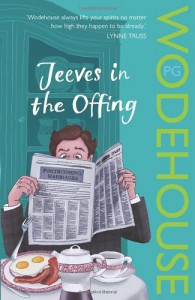
This slim volume was first published in 1960 and appears three quarters of the way down the lengthy list of Wodehouse novels featuring the inestimable Jeeves. In fact, in this episode the celebrated gentleman’s valet quickly departs for a holiday in Herne Bay, Kent and helps decide Bertie Wooster to accept a summons to his Aunt Dahlia’s ‘rural lair’. Ordinarily one of the highlights of the series is the interplay between the two main characters, however, with Jeeves absent for most of the tale, Bertie is without his customary foil, which at times feels like just half of a double act. The plot works though and the other characters aid the comic moments, but Bertie, unprotected by the attentive Jeeves, does feel somehow incomplete.


While her husband (Uncle Tom) has gone away to schmooze a wealthy business partner and get an important deal over the line, Aunt Dahlia must host the other abandoned spouse (Mrs Cream) and her son (Wilbert), ensuring that nothing is done to jeopardise the deal from afar. Joining the group for the weekend at ‘Brinkley’ is Lady Wickham’s daughter (Roberta), whose reputation as a prankster precedes her; Aubrey Upjohn, former headmaster at Wooster’s preparatory school; and Upjohn’s stepdaughter (Phyllis). But for Jeeves absence, Bertie would have avoided such a toxic brew, but consoled by his journalist friend, ‘Kipper’ Herring and reminded that at least the party would enjoy the delights of Chef Anatole’s kitchen, he relents. Still, ahead of his departure, Bertie gets a call from a distraught Lady Wickham, who has discovered in ‘The Times’ the announcement of her daughter’s engagement to Bertie. Intriguingly this is also news to Bertie. Yet, since his former proposals of marriage to Bobby Wickham were so unceremoniously rejected, Bertie rightly deduces that a game is afoot.
As usual, the rather pleasant-but-dim Bertie is cast as an important cog in the machinations of others, in which he is destined to be the weak link. The final outcome, of course, being the culmination of unintended consequences and a belated intervention by Jeeves.


Poking fun at the aristocratic classes, masterfully manipulated by their intellectual superior in Jeeves, remains a rich seam, well mined by Wodehouse. However, it is the interplay between beloved characters, the past era of gentry and intricate plotting, which the author satirizes so mercilessly. For the reader, this familiar though ridiculous portrayal of a bygone age remains a glorious example of English farce.

Rating: 3 out of 5.

Blunt, Heads & Laughter in Gloomwood!

14:04, 8 November 2020

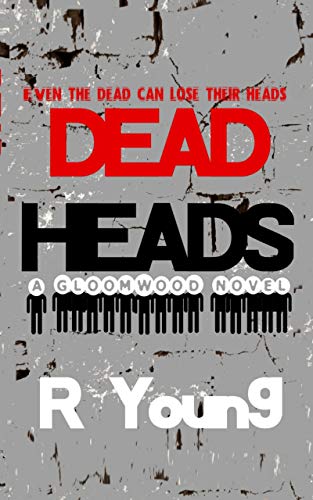
For Twitter followers of Ross Young (@InkDisregardit) it may be unsurprising to learn that his debut novel, “Dead Heads” is an irreverent comedy. Notwithstanding the contested nature of the afterlife, the author’s depiction of ‘Gloomwood’ (a city located somewhere beyond the living sphere) is a far cry from the common expectations of paradise. Yet, it is perhaps consistent with a realm overseen by the Grim Reaper – grey, depressing….grim.

Still, though populated by the dead, when members of the great and the good start being mysteriously decapitated, the city administrators look to the newly-arrived Detective Augustan Blunt to stop the carnage and unravel the strange ethereal events. Such a surreal premise might discourage some readers of contemporary urban fantasy, but the characters are well-drawn and the world constructed by the author is fascinating in all its detailed weirdness. However, it is the dialogue and crisp one-liners that give full rein to the author’s dry humour and the inventive nature of his story-telling. For example, I just love the idea of being collected from the ‘deathport’ by a reaper in a hoodie!

Ross Young is an unfamiliar indie writer to me, but this outing has fuelled my curiosity and this first Gloomwood novel is a promising platform for future stories and the further development of a funny cast of characters. Somehow this book just seemed to resonate with the surreality of our time and laughter born of dark humour may be our best antidote in the face of the COVID tragedy, at least for now.

Rating: 4 out of 5.

Chinese Whispers…

10:52 PM 14 JANUARY 2019

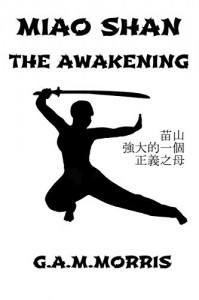
Ahead of the publishing of “Mia Shan, The Awakening” (15/1/19), I was given the opportunity for early access, in return for an honest review. The book is not easy to pigeonhole, bearing traits of various fantasy subgenres – historical, dark, paranormal and urban. However, I suspect the prominence of Chinese martial arts and the attendant violence is likely to have a greater bearing on the readership, than some notional category. I am not a fantasy buff by any means, but neither does the reader need to be, to engage with this interesting saga, which opens in Hong Kong at the end of the nineteenth century.


The narrative follows the development and exploits of Chow Lei, aged ten at the outset, who is orphaned and raised by her grandmother (PoPo), above the family’s thriving noodle shop. The family matriarch worships Guan Yin, the bodhisattva of compassion and mercy and is relying on the venerated idol to keep her granddaughter safe, but though Lei discovers an exceptional ability to master martial arts, compassion is not one of her strengths. Still, in spite of her PoPo’s reticence, Lei is sent to the Shaolin Temple at Seng Shan to be admitted as a novice nun, to continue her training.


For those of us brought up on David Carradine playing Kwai Chang Caine in the seventies TV series ‘Kung Fu’ and more recently the critically-acclaimed movie “Crouching Tiger, Hidden Dragon”, there are familiar archetypes, which unless handled carefully run the risk of appearing a little tired. The superhuman qualities typically conferred on the protagonist are also expected, but need to be plausible. The author neatly avoids these traps by suggesting Lei might be the prophesied Bodhisattva of Justice. Certainly to master the eighteen fighting styles in two years is unique, but Lei’s ongoing absence of compassion for her adversaries, alongside a very definite view of right and wrong, continues to worry her Shaolin Master (Shi Suxi). Indeed, in a very Star Wars-esque moment, he exhorts Lei, “You must know the void and be one with the void. You must know how to avoid the dark ways and follow the path of enlightenment….”


Now re-named Miao Shan and equipped to address injustice head-on, Lei returns to her city, a mighty sword-carrying bulwark against powerful criminal evil-doers.
It’s a familiar formula, but on the whole, the author has created an entertaining novel, which has scope for sequels. What it lacks in characterization, it certainly makes up for in the action department and for fans of kung fu that doubtless helps the readers’ appreciation.

Rating: 3 out of 5.

Three’s a charm…

9:20 PM 10 NOVEMBER 2018

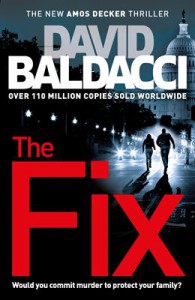
A third novel featuring detective Amos Decker and the FBI team, of which he is a member, is on the up. After their recent success (see “The Last Mile”), Special Agent Bogart’s people are on the move to Washington DC, to bring their skills to bear on some criminal action in the capital. Decker does not welcome the disruption. But, when a man walking in front of him by the Hoover Building shoots an apparently random woman and then himself, these are not the kind of events Decker can shrug off. Cue a convoluted investigation with more twists and turns than an Olympic diver!


In common with the best thriller writers, Baldacci deftly maintains an almost breathless pace at times. However, the presence of familiar characters from the earlier novels in the trilogy and their deepening relationships with the key protagonist are also interesting.
Decker remains a fascinating anti-hero and something of an enigma. The value of his prodigious memory (legacy of a head injury sustained in his lone NFL appearance) is well understood by his colleagues, but increasingly they also grasp the significant cost to Decker’s social functioning. Despite their efforts, at times, Decker feels like a stranger in his own body, unable to revert to the personality that he was, nor resist dwelling on the devastating loss of his family (see “Memory Man”). Yet, his formidable physical and mental presence are used to good effect in this story, as governmental inter-agency pressures and international intrigues simmer, threatening to boil over into lethal destruction at every turn.


Though compelling, Decker’s insatiable, naive drive to find ‘the truth’ seems bound to be manipulated and in this book Alex Jamison (former journalist) is more clearly seen as his self-appointed protector. Yet, the reader knows Decker is incapable of reciprocating her devotion, at least in any romantic sense.


Whilst changing the team’s location has arguably provided the author with a broader canvas, the plot-line in “The Fix” is a more traditional ‘whodunit’ and consequently felt ‘narrower’ and more predictable than the preceding novels. That said, Baldacci has left plenty of scope to develop the character of Amos Decker and his colleagues further. There are also enough loose ends remaining should the author be minded to move beyond the trilogy, which seems the preferred ‘boxset’ of choice currently. All three books weigh in at around six hundred pages, but for me, this final(?) installment is possibly the lightest of the bunch. Worth a read, but lacking the novelty and impact of books one and two.

Rating: 3.5 out of 5.

Intriguing Sequel

1:41 PM 28 OCTOBER 2018

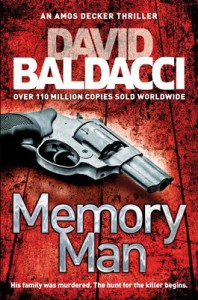
This sequel to the novel “Memory Man” continues the story of quirky detective Amos Decker, following his secondment to a newly-formed FBI unit. After the trauma of the original thriller, in which the main character sought to avenge the killing of his family, a move to Washington offers the prospect of a fresh start. Albeit his experience of hyperthymesia (excessive memory/perfect recall) guarantees Decker’s tragic memories can never fade, even with time, he realizes the need to move on. Still, though his prodigious ‘gift’ continues to enable Decker to process information and formulate hypotheses, in this volume the reader gets a clearer insight into the social consequences of Decker’s acquired brain injury. Whilst his cerebral functioning is clearly an asset, Decker has paid the price of an emotional deficit, which impedes his capacity to connect with colleagues and foster attachments. This makes teamwork a challenge, both for Decker, who is partially aware that he misses social cues and for those around him, who need to create bespoke relationships if they are to orchestrate their efforts. In that sense, Decker is very much an ‘island’ and it is key characters from the first book who seek to bridge his isolation, alongside a former football star on death row, who looks set to suffer the ultimate injustice.


Special Agent Ross Bogart has staked his reputation on making a unique FBI unit deliver results, but with only one other agent in the group, the task is at times like trying to herd cats, in particular trying to marshal Decker’s maverick tendencies. In his former police career Decker had a partner, but he now struggles with close relationships. Yet, journalist Alex Jamison knows that she has been offered a spot on the team because of her affinity with Decker. He responds to her and Jamison in turn is protective and encouraging towards Decker, reaching out rather than treating him as a curiosity.


Of course, making the ‘victim’ a college football star enabled the author to continue to trade on Decker’s brief NFL status and bind the pair of ex-gladiators together. However, the FBI involvement also allows the story to encompass additional resources and a national backdrop, which lends further tension to the story. Certainly Baldacci’s intricate plot-lines are skilfully meshed to create another fast-moving book, with some cleverly crafted antagonists. Indeed, the carefully calibrated depravity of the baddies has the reader willing the knights of justice to success. Corruption, racism, poverty, the abuse of power, these well-worn distortions of the human experience are all present in this book, the dragon to be faced if not slain, in an against-the-odds confrontation. But, for me, the enjoyment of the book is as much about the further development of the protagonist, as the reader gets to see more of the submerged iceberg that is Amos Decker and Baldacci has definitely adhered the old show biz adage, ‘leave them wanting more’…

Rating: 4 out of 5.

Forget Me Not…

5:15 PM 14 OCTOBER 2018

I was recently introduced to the work of David Baldacci by my Dad, who has enthusiastically devoured the Amos Decker thrillers in quick succession. This first in the series introduces the gruff and unlikely hero – ex NFL player and police detective, decimated and made destitute by the collapse of his private world some fifteen months before. However, what makes the rather tragic character of Decker so unusual and compelling is his experience of ‘hyperthymesia’ (excessive autobiographical memory/perfect recall). On the one hand, it does seem like a convenient way of giving ‘superpower’ to a detective, but the narrative actually describes the burden equally as a curse, for the man unable to erase some haunting memories. Still suffering under the weight of his loss, Decker is barely functioning, but is drawn back into his painful past when a man hands himself in and confesses to the murder of Decker’s family. And so the blue touch paper is lit on an explosive tale of murder, intrigue and a battle of wits to prevent further killing and seek justice for the growing number of victims.


Despite being a brilliant detective, Amos Decker is an emotional shell, no longer able to process as he once did. Yet, as well as a triumph of complex plotting, the author’s skill lies in his ability to make the reader care about how it turns out for the flawed main character. Former police partner, pushy journo, FBI special agent are all excellent supporting characters and each realizes Decker is the key to the case and prop him up along the way, recognizing his vulnerability.

It is a masterful example of the genre. Perhaps, the fact that, like my Dad, the final page had me seeking out the title of the sequel is testament to this book’s impact as a ‘page-turner’. Quite dark, the rattling pace is maintained, despite the convoluted twists and turns and in an interesting symmetry the criminals are as unusual as the pursuer. Well worth a read.

Rating: 4 out of 5.

Busman’s Holiday

12:07 PM 26 AUGUST 2018

My 100th review and I’ve been mulling this over for a few weeks. I’m an admirer of indy author, Jane Davis’ work, so much so that I bought my Kindle copy in advance and looked forward to the launch. The author’s customary style is again deployed to good effect and the narrative is engaging and draws the reader into the respective experiences and feelings of the characters, but I think herein lies my difficulty and I stress it is my problem.


The story-lines centre on the aftermath of a major incident at a London underground station (St. Boltoph and Old Billingsgate), in which fifty nine people lost their lives. “For over thirteen years the search for truth – for the undoing of injustice – has eaten up everything. Marriage, friendships, family, health, career, finances.” Such a devastating, albeit fictional, loss of life is clearly fertile territory to examine the sense of loss, anger and despair of those bereaved family and friends left to mourn and the aching instinct for answers (‘why’?), accountability and the public vilifying of the blameworthy.

Unfortunately, this fictional account of a disaster, in which so many perished, has coincided with such an array of actual disasters, still etched in the public consciousness and pored over in the media that we are, sadly perhaps, all too familiar with the post disaster landscape (Grenfell fire; Manchester bombing; Hillsborough; 7/7; 9/11). I’m not suggesting that a novel is an inappropriate platform for exploring the human response to sudden catastrophic loss and the enduring impact that ripples outward. It just seems to me to be an emotional devastation, which may lack appeal if the reader is seeking ‘entertainment’, or an escape from ‘reality’. Though here I should probably record a ‘conflict of interests’, in that having trained as a crisis support worker for such eventualities, it is difficult not to read this book through a professional lens.


In any event, this ambitious book is very well written and the respective discoveries and cathartic journeys of the key bereaved characters are also cleverly offset by the experience of Eric, a law student who comes without the emotional baggage of those directly affected, but nonetheless is grounded in his own life’s challenges. Naturally the experiences of surviving partners, parents, siblings, and friends will be different and Davis handles this diversity well via the delicate parallel plotlines. In some senses the one ‘unknown victim’ is the saddest of all. However, while the toing and froing, pre and post- incident and across the multiple perspectives does confer a certain fragmentation within the storytelling, the narrative is successfully woven to a satisfactory conclusion.


On balance, I think Jane Davis pitches the tone about right. Not so bleak as to trigger compassion fatigue, but not so sanitized as to run the risk of appearing implausible. Fortunately perhaps, most of us can overlook the licence granted to the fiction writer, to fashion an interesting account and Davis has certainly made good on a tricky theme. For me, it’s proved a bit too much like a busman’s holiday, but I acknowledge I don’t have a neutral perspective and shall ponder other reviews to get a more balanced view. That the author should tread here at all does her much credit.

Rating: 4 out of 5.