“Out of the Blue and into the Black”

10:17 PM 29 SEPTEMBER 2019

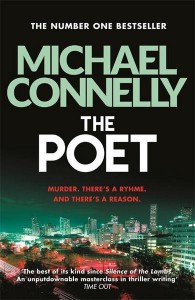
Following my review of book twenty something in the Harry Bosch series (“Two Kinds of Truth”) and the encouragement of several Michael Connelly fans, I have back-tracked to where it all began. “The Black Echo”, published in 1992, marks the introduction of the eponymous detective and is testament to the journey undergone by the main character and the polishing of the author’s style over the intervening years. Connelly is certainly prolific in his output (the latest in the series, number twenty four, is due out today), so I’m keen to understand what is it fuels such longevity and keeps the novels fresh for his legions of readers?

Crime, of course, remains the most popular form of fiction and the author’s brand of punchy, contemporary, thrilling suspense is a dynamic page-turner. Still, Hieronymus Bosch is no Hercule Poirot, or Endeavour Morse (save for bearing an extraordinary name), relying solely on his cerebral gifts. Rather, at least in this first novel, he is also an action hero, more in the mould of Dirk Pitt, a maverick, determined, driven even. Leastways, our introduction to Bosch lays the foundation of a backstory that has the reader immediately curious, about a man of some implied depth, cleverly told through the FBI file held by his temporary partner for this instalment, Special Agent Eleanor Wish and the involvement of Billy Meadows, a former fellow ‘tunnel rat’ in Vietnam.


The horror and brutality of subterranean warfare has echoes of other battles (for example, see the WW1 iteration described by Sebastian Faulks in ‘Birdsong’), but the ability of such experience to shape an individual is surely not in doubt. Bosch the loner, scarred by conflict, yet as a consequence, perversely equipped for the ‘war against crime’. A round peg in the square hole that is the LAPD, he is destined to rail against the system and hold himself accountable to a personal set of values and a conscience that confers far greater integrity. Just as well, since the vultures from Internal Affairs circle, convinced that Bosch is dirty and going down.


A body – it’s a familiar opening to a crime story, but make the victim less random and the cause not so clear-cut as a simple overdose and we’re in business. Create a link to an unsolved safety deposit box robbery, perplexing national agencies – a tunnelling job, perpetrated while Bosch was suspended and the stage is set.


Curiously Bosch has little in common with colleagues and has a ‘marmite’ personality, untroubled by what others think of him. But, he also has a formidable network borne of long service and a reputation for getting results, a trait begrudgingly acknowledged even by his superiors. However, an unexpected secondment to the broader FBI investigation sees Bosch operating in an unfamiliar agency with a new set of rules. It doesn’t suit him better, though in Eleanor Wish he finds a partner and useful ally.


As the evidence mounts and connects to Washington and the chaotic withdrawal of people and wealth from Saigon at the end of the war, it is clear that powerful forces are at work and disrupting the investigation with impunity, possibly from the inside. For once, the fact that Bosch trusts no one is a positive asset. In poignant scenes evincing Karmic symmetry, the detective is fighting for his life in a tunnel and looking for a final clue on the Vietnam memorial, seemingly unable to unshackle himself from the legacy of a futile, dark past.


I really enjoyed this book and I can understand the fascination cultivated among readers for the troubled and damaged soul that is Harry Bosch. I suspect in this opening novel we have glimpsed just the tip of the iceberg created by Michael Connelly and in common with the best of fictional sleuths, it is in the flawed character of Bosch that some of the most interesting aspects of the human experience may be revealed. Book 2 awaits!

Rating: 4 out of 5.

The Last, My First, in a Lengthy Series

10:27 AM 25 AUGUST 2019

Hieronymus Bosch (fifteenth century Dutch artist) is also a great name for a detective with the San Fernando police department and yet I come late to the Bosch phenomenon. Twenty one novels (so far) in the series by Michael Connelly and apparently one of the most watched original TV series on Amazon Prime (in its third season), somehow it had not penetrated the ‘Burfo-bubble’. So, I am indebted to an enlightened friend who loaned me his copy of “Two Kinds of Truth” (Intriguingly the latest in the series, published in 2017), as a useful start point. It proved a good call. Part murder mystery, part thriller, part courtroom drama, the novel galloped along like a Grisham/Baldacci mash-up. Still, Michael Connelly is clearly a skilled storyteller, with an eye for character that makes the eponymous ‘Harry’ Bosch an interesting, if somewhat enigmatic hero.


On this occasion Bosch straddles two investigations. A double homicide at a pharmacy will flare outwards from being local murders, to a symptom of wider organized crime and a challenge to the integrity of a historic case, which saw the detective allegedly consign an innocent man to fifteen years on death row. Thus, jeopardy to life and reputation rains down on Bosch, who must protect both victims and himself from the drenching impact of powerful malign forces.


A former police reporter for the Los Angeles Times, the author utilizes a knowledge of criminal justice process and a journalistic nose for the sensational, to repeatedly hook the reader. But, while the dual plot is exciting and moves along at a breathless pace, it also provides some useful space to ponder Bosch the man and his selfless dedication to a very personal cause. I thoroughly enjoyed this very American novel. However, in what is a fairly crowded genre, for me, it is the central character that makes it stand apart. That I am minded to go back to the beginning of the book series is perhaps testament to some fine writing and my friend’s impeccable taste.

Rating: 4 out of 5.

To Create or Relate? Questions of Human Currency

3:54 PM 15 JULY 2019

One of the current topics causing some hand wringing in our angst-ridden western society is the spectre of artificial intelligence (AI). The potential of AI seems universally acknowledged, but its development, ethics and governance appear more contentious. Moreover, once the genie is released from the corporate bottle, in the long run, is humanity rendering our species (in its current state of evolution) obsolete?


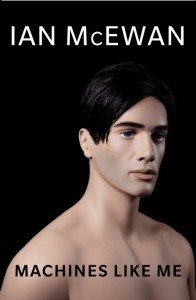
There are few writers with the gravitas to step meaningfully into this contemporary debate, let alone encapsulate and conceptualise some of the attendant issues through the medium of a novel. Yet, Ian McEwan has done so with his usual aplomb. The social adjustment for the introduction of such advanced tech’ might be expected to be profound. In ‘Machines Like Me’, the arrival on the market of human-like machines (twelve ‘male’, thirteen ‘female’) distributed around the globe, are a focus of curiosity and concern in equal measure. But, not in our world. In an interesting diversion, the author has set the plot in a different dimension, a world familiar to our own, but where Margaret Thatcher’s task force is defeated in The Falklands, Tony Benn becomes Prime Minister and an ageing Alan Turing is revered as one of the greatest minds of the time. The ploy enables the implied technological advance to be explained (it remains work in progress for us) and cunningly maintains a sense of looking into a fishbowl at the consequences for two ordinary Londoners.


Charlie, a thirty-something disbarred lawyer and author of a minor book on electronics and anthropology is broke and living hand-to-mouth trading shares on the internet. And yet, on receipt of a bequest from his late mother, he indulges his passion for robots, androids and replicates by purchasing an ‘Adam’ (it is rumoured Alan Turing has bought the same model). The new arrival also enables Charlie to forge a relationship with his upstairs neighbour, Miranda, a doctoral scholar of social history, ten years his junior.

Notwithstanding Adam’s need to recharge periodically, he is remarkably human-like and develops his responses and information systems, such that he is convinced that he also has feelings of love for Miranda. However, the strange triangle that ensues lacks the threat born of deceit, as Adam is consistently honest about his emotions and bound by his promise to Charlie not to actively submit to them. Yet, it is the inflexibility of Adam’s abilities, an inability to be humanly inconsistent, which will provoke an inevitable tension. Bound by an immutable logic, constrained by an immaculate adherence to the rule of law, Adam represents the perfect citizen, but ultimately is unable to contend with the messiness of the human experience, or collude with his friends to their unfair advantage. Loyalty, it transpires, cannot set aside responsibility to the wider good of society, or bend its rules.


In the moral maze explored by McEwan, the reader is invited to think about the status of such AI sentient beings, destined to be superior to their human ‘creators’ and the unintended consequences, such as obligations conferred on the society hosting them. Can it be that such machines can truly be described as possessing a ‘self’, what in the book Turing calls, “a conscious existence”? The ‘test’ often mooted is the ability of AI to create authentic art, but since Adam is able to fashion Haiku poems, suddenly the temptation is to refine the criteria of art. In any event, the creativity attributed to humans lies, we are told, in thinking ‘outside the box’.


I thoroughly enjoyed this book and wrestling with the underlying tenets. Moreover, as I write this review the announcement that the late Alan Turing is to appear on the new £50 note signals the conclusion of his official rehabilitation and further endorses his pioneering contribution to the early development of computers. Clearly we are living in complex and fascinating times, but this book dares the reader to recall the past, glimpse the future and wonder…

Rating: 4.5 out of 5.

Social Capital?

3:47 PM 13 JULY 2019

“City Crime” is another debut novel and I bought a copy at a talk by the author, Ian Richardson, at our local library. The title might give the impression of misdeeds in the affluent financial sector, but while the action is perpetrated in the hallowed square mile, the real novelty factor is the involvement of detectives from the City of London police, which seems akin to the unusual challenge of policing Beverly Hills. Still, DCI Gould and newly promoted DS Phillipa Cotterell preside over an investigation that is more well-versed than its setting, driven by familiar human frailties of jealousy, greed and lust. Family in-fighting, organised criminals, drug-dealing, blackmail and tainted money, are deftly woven within a plot that belies the veneer of affluent success and culminates in brutal murders and the exposure of baser instincts.


In essence the reader can find little sympathy for any of the cast of victims or the numerous suspects, nor for that matter the police officers. Notwithstanding the rather naïve ideals of Ms Cotterell, one gets the feeling the more tempered cynicism of her superior also has its place, when unpicking layers of deceit. In what seems destined to be a short-lived partnership, the clandestine coupling of the police officers outside of the investigation also appeared likely to heap pressure on their relationship, rather than support it, but in or out of work, their collaboration seems to have a limited shelf life. This may be disappointing if the reader is looking for the next ‘crime-fighting duo’, but the chemistry, á la Morse and Lewis; Poirot and Hastings; Holmes and Watson, has to be right in order to evolve, though such novels also need to be able to stand alone and this it does.


In truth, I found the plot more convincing and developed than the characters, but the twists and turns of the story were absorbing and as the introduction of a new voice in criminal fiction, this book was an enjoyable and promising light read. I hope the author continues to write into a well-earned retirement.

Rating: 3 out of 5.

Unrelenting Tension Reels the Reader In

10:43 PM 16 JUNE 2019

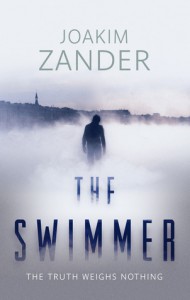
Excellent novels coming out of Scandinavia continue to enjoy international popularity at the moment and this terrific debut by Joakim Zander (2013) is further testament as to why. An unashamed spy thriller, “The Swimmer” exploits for the reader a dynamic plot, which links strong characters across a complex web of time and place, grappling with circumstances typically not of their making. Certainly there are echoes of the ‘Nordic noir’, particularly when a key character (Klara Walldéen) heads home to St. Anna’s Outer Archipelago in Northern Sweden, but the tale spins effortlessly between contemporary Europe and the USA, taking in historical, interlinked events in Afghanistan, Syria and Kurdistan along the way. Clearly the author has utilised his experience as a former lawyer working in the European Union to create vividly convincing scenes within the corridors of power in Brussels, where the reader finds Klara employed as assistant to an ambitious MEP. However, the involvement of a lobbyist and unidentified security services develops a wonderfully clandestine backdrop where ‘the truth’ is continuously manipulated to maintain a plausible public narrative. Indeed it is the grinding of tectonic political forces, which threaten to engulf relatively powerless individuals and discard them as tolerable collateral damage.


Unknown to her, Klara’s childhood spent in happy, obscure isolation with her grandparents was intended to shield her from the loss of her Swedish mother and the absence of her anonymous American father. Moreover, it was calculated to put her beyond the reach of those with a vested interest in silencing witnesses to war-time atrocities. But, after completing her studies abroad at the LSE, as Klara starts out on a promising career, new and present dangers begin to surface and an unseen guardian begins to stir. Aside from the thrilling action and the growing body count, the book offers an interesting take on Klara’s past and present relationships, some apparently disposable, others intense and enduring and the testing of those ties amid life-threatening chaos.


The swimmer has lapsed into an uneasy retirement and sought to protect his daughter’s life chances from the taint of his secretive past. The fervent desire of forces wanting to shine a light on the barbarous activities committed in war must overcome those equally intent on burying the past, to maintain the current fragile peace, albeit perpetrators walk free. For those caught up in the ongoing aftermath, is it better to occupy the moral high ground, or to fashion a means to survive?


Joakim Zander has created a compelling book, threaded with tough female characters, hardened by life in the far north and an unexpected challenge for the macho professional groundlings. The author also poses subtle moral dilemmas, which permeate the book. However, though the twisting plot deliberately frays the nerves, it also delivers a satisfying denouement and a thoughtful afterburn, which is so often the hallmark of an exceptional read.

Rating: 4 out of 5.

#IndieApril choice

10:14 AM 5 MAY 2019

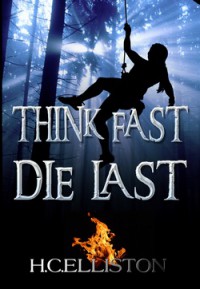
In solidarity with the Twitter campaign #IndieApril, I alighted on this book by independent author, H.C.Elliston over the Easter weekend. This was my first dip into the work of Ms Elliston and the first book from the ‘romantic/thriller’ genre to make it onto my ‘Booklikes’ virtual shelf. Ordinarily, not what I would describe as ‘my thing’, it can sometimes be good to mix it up a little and I came to “Think Fast, Die Last” with an open mind.

After years in an abusive, controlling marriage, the main character (Jenna) is making a break for a happier life with Dylan. The first step in the transformation is a weekend retreat, but the pair find their idyllic hideaway has been double-booked and their privacy invaded by another equally unimpressed couple (John and Kerry). Though the couples have different agendas, they find themselves bound together for mutual advantage and to survive the crossfire between competing criminal gangs, who appear to have violent designs on their respective well-being.

Naturally Jenna’s husband (Alan) is confirmed as a waste of space, but unbeknown to Jenna his criminal activities have attracted the attention of more serious thugs and by association placed his estranged wife in danger. In contrast, Dylan is the antithesis of Alan and through his behaviour under the trials of a life-threatening situation, he and Jenna may have a future, if they can both just survive.

In summary, this book is a light holiday read. The scenario is mildly improbable, the threatening villains wannabe sopranos, but far too hapless and incompetent to suggest genuinely organized criminals and the love interest is consistent with a vulnerable woman warily extricating herself from a disastrous marriage. The various dramatic flashpoints felt more like swells than crescendos, but the storyline moved along without shredding emotions and sometimes that’s just fine.

In a sense there was a tension in the alloying of genres, in that the book didn’t feel like an out-and-out romance, but nor was it especially thrilling. Still, there was enough for me to think that I may check out one of the author’s other novels.

Just one observation on the ‘pov’ layout of this novel. Thirty four chapters and all bar a few written from Jenna’s perspective, so in various parts many successive chapters entitled ‘Jenna’. There seemed to be different thoughts on this within the #WritingCommunity twitterati, but as a personal view it seemed unnecessary and a bit irritating. If the perspective hasn’t changed, as the reader, I may only need to be signposted when is does, but I accept there are differing views and this hardly counts as a blemish, on an otherwise enjoyable book.

Rating: 3 out of 5.

All that glitters is not gold…

10:30 AM 23 APRIL 2019

I have previously reviewed the delights of ‘Middlemarch’ (see blogpost dated 1/1/17), which is generally regarded as the pinnacle of George Eliot’s literary achievements and undoubtedly it is a masterpiece. I also catapulted ‘Adam Bede’ onto my favourites shelf (see post dated 10/6/17) and so I came to ‘Silas Marner’, the author’s third novel (originally published in 1861) with high expectations and again, I was not disappointed. In truth, this book is another sublime tale by Eliot, with at its core a challenging moral conundrum, which has further bolstered my admiration of her work.

Eliot has ‘form’ in conferring unflattering characteristics on wealthy scoundrels, counterbalancing a virtuous example of the poor and comparatively powerless, but the story of the ‘Weaver of Raveloe’ is far more than a simple exposition of right and wrong, good and bad. Rather, like the main character’s fine linen, it is an intricately woven piece of artisanship, which demonstrates the redeeming and noble capacity of good people to do the right thing, even in the absence of personal gain. Such egalitarian principles may not be the social norm’, but in the small communities described by Eliot, they do establish reputations and reinforce social standing.

Silas Marner arrives at Raveloe chastened by a false accusation of theft in his pious, former community, who turned against him despite a lack of evidence. As a consequence, Marner moves away, turns inward and maintains only limited contact with his new neighbours, to sell his linens and buy food. By design, Marner’s becomes an isolated, frugal and reclusive life. Yet, even in the absence of contact with his peers, the central character discovers he cannot avoid the shaping of a local reputation, born of rumour and the imagination of villagers. The theft of his life’s savings, however, brings Marner to an even lower point in his life, from which his resilience will be ultimately tested.

The parallel plotline, deftly created by the author, concerns the sons of the local Squire Cass, whose privileged, profligate lifestyle is diametrically opposed to that of Silas Marner and yet converge they must upon the introduction of a two year-old orphan, who becomes the pivotal character for the respective storylines. Disregarding local opinions, Marner takes responsibility for the child (under the existing ‘Poor Law’ this would otherwise have fallen on the parish) and here strong female characters come onto play. I’m especially fond of Dolly Winthrop, local matriarch, who befriends Marner and takes the ardent bachelor in hand, to support the child-rearing and steer him into the heart of the village. ‘Eppie’ as she is christened gives new life to Marner and he in turn selflessly dedicates himself to her.

Only on the cusp of her adulthood are the ties of love tested by those of blood. A decision about whether to accept an opportunity for social elevation is a theme Eliot returns to in ‘Middlemarch’, written some ten years later and the author again mines a very fertile seam here, highlighting the apparently arbitrary nature class and of life’s chances. However, there are a number of underlying messages to be gleaned from this nineteenth century parable. Among them,‘life is what one makes of it’; ‘it’s never too late to change’; and ‘it takes a village to raise a child’. In any event, such masterful storytelling continues to resonate with our own time and great writing will always have an audience. Another for my favourites shelf.

Rating: 4.5 out of 5.

At the going down of the sun…

3:49 PM 21 APRIL 2019

The passing of the one hundredth Remembrance Day since the end of the Great War 1914-18, last November, gave good reason (if it was needed) to revisit some of the written records of that gloomy period of European history. Often poignant, the poetry, letters and tragic lists of the fallen offer reminders, lest we forget, of the sacrifice of a generation. However, given the colossal loss of life, what sometimes appears absent from contemporary accounts is a view from the non-commissioned ranks, a ‘Tommy’s’ experience from the trenches of the front lines. As such, this memoir by Cpl Sam Sutcliffe, collated/edited by his son Phillip, offers a telling insight into the chaos of conflict visited on so many and the mind-set of those so often cast as ‘cannon-fodder’. Even allowing for the retrospective writing of this lengthy book, the vivid descriptions created by the author and the accompanying endnotes, cross-referencing a wide range of confirmatory material, make this a sobering but compelling read.
The title of the book gives an immediate flavour of the self-effacing humility of the author and yet he goes on to describe joining up aged just sixteen, with his older brother (Ted) and friends (in fact, Sam lied about his age, as the youngest recruit allowed was 19). The swell of public patriotic fervour in 1912 and the casual acceptance of the need to do ‘one’s duty’, in hindsight, seems naive. Moreover, the apparent absence of apprehension suggests a misunderstanding of the carnage of war. The phlegmatic acceptance of Sutcliffe’s parents to their young son’s decision also perhaps an echo of the national willingness to tolerate sacrifice. Though later, conscription became necessary and through his journey the author develops a certain cynicism about those who avoided service altogether and those who sought to distance themselves from the trenches at the front line, tempered only by the psychological breakdowns he witnessed there.


Subsequently Sutcliffe’s tender age did confer a temporary reprieve. Still not eighteen, the author had already fought in the ill-fated Gallipoli campaign and the first battle of the Somme, rising to the rank of acting Sergeant, when he was plucked briefly to safety until 1917 (when he became nineteen) and could be returned to the western front, in time for the anticipated Spring offensive. Captured during that monumental effort by Germany to end the war, Sutcliffe relates his subsequent experience as a prisoner-of-war and an equally challenging personal struggle to just stay alive and survive the attendant risk of disease and privation.


This book is an extraordinary account of a teenager’s experience of a brutal conflict that culminated in a vast body count. After Gallipoli (wherein having been evacuated his unit was returned to cover the withdrawal of the foremost positions), the author laments the decimation of his original battalion of volunteers from London, culled from a thousand men to around just two hundred. Indeed the scale of this loss appears to haunt Sutcliffe throughout his account and his perspective clearly changes regarding the veneer of national pride, which he sees laid bare amid such abject failure.


At times the book reads like a novel. For example, the author is separated from his brother early on, but their paths cross several times in the course of the war. Yet, there is no disguising the sense of relief when the siblings both survive, albeit Ted’s exposure to gas in the trenches had a lasting effect. No commentary on the strategic mistakes pored over by historians in subsequent decades, nor criticism of the class system which conferred leadership roles on some ill-equipped to inspire others, though Sutcliffe does single out a couple of officers revered for their compassionate and resilient example, who did indeed lead from the front. Nonetheless, the reader is left with the distinct impression that notwithstanding his protestations to the contrary, Sam Sutcliffe’s contribution was indeed heroic and it is the collective efforts of many such ‘nobodies’ and a preparedness to do their ‘bit’ that ultimately made the crucial difference. We shall remember them…

Rating: 4 out of 5.

The “Darling” Days

2:01 PM 7 APRIL 2019

This proved a curious novella, from a writer unfamiliar to me, with echoes of those black and white Ealing Studio movies, where the British cast spoke in plummy tones and the criminal classes were still referred to as ‘rascals’ and ‘scoundrels’. Less surprising when the reader realises that Henry Cecil is the pseudonym of Judge Henry Cecil Leon (born 1902), yet the humour coursing through this charming tale does make it satisfying, albeit in a rather nostalgic way.


Cambridge-educated, Cecil was called to the bar in 1923 and post-World War II was appointed a County Court Judge in 1949. Still, it is unusual that such a pillar of the establishment should expose some of the potential absurdities of the law and how it might play out within the vagaries of ordinary lives.


In this example, the reader is introduced to Mrs Harriet Hunt, who was successfully married to her husband (Graham) for twenty years, when without warning, he disappeared. That was seven years ago. Having experienced the predictable gamut of emotions, Harriet might have reasonably assumed Graham was dead, when he did not return home or make contact. However, the arrival of a mysterious cheque for £100 every month since, from a firm of solicitors, lent probability to her husband’s survival and increased the likelihood that he had in fact run off with another woman. Harriet continued to be perplexed by such a scenario, when she felt certain they had been happily married, but she was also hurt by the possibility that Graham might have ‘pensioned her off’ in this way. Still, in the light of the prevailing evidence she reluctantly accepts the need to settle the future and having been pursued assiduously by the couple’s former friend, the gentle George, seeks to petition the court for a divorce.


Stage set and having sealed the legal argument with an agreement to go to bed with George later that evening to consummate their relationship (to be followed by supper), Harriet returns home to find Graham has also returned, just as suddenly as he departed.


In his mild and comical approach to this story, Cecil almost imperceptibly weighs complex issues, such as the disparity between the moral and legal status of marriage, the expectations of men, women and society and the meaning of ‘love’. For the contemporary reader it might appear dated and yet I suspect, if one cares to settle down with a ‘whisky and a splash’, this is a funny, short, but welcome glimpse of a mythically  halcyon era.

Rating: 3 out of 5.

Short but Sharply Provocative Masterpiece!

1:40 AM 17 MARCH 2019

Gabriel Garcia Márquez was awarded the Nobel Prize for Literature in 1982, following “Chronicle of a Death Foretold”, which was published the year before. This short novella (122 pages) was generally lauded as a masterpiece and translated from the original Spanish, it is clearly a complex literary exploration of individual and collectively-held values and the moral standards underpinning them.


Set in a small, diverse Caribbean community, the opening sentence immediately peaks the readers curiosity:–
“On the day they were going to kill him, Santiago Nasar got up at five-thirty in the morning to wait for the boat the bishop was coming on.”


Notwithstanding the proximity of ‘the church’ and the attendant moral authority, the most heinous crime is about to be perpetrated. The plot goes on to test the case for an ‘honour killing’, in undermining this most fundamental of commandments and the complicity of individuals and society in rationalizing the sacrifice of an ostensibly innocent man. In spite of the subsequent handwringing, the acceptance of the concept of dishonouring an individual, a family, a community, breathes life into a chain of reactions and responses, which culminate in a barbaric, unchecked thirst for revenge, on behalf of victims, apparently unable to withstand the expectation of social norms. And there are a series of ‘victims’ and consciences to be expiated.


However, the ambiguities discovered through the author’s examination of the circumstances and subsequent reflections seventeen years later give credence to the possibility of fate, yet the certainty that the killing solved nothing and surely failed to salvage any sense of honour.


This book is provocative and deliberately harrowing in its dissection of a community through the lens of a murder enquiry. Moreover, it questions our capacity for independence within a human hive.

Rating: 4 out of 5.