Love vs Lust – a tiresome rematch

4:33 PM 8 MAY 2020

I’m prepared to accept that this book by Paulo Coelho was intended perhaps as a parable, deep and insightful, from which the reader could glean an important lesson for life. Unfortunately, for me, its depth was rather undermined by a torpid, meandering tale, which fostered little empathy with the main character and minimal interest in whether her stale marriage would survive a bout of premeditated adultery.

Linda is a journalist and lives in Geneva. She is married to a wealthy husband and together they have an only son, enjoying a clearly privileged life, in one of the safest and most stable countries in the world. And, the author suggests, therein lies the problem. For safe and unchanging, read predictable even boring and a metaphor for Linda’s sense of unhappiness. Throughout the book, Linda’s partner is never named, but referred to as ‘husband’ and like their country regarded by Linda as ‘perfect’, yet uninspiring and anonymous, safe and functional, but lacking in emotion or passion for life. By contrast, her lover-to-be, politician Jacob Konig incites in Linda spontaneity, fear and risk, but also a feeling of being alive, of shaking things up.

For all her rather hollow exploration of what is perceived as impending depression, Linda disregards the implications for her child, or husband, of gambling with their marriage. Rather, the initial guilt erodes and the apparent antidote to her gnawing loneliness and unhappiness is even rationalised as “the present that I deserve after behaving for so many years”. The key character is an intelligent, beautiful woman and yet her response, which she describes as sordid, selfish, even sinister, is apparently beyond her control. Even though she anticipates her illicit affair is destined to be time-limited and is anxious about being discovered, Linda is addicted to the window into herself that Jacob has opened. Yet, her artificial creation of the ideal family and the perfect lover reek of weakness and a tragic, but pathetic attempt to distract from an unsatisfying life.

Fundamentally there is nothing new here. The grass is not always greener, beware what you wish for, treat others as you would wish to be treated, etc. Ironically perhaps, what may be viewed as self-indulgence, may also invite others to shape the immediate future. A test for even the taken for granted, ‘perfect’ husband. 

Rating: 3 out of 5.

Shipwrecked Sailor Leads to Literary Treasure

10:33 AM 24 APRIL 2020

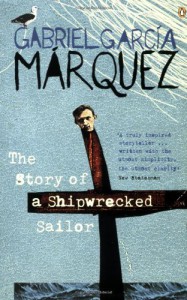
Mark Twain once wrote, “Truth is stranger than fiction, but it is because fiction is obliged to stick to possibilities; truth isn’t.” It’s an adage exemplified in this poignant account of survival at sea. The tale was originally related to a young reporter at the Bogota daily, ‘El Espectador’ in 1955. The young sailor, Luis Alejandro Velasco, was just twenty years old and would go on to experience a brief, but lucrative, period in the Columbian media spotlight, before sinking without trace. The reporter, belatedly attributed with writing the piece, one Gabriel Garcia Marquez, would subsequently experience a “nomadic and somewhat nostalgic exile that in certain ways also resembles a drifting raft”, before going on to be awarded the Nobel Prize for Literature in 1982. That the original serialised newspaper story was republished in the form of a book, as a retrospective homage to Marquez’ early work, was dismissed by the author as more about an exploitation of a fashionable writer’s name, than the merits of the story. Still, I think Penguin deserves some credit for having reproduced this short work (just 106 pages) for posterity.

The Columbian navy destroyer, ‘Caldas’, had been in dock in Mobile, Alabama to undergo repairs for eight months and in February 1955 was on its homeward journey to the port of Cartagena. It should have been an unremarkable routine voyage, but when eight members of the crew were swept overboard, just hours from home, the story instantly became a national calamity. A search for survivors began immediately, but after four days the effort was abandoned and the lost sailors were declared dead. After a further week, Luis Velasco washed up on a beach in Northern Columbia, barely alive. Somehow he had managed to survive for ten days without food or fresh water, adrift on an open life raft. In essence, this book is a journalistic reconstruction of this implausible feat, derived from painstaking hours of interview, deliberately written in the first person to accentuate the emotional drama of a firsthand account. It’s certainly a gripping and compelling read. Almost as intriguing is “The Story of this Story”, written by the author in 1970 and included as a prologue, with Marquez’ reflections some fifteen years later.

What ‘El Espectador’ hadn’t foreseen was the seismic impact for the nation of such an unsuspecting hero, nor the reaction of the incumbent dictatorship. Yet, thankfully, rather like his subject, Marquez popped up later, albeit on a foreign shore. Content to vanish into obscurity, Velasco, the reader understands, remained in Columbia. By contrast, the author became a literary treasure of the world.

Rating: 4 out of 5.

Fate or Coincidence – a COVID Read

7:21 PM 12 APRIL 2020

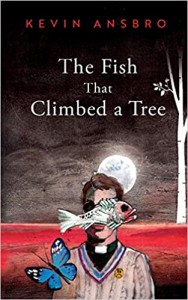
Cometh the hour, cometh the book! Just when we had lapsed into the nightmarish ‘social isolation’ that has attended the COVID-19 pandemic, I happened upon this novel through the vagaries of Twitter and the #WritingCommunity. Perhaps, in keeping with the book, it might almost have been fated to rescue me from a state of pervasive gloom and offer a literary balm to a bruised psyche. Indeed, Kevin Ansbro’s tale of love and devotion, in a variety of forms, is teeming with the ‘feel good factor’, but also succeeds in realizing the author’s self-confessed penchant for “handcuffing humour and tragedy to the same radiator”. It is hard to pidgeon-hole this book neatly into a single genre. Thrilling – certainly, philosophical at times, but it is also brimming with pathos, humour, suspense and love rather than romance, juxtaposed with far darker strands of human life and even the hereafter.

To revel in what man (and woman) is capable of, is to wonder at a fathomless capacity for altruistic good and yet also recognize a breathtaking instinct for selfishness and even unalloyed evil. In “The Fish that Climbed a Tree” the author deftly traverses that continuum in a cleverly conceived plot that draws upon the experience of an impressive range of characters, whose respective journeys are influenced by an active (or in some cases very redundant) moral compass.

The heroically named Ulysses Drummond, vicar of St Cuthbert’s, Hackney, and Iraq war veteran, was of a good family and with his diminutive wife Florence had made a very positive contribution to their community. They were also proud parents of Henry, aged 10, when the couple were brutally murdered in front of their young boy. By contrast, the murderers – Ukranian gangster, Yuri Voloshyn and Rwandan war criminal, Pascall Makuza, are on a very different trajectory towards judgement day. Still, whether by fate, or a series of coincidences, the Drummonds will be dogged by that fateful day, as Henry passes into adulthood and a date with destiny foretold in the book’s prologue.

Along the way, through boarding school and into his life in London, Henry’s timid, shy naivety ensures he is bullied and beaten, nurtured and comforted, encouraged and feted, but it is the relationships that he forms and the decisions he must live by, which intrigue the reader. That and the heady blend of supporting characters, so well drawn, as to remind me of Dickens, long before the author’s nod to “A Christmas Carol” in the final chapter.

While I accept that, at times, Ansbro’s extravagant use of language, with a liberal sprinkling of adjectives, similes and metaphors may not be to every taste, for me such flourishes added to the charm of this book. The underground train’s “doors closed with a matron’s shush…”, simply an example of well-crafted writing. Indeed, the style (except for the repeated use of “Omigod”) felt part of some glorious former era, which of course may say as much about my reading preferences.

However, in a happy coincidence, my review also now chimes with #IndieApril and pays tribute to an often neglected well of writing talent. Moreover, I am grateful to Kevin Ansbro for a tremendous diversion in these troubled times and do not hesitate in loading this novel onto my ‘favourites’ shelf. I hope that when I return to it in future, I shall recall the contrasting real-life circumstances surrounding this first reading.

Rating: 4.5 out of 5.

‘The Place Where the Desert is Ocean…’

12:45 AM 31 MARCH 2020

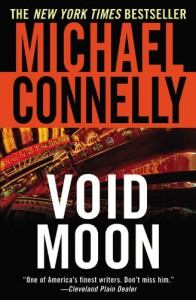
Another thrilling book by Michael Connelly, but a departure from the author’s familiar menu of detective novels that I have been voraciously consuming in chronological order. Not that there aren’t crimes perpetrated, murders (quite a number) committed and a host of intriguing rogues to ponder. Yet, without the long, heroic arm of the law to interfere, the book lacks the obvious duel between ‘right’ and ‘wrong’ , ‘good’ and ‘bad’. Instead, the reader is invited to throw his/her loyalties behind a robber/kidnapper (Cassie Black), rather than the ‘security consultant’ and psychopathic killer, with connections to the mob (Jack Karch). Of course, there are complex mitigating circumstances, which become clearer as the story unfolds, making it easier to root for the underdog, but the story, mainly set in Las Vegas is essentially a crime novel wherein the rules of the jungle apply and brazen quick wits may not be enough to overcome ruthless vested interests and well organized muscle.

Cassie is working in car sales following her release from prison in the euphemistically named ‘High Desert’ and keen to avoid a recall. However, with just fourteen months to see out, under the watchful eye of Thelma Kibble, her parole officer, the timeline is suddenly shrunk leaving Cassie needing big money, quickly, if she is to get away as she dreamed and make a fresh start.


On the one hand Cassie knows that the risks are huge, but despite the years of incarceration, the adrenaline of ‘outlaw juice’ has not been purged from Cassie Black’s system. Nor, has the sense of loss following that fateful night six years before, when her lover and charismatic mentor, Max Freeling, had died at The Cleopatra casino in Las Vegas. The book’s pervasive sense of destiny and inevitable symmetry though is encapsulated in the astrological musings of his step-brother Leo Renfro, who identifies potential jobs and has grave misgivings about the harmful influence of the ‘void moon’, which should be avoided at all costs.


For me, the protagonist in this novel, Cassie and her antagonist, Jack Karch, are quite weak characters by Connelly’s standards. Indeed Karch is almost a pastiche of the Las Vegas mobster and yet it is the ‘bit-part’ players that save it. Instead of concentrating on developing the main characters, in Thelma Kibble, Leo Renfro, ‘Jersey’ Palz (kit man) and Vincent Grimaldi (owner of The Cleo’) the author has, perhaps inadvertently, shaped far more interesting characters. That such cameos are more memorable than the key characters suggests a flawed story and yet it carries the hallmark pacy suspense and action associated with Connelly. Still, this diversion from the main course of the Harry Bosch series of novels does lend this book the feel of a ‘light bite’, an entree, ahead of my return to book seven in the series (‘A Darkness More than Night ’, 2001). At least my appetite has been piqued.

Rating: 3 out of 5.

Bosch Drinks Deeply from the Poisoned Chalice!

10:00 AM 1 MARCH 2020

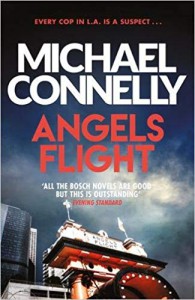
Howard Elias was a high-profile, but contentious Los Angeles lawyer, whose stock-in-trade was suing the LAPD. He only filed in the federal court and typically under the civil human rights codes, whereupon his skilled use of social media also rubbed salt into the open wound of racial tension that scarred the city. Elias was reviled by police, revered by those he represented, but when he is gunned down on ‘Angels Flight’ (a historic inclined railway and downtown landmark), the authorities are immediately fearful of a potential backlash and the possibility of a return to the violent racial riots of 1992. Realizing that many would believe the murder was perpetrated by the police and accordingly be mistrustful of their investigation, it falls to Deputy Chief Irving to hand this poisoned chalice to Detective Harry Bosch and his team. It’s a decision that carries risk. In such a politically-charged atmosphere, Bosch, Edgar and Rider know that their selection is a cynical nod to ethnic diversity, but they’re also capable investigators, with integrity and will demand that the chips fall where they may, despite attempts to stifle their efforts by the inclusion of Internal Affairs and the FBI.

Indeed, there are distractions aplenty for Bosch in this sixth book in the series, as his short-lived marriage to Eleanor Wish is in melt-down, his path is crossed once more by arch antagonist from the IAD, John ‘Sustained’ Chastain (see ‘The Black Ice’ and ‘Trunk Music’) and a succession of barriers arise, including a leak from within the department, barring his way to the truth. Readers/fans are, of course, familiar with the irreverent attitude of Bosch to the political calculations of his bosses and his resilience at being repeatedly thrown under the bus of investigations with the capacity to combust spectacularly, but he is also unerringly loyal to his team colleagues (past and present) and is always willing to take a hit for them.

In this powerful story, the plot is so much more than the obvious crime of murder and is as much about the hidden network of associates connected to the late Mr Elias and a swirl of cases,causes and effects, past and present, which continue to keep a fatal momentum of their own. In the impending ‘Black Warrior’ court case, Elias was again confidently primed to expose the depth of corrupt police behaviour and the inept nature of another flawed investigation by the LAPD. With the rhetoric of charismatic preacher Reverend Tuggins fanning the flames of a smouldering sense of injustice, in sections of the community, Bosch needs to solve the murder and prevent a potential miscarriage of justice, which could ignite the whole tinder box. Meanwhile, the book also draws into view those characters with politicized appointments tasked with fronting a system of justice that is seen to be good enough and must spin the unpalatable truth in ways that Bosch understands, yet despises.

Whilst the detective’s perspective of what’s right is laudably heroic to the reader, the body count that follows is high and I do wonder at the burden on his conscience moving forward. Still, Conelly also weaves lighter moments into his book, such as the poster advertising Clint Eastwood’s film “Blood Work” (a rather droll reference to his earlier title, wherein reality and fiction are neatly combined). In any event, I am compelled onward to “A Darkness More Than Night” (Book 7 in the series), with a real spring of 4 star satisfaction in my step.

Rating: 4 out of 5.

Echo Chamber?

9:18 PM 16 FEBRUARY 2020

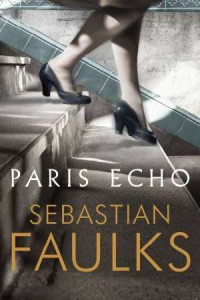
As a longstanding admirer of Sebastian Faulks’ work, simply the title of this latest novel (2018) stirred the reader’s imagination and the prospect of a return to the original site of the author’s reputation. The ‘French trilogy’, published between 1989-98 (‘The Girl at the Lion d’Or’; ‘Birdsong’; and ‘Charlotte Gray’) established Faulks as a major British writer, wherein he used the common backdrop of war and explored the immediate impact and legacy of conflict for the characters involved. This has proven fertile territory, partly perhaps due to the historical gravity of such events, which continue to weigh heavily on the scarred psyche of our continent, but partly also to Faulks’ unerring capacity to evoke a gallic essence in his novels, which transports the reader with such panache.

This latest novel is set in contemporary Paris, but through the contrasting encounters of an American researcher (Hannah) and Moroccan immigrant (Tariq), the author develops a vehicle to observe the modern cosmopolitan metropolis, as well as allude to difficult, past wartime and colonial memories that have yet to be fully expunged from the national consciousness.

Tariq is nineteen and though able to speak french (a legacy of his late, Algerian mother who was raised in Paris), he abandons his education in Tangier, to follow tentatively in her footsteps, arriving homeless and penniless, his first venture abroad. By contrast,Hannah has been dispatched by her US university to research a book and is returning to Paris, to the scene of her ill-fated and only love affair, ten years earlier. And with both main characters thus deposited, the stage is set.

The disparate experiences of Hannah and Tariq are driven largely by the stratified socio-economic groupings of the Fifth Republic, and that they apparently have little in common. Still, what limited overlap exists offers each insight into the other’s world and over time their respective curiosities satisfied, lessons learnt, fragile hearts restored, they can move on. However, what the main characters do have in common is their status as ‘outsiders’. Notwithstanding the undoubted magnetism of Paris, the ‘echoes’ emitted by the city resonate differently, even between native generations and the absence of that shared history suggests that visitors may be untainted, but surprised, by a sometimes troubled past.

Intertwining such complex themes, on the back of a fairly weak plot left me with the sense of a book that didn’t quite deliver on its potential. Faulks writes beautifully and with his customary affinity for all things French, but this book has a nebulous quality, which I found hard to fathom. Perhaps it is an inevitable bugbear that having produced a universally lauded ‘modern classic’ in ‘Birdsong’, readers wait impatiently for those heights to be repeated (incidentally I am a great fan of Faulks’ novel ‘Engleby’). In the meantime though, I am curious to read some alternative reviews of this novel, to see if I have missed the key that unlocks some hitherto hidden depth.

Rating: 3 out of 5.

The Ultimate ‘Skin in the Game’….

6:54 PM 15 FEBRUARY 2020

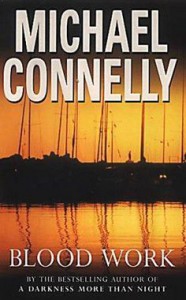
Another exceptional tale from the pen of Michael Connelly, though again this book strays from my ‘as the crow flies’ list of novels featuring Harry Bosch. Instead, the author introduces the reader to ex-FBI agent, Terrell (‘Terry’) McCaleb, who will (I am reliably informed) cross paths with Bosch further downstream in the series. Recently retired on health grounds, McCaleb is grappling with profound changes in his life. On the upside he is living on his late father’s boat, ‘The Following Sea’ and planning a permanent move to his spiritual home, Catalina Island. More challenging, McCaleb is recovering from a recent heart transplant, but just as the reader is processing this interesting scenario, Connelly wrings more intrigue from it, by engaging the reluctant retiree in a search for the murderer of the organ donor, indirectly responsible for his own survival. Still, if the central idea is cleverly innovative, the execution of the fairly complex plot is at times simply sublime.

In my earlier review of novel, ‘The Poet’, I observed that there were similarities between the main character (journalist, Jack McEvoy) and Harry Bosch and the same can be said of former agent McCaleb, but that does not detract from the slick plot, wherein he must operate without the authority that an FBI badge provides. Moreover, the posse of new characters arranged around McCaleb help develop the story in ways that might be more difficult for officers of the law, bound by the processes of criminal justice.

The frail condition of McCaleb post-op’ is both a catalyst for action and an attendant risk, with potentially fatal consequences if he can’t nurture his new heart. Indeed, the rhythm of the book has the reader’s pulse eerily paired with McCaleb and the trials of a painstaking investigation. That his involvement is at the emotional request of his saviour’s bereaved sister (Graciela Rivers), just ramps up the pressure on McCaleb and the imperative that her sister’s sacrifice and his survival is justified. The guilt that swirls around McCaleb, as the unwitting recipient of the young mother’s life chance, beset by a debt he can’t possibly repay, is poignant and sensitively handled by the author. However, inevitably McCaleb must also overcome the competitive architects of, thus far, fruitless investigations by LAPD, the bureau and a local Sheriff’s department, if he is to put things right (as far as he can) and combat the notion that he had most to gain from the donor’s death!

In common with the earlier novels, Connelly’s gritty portrayal of Los Angeles and its environs suggests a warts and all fondness for the area, which seeps into his characters. Certainly the boat into which McCaleb has been cocooned may yet see him emerge a quite different man, especially if he can land a suitable companion for his onward voyage.

I really enjoyed this book and look forward to the meeting of McCaleb and Bosch anticipated in Book 7 in the series (‘A Darkness More Than Night’). Once again Michael Connelly has created a puzzling and compelling page-turner, with a main character, in this instance, destined to literally have ‘skin in the game’. I toast the author’s ingenuity and the strength of his imaginative powers with 4.5 well-deserved stars.

Rating: 4.5 out of 5.

“Power is the Ultimate Aphrodisiac…”

10:07 PM 20 JANUARY 2020

I thank Henry Roi PR for providing me an electronic copy of this novel, originally published in 2008, which I freely chose to review. This has in no way influenced my review.

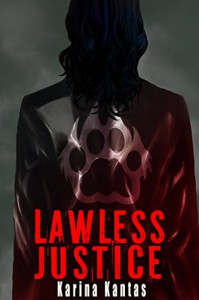
This was my introduction to the work of Karina Kantas and notwithstanding the pace of the novel has much in common with a thriller, the underlying commentary on themes such as gang culture, knife crime, social identity and power lent the book some interesting depth, made all the more intriguing by the use of a mainly female cast of characters.

Cass is escaping a longstanding abusive relationship, which began shortly after leaving school and culminated in her isolation from family support. The attendant violence also coloured the young woman’s attitude to physical harm and hardened her resolve not to be a victim. However, when Cass is the subject of a random attack after a night out, she is rescued by the ‘Kittnz’, a gang of five female bikers, led by the indomitable ‘Raven’, and recruited (via a brutal initiation) to join their select gang. Part of the appeal for Cass, soon re-named ‘Ice’, is their flamboyance, “all loudly dressed in similar leather outfits; beautiful women who looked like glamorous rock chicks…” but more importantly, “the fear and respect they created was intoxicating.” In fact, Cass was won over long before the full implications of her commitment were known, any reticence leached away by her desire to join their ‘sisterhood’ and to be feared, it was sufficient to know that the gang’s activities were ‘rewarding and justified’.

The journey to a sense of liberation, self-esteem and empowerment are mainly observed through the experience of the newest recruit and the pent-up anger within ‘Ice’ and her desperation to be accepted, finds her capable of extreme violence. The raison d’etre of the Kittnz is allegedly to ‘do over’ people who overstep the mark. However, the clandestine nature of their existence insists that they each work in outlying towns (their professional personas – lawyer, doctor, journalist, psychoanalyst also providing a useful skill-mix), only venturing into Northampton in the guise of their alter-egos. The choice of a fairly nondescript provincial town made me smile, but I imagine was deliberate and perhaps enabled the Kittnz to enjoy the exaggerated rep’ that might go with swimming in a smaller pond. But, the tentative democracy underlying the gang’s activities is quickly exposed by the iron control exerted by ‘Raven’ and the expected sacrifice of family, friends and private life. The lifestyle upside of belonging, clothes, money, drugs and disinhibition are well described by the author, but so too is the price to be paid. I read with almost morbid curiosity the new depths of depravity that the gang might plumb to sustain their reputation. What started out with almost moral zeal, delivering a modest form of ‘justice’ for those let down by the system, quickly deteriorates into an escalating, toxic cycle of violence infecting the gang members and the corruption on which they depend. This is most clearly evidenced in the trajectory of ‘Ice’, raised high on her carefully nurtured resilience and her lust for fearsome power, ultimately, in a sad symmetry, subjugated to the will of her waning leader and a bigger, more ruthless male gang. A rather tragic victim transformed into an abuser and then a victim of another hue.

The take away from this book is perhaps that vigilantism is flawed, not by the gender of the vigilante, but the absence of transparent authority. However, the slightly implausible premise is nonetheless well handled by Ms Kantas and the story well-told. On this showing I look forward to reading more of her novels in future.

Rating: 3 out of 5.

The Tarnished Gloss of Sin City and Tinseltown

12:18 PM 14 JANUARY 2020

Book 5 in the series and another case for Harry Bosch with all the twists, turns and adrenaline-inducing plunges of a parkour outing. When a body turns up in the trunk of a Rolls Royce, abandoned in the hills above L.A, it has all the hallmarks of a professional hit. Yet, when the ‘Organised Crime Intelligence Division’ (OCID) passes on an apparent ‘whack job’, though surprised, Bosch is quick to pick up the baton and start joining the dots from a film production company in Hollywood to the original sin city, out in the Nevada desert.

Bosch is newly reinstated at the homicide table, after his imposed absence and designated the lead investigator of a team with two other detectives, partner of six years Jerry Edgar and rising star Kizmin Rider. All are operating under the watchful gaze of newly-appointed Lieutenant Grace Billetts (replacement for the late Lt. ‘98’ Pounds), who comes with a reputation for being tough, enough to earn the moniker ‘Bullets’, behind her back.
One of the things I enjoy about the Bosch series is the melding of old and new and the author’s grasp of complex detail across a substantial series of novels. Characters arrive and may disappear, to re-emerge later, while even the ever-present characters in the cast may undergo changes conferred by disparate lives. For example, Medical Examiner, Dr Jesus Salazar, is now wheelchair bound following a motorbike accident; former FBI-agent, Eleanor Wish, must rebuild her life after a prison sentence handed down in ‘The Black Echo’ (Book 1); and Harry Bosch is reconstructing his home after the effects of the Northridge earthquake saw it demolished in ‘The Last Coyote’ (Book 4).

In a return to the style adopted in that last book, the author does away with chapters, instead, dissecting the book into ten ‘parts’ of varying lengths, which chunk the story into an easily digestible format. Still, Connelly has an unerring knack for also blurring the ‘goodies’ and the ‘bad uns’ and threading his plots with ethical dilemmas, to test the most pure of motivations. Even the cities take on a persona, such as when Bosch is contemplating Las Vegas “…No matter how much they tried to dress her up with neon and family entertainment, she was still a whore.” But, of course, it is within such dark recesses that the criminal underworld and therefore Harry Bosch thrives. Indeed, the theme of this particular tale might be, ‘never judge a book by its cover’. Not everyone who wears a badge can be trusted, any more than every associate of the mob can be assumed to have made poor choices. The corrupting influences of power and money are evident on both sides of the street.

As seems the norm for Bosch, he is destined to push the boundaries of procedure and thereby the patience of even those notionally on the same side. His saving grace, of course, is that he gets the job done, albeit using unusual methods and exceptional intuition and brainpower, though there was also a ‘keystone cops’ moment in this story. I was slightly wrong-footed by the ending too, perhaps because I have been conditioned to empathise with the dark clouds and lashing of rain that tends to drench Bosch’s life, but it would be curmudgeonly to deny the main character his day in the sun. Another four star rating from me and the prospect of some serious changes to Bosch’s situation in Book 6.

Rating: 4 out of 5.

Talking Truth to Power

11:14 PM 3 JANUARY 2020

“Death is my beat…” is the kind of dramatic opening at which Michael Connelly excels and it’s a fitting introduction to the main character of this 1996 novel, ‘Rocky Mountain News’ reporter, Jack McEvoy. I should perhaps stress that this is NOT a Harry Bosch detective story. Notwithstanding my intention to run down the lengthy Bosch series of novels, my learned friend and aficionado in such matters advised there was value in this (not so short) diversion that would see seeds sown, to be reaped later. Time will tell. However, the sure-footedness of the author’s writing style certainly made this standalone companion to my literary pilgrimage, worth paying homage to. Indeed, there are parallels between the detective and the journalist and just as Harry Bosch has previously found himself enmeshed in the FBI, so in this novel, it is the turn of Jack McEvoy to work alongside the Feds, in an investigation spanning a number of states.


The catalyst had been the death of Jack’s twin brother. The lead investigator on a horrific murder case, Detective Sean McEvoy had allegedly committed suicide, overwhelmed by the attendant emotional trauma. The evidence had been weighed quickly, to turn an embarrassing page for the local police department, only Jack wasn’t buying it. What if, instead of assuming suicide, it was assumed that Sean McEvoy was the victim of a homicide? Could the evidence support such a radically different interpretation? The police aren’t the only agency with investigative resources and by pulling hard on the loose threads, Jack begins to unravel a whole world of pain.


Not only is the dynamic flow of the plot reminiscent of the Bosch novels, in Jack McEvoy, the author has also embedded some very familiar traits. Intelligent, but stubborn, rebellious, but loyal, determined, but at times naive, there is something very satisfying about the maverick character cocking a snook at authority and in so doing establishing his integrity. Of course, as a former crime reporter for the LA Times, Michael Connelly is well-placed to lift the lid a little on the role of the investigative journalist and the inherent tensions between the guardianship of the public’s ‘right to know’ and those clandestine operatives tasked with keeping the public safe from harm, on a ‘need to know’ basis. With trust on both sides in short supply, the author also has fun with it, in the inevitable romantic incursion across boundaries. Though this lighter plotline perhaps eases the discomfort, which flows from the disturbing portrait of a clinical serial killer.


All-in-all a very satisfying, but challenging read and the sequel (‘The Narrows’) comes in at number ten in the Harry Bosch ‘hit parade’. In fact, last week the third book in the ‘Jack McEvoy series’ has been announced (‘Fair Warning’ due out in May 2020). This intertwining of characters and series is turning my simple trek through an interesting body of work into something of an odyssey, but the journey is made all the more interesting for it. Still, I am also indebted to my Twitter buddy @JoeBanksWrites who is up ahead on the reading list climb, like my very own literary sherpa! Next stop for me, Book 5, “Trunk Music” (1997). See you at the top!

Rating: 4 out of 5.