The Ingenious Gentleman of LA…

img_1508

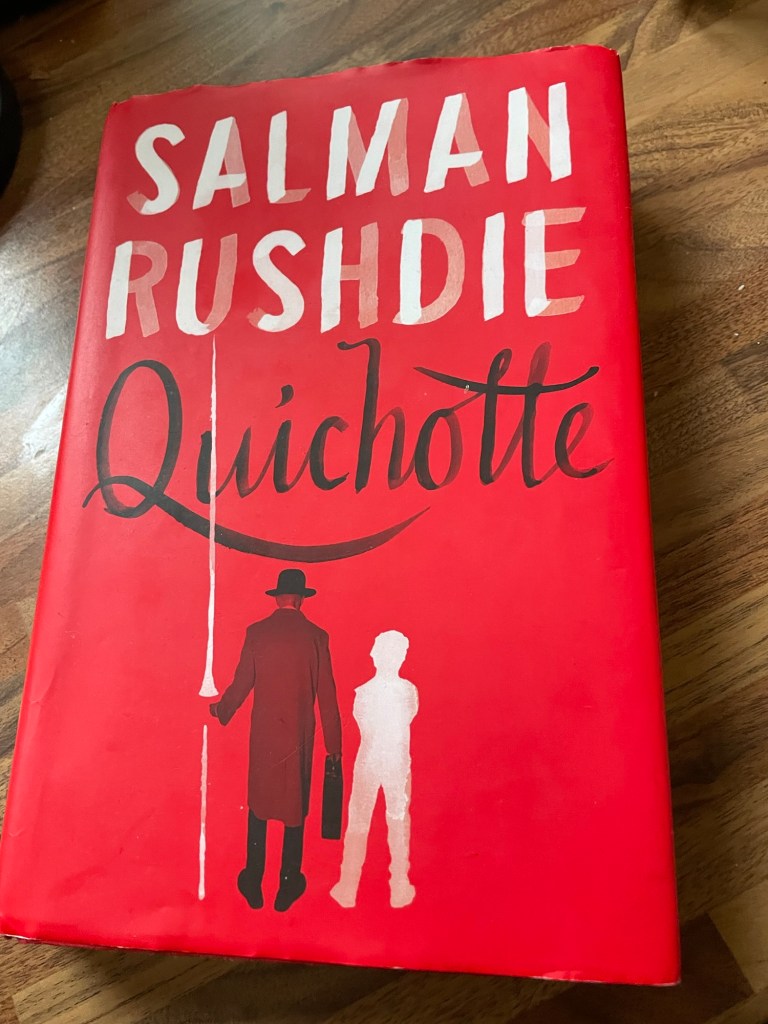
I picked this book up in a charity shop, buoyed by my recent enjoyment of ‘Victory City’ (see October 2024 review) and a vague recollection of my introduction to ‘Don Quixote’ at school. Indeed, Salman Rushdie acknowledges the Cervantes classic provided inspiration and underpinning themes for this contemporary take, but set in modern USA, the journey taken by Quichotte ( pronounced ‘Key-Shot’) plunges the reader into a fascinating and at times surreal odyssey, which explores the very nature of reality in a world where ‘truth’ is so relentlessly contested. Given the gravity of the author’s body of work, the reader was not surprised by the depth of the tale’s scope. However, the evolution of the plot gave the impression of a Russian doll, each layer of the complex story-within-a story providing sumptuous food for thought, yet willing the key characters on through their respective mirages.

In-keeping with it’s illustrious forebear, Quichotte lends itself to cerebral challenge on multiple levels. That the author has taken “a travelling man of Indian origin, advancing years and retreating mental powers” and set him on a romantic quest in pursuit of the most unlikely recipient of his love is curious. That Quichotte’s fictional journey towards his beloved should enable the reader to explore so many strands of contemporary life, meticulously interwoven with the parallel story of ‘brother’ (Sam Duchamp), the author/inventor of Quichotte, so intricately plaited together, tapering to a satisfying and beribboned end, is quite miraculous!

Still, underlying the fiction is also a thinly veiled commentary on the erosion of culture and the apparent willingness of society to be in thrall and to indeed collude with its manipulation. “The world before the birth of the monster the internet became, before the age of electronically propagated hysteria, in which words have become bombs that blow up their users.”

Through the invention of Sancho (Quichotte’s son) the reader is afforded a blank canvas, a child’s eye view, trying to make sense of a confusing world, an ‘age of anything-can-happen’, even when it’s nonsensical. Indeed, Sancho wonders whether the human race is “mistaken, or perhaps deluded, about its own nature. It has become so accustomed to wearing its masks that it has grown blind to what lies beneath…”

The author’s caustic observations tinged with apparent dismay at the immersion of society in ‘junk culture’ and the castigation of its architects, in the guise of Evel Cent, appear to rail against a dementing process underway. In that sense, Quichotte may represent a metaphor for the addled confusion through which he experiences the world. “Yesterday meant nothing and could not help you build tomorrow. Life had become a series of vanishing photographs, posted every day, gone the next. One had no story any more. Character, narrative history were all dead. Only the flat caricature of the instant remained….” Pessimistic perhaps, but at least the existence of love is portrayed as a potentially redeeming possibility.

This reader found the dystopian and acrid dissection of western culture uncomfortable at times and even belying the simple retelling of a classic tale and yet the aftertaste burns and the author may have a point, such perceptions should be unpalatable. Certainly this book forges an extraordinary take on the genre of magical realism. What a fascinating dinner guest Sir Salman Rushie would be!

Rating: 4.5 out of 5.

Sounds Like a Breakthrough….

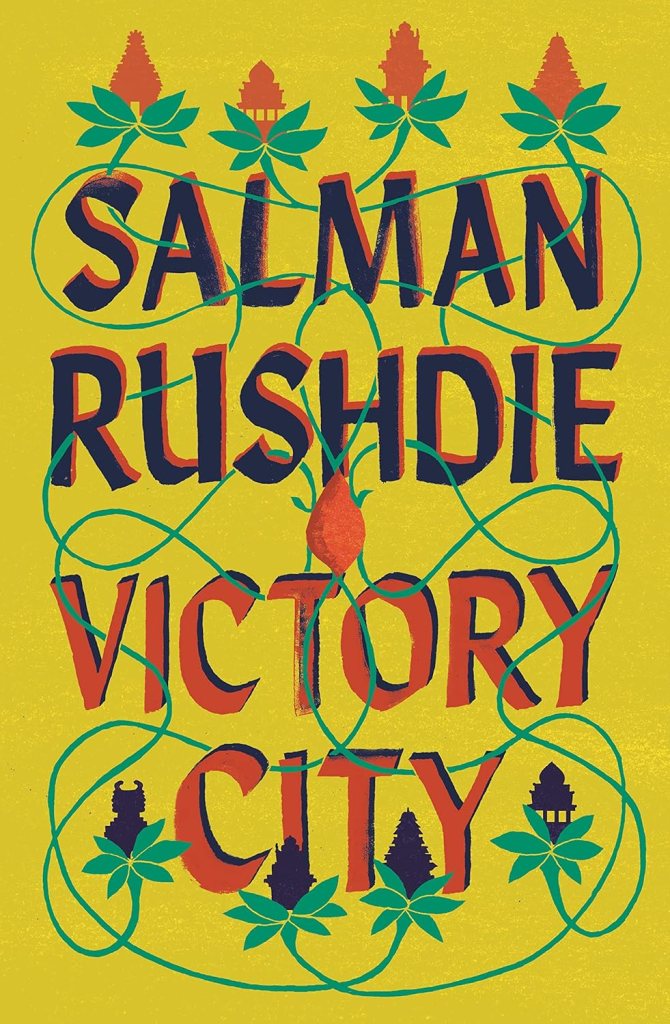
I have not always got on with audiobooks. It’s not that I am sniffy about them, one of my favourite reviewers, Mike Finn, is an excellent advocate for the form, it’s just something about how I prefer to ‘consume’ and ‘digest’ books. For example, I listened with rapt attention to “The Handmaid’s Tale” and its sequel “The Testaments” by Margaret Atwood, spoken by Ann Dowd et al. Despite their huge profile, I hadn’t ‘read’ the books previously and I thoroughly enjoyed the experience….and then went and bought my own copies! Somehow, it didn’t feel like I’d done the work – the reading – and I guess I enjoy it. Imbibing fiction through my ears was not as complete, or satisfying (for me) as poring over the written word. However, I have persevered and in “Victory City” by Salman Rushdie, I can report something of an epiphany.

It may be that I inadvertently alighted on an excellent example, as the book won the AudioFile Earphones Award 2023, but the reader, Sid Sagar, is just perfect to my Anglo-Saxon ears and the 11 hours 49 minutes it takes to recount the epic saga was simply breathtaking at times.

The book relates the 247 years of life divinely granted to the heroine, Pampa Kampana and shares the rise and eventual fall of the city and empire of Bisnaga, the ‘Victory City’, from its mythical foundation, its kings and queens, lavish culture and the familiar human frailties that eventually erode its pre-eminence. Across her two centuries, Pampa Kampana enjoys a ringside seat for the creation of regional history, while her husbands, lovers and children arrive and depart, a necessary consequence of the main character’s accursed longevity.

The sheer scale of the author’s ambition in this tale is extraordinary and must surely endorse Salman Rushdie’s reputation as one of the finest storytellers of his generation. That he should transport a formerly unenlightened audio ‘reader’ so completely is also to be gratefully acknowledged!

Rating: 5 out of 5.

Cementing Early Promise

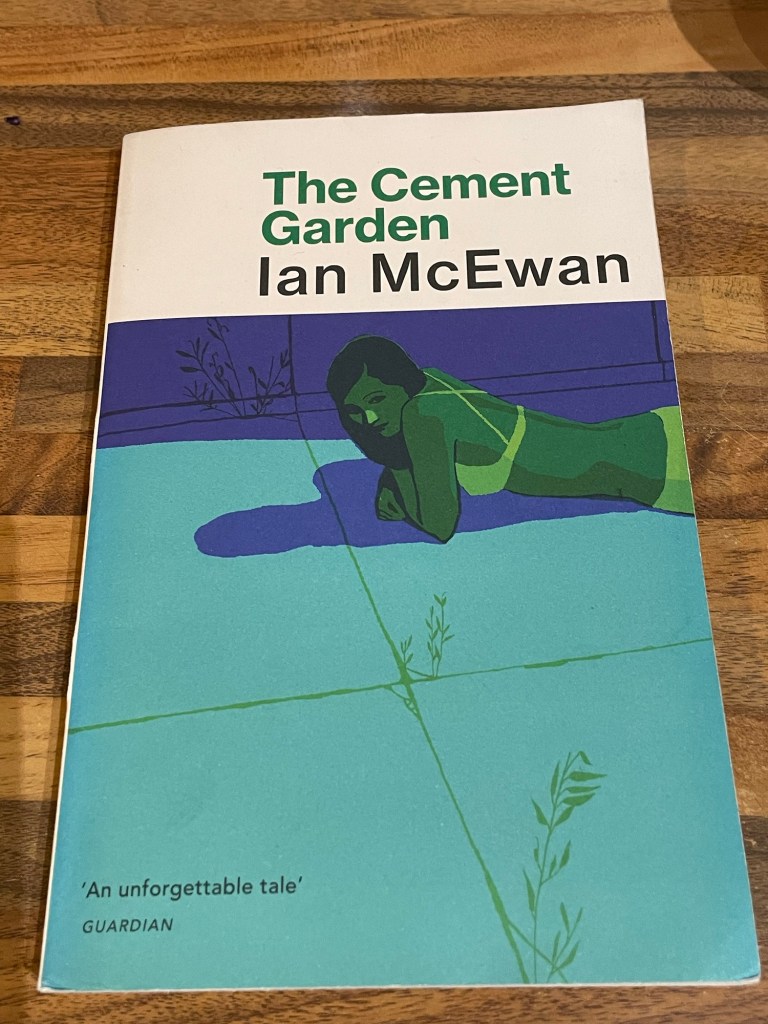
This first novel by Ian McEwan, first published in 1978, is short (just 152 pages), but in common with much of the author’s work, it packs a disproportionate punch and is deliberately disturbing. 

The story relates the experiences of four siblings, Jack (13) – the narrator, Julie (17), Sue (12) and Tom (6), who are forced to adapt when they find themselves orphaned by the unexpected deaths of their father and mother in fairly quick succession. Mindful that they needed to avoid the attention of the authorities, but ill-equipped to cope with the mundane expectations of the adult world, their respective struggles reflect the characters’ disparate ages and natures. Yet, their collectively grim existence is lightened only by the the macabre unfolding of the kids’ latent vulnerability and the attendant black humour, which staves off, at times, the fear threatening to engulf them all.

There are perhaps faint echoes of ‘Lord of the Flies’ (1954), but the reader’s unease stems in part from the worryingly plausible actions of the teenagers, drawn into a parentless world with no safeguards to deter some guileless decisions. What has subsequently become the trademark flourish of McEwan’s use of language is in evidence in this debut novel and marked him out as an author to watch. Some seventeen novels and six nominations for the Booker prize (to date) later, the author rarely disappoints.

Moreover, in this example, the titular ‘cement garden’ offers a metaphorical legacy of the main characters’ late father, a brutally minimalist approach designed to blanket the natural outside space, but also inadvertently incarcerating the children’s lives within.

Rating: 4 out of 5.

Low Calorie, High Quality Fiction

img_1351

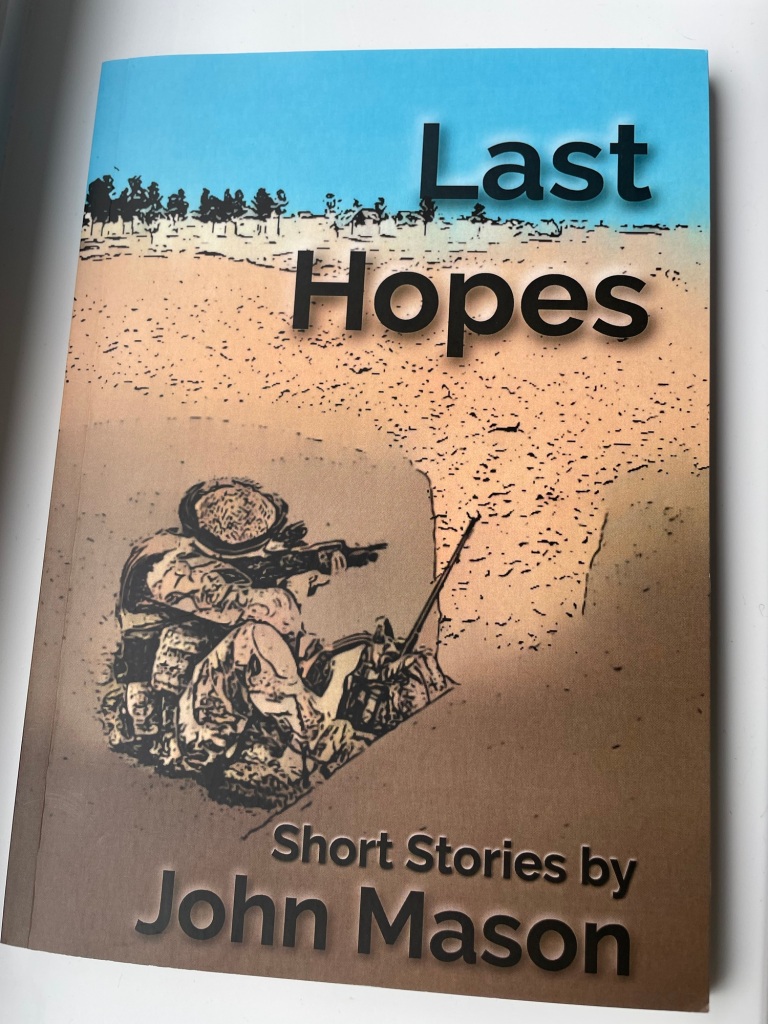
I came across this slim volume of short stories in the Monmouth ‘Health & Social Care Facility’. Written by local veteran, John Mason and also published locally, the profits from the sale of this book are pledged to military charities, which immediately sparked my interest, but in fact these stories are worthy of much wider attention.

The first half of the anthology is dedicated to the theme of ‘Last’. Last … ditch; straw; refuge; laugh; man; gasp; resting place; minute; call; bus; night; chance; judgement; exit; and word, through which the author has imaginatively plumbed a rich seam to good effect. But, then he moves on. As though not satisfied with a paltry fifteen stories, the remainder of the book comprises a similar number of stories under the titular banner of ‘Hopes’. Yet, there is a cogency to the two halves, perhaps two sides of the same coin. The ‘Last’ stories pay tribute to human resilience, the capacity to ‘dig deep’ when circumstances demand and simply not give in. Meanwhile, the complementary ‘Hopes’ stories speak to the human capacity for positive ingenuity, to overcome the unexpected setbacks of life and mash those lemons into lemonade! A combination of self belief, positive perspective and an optimism that reaches beyond wishful thinking, enabling the determined individual to tilt fate in his/her favour, or at least attempt to.

As a veteran myself, I relished the authentic references to varied military experience, but the broad themes and diverse settings for the stories ensure a wider appeal too and the collection is much more thought-provoking than stale war-time parodies and wreaked of unsentimental realism. Indeed a large proportion of the stories are set in civilian life, but I suspect for veteran readers, the tales of re-imagined ‘active service’ may prove the most resonant.

A purist might suggest that some of the examples have strayed into ‘micro-fiction’ territory, that is extremely short stories, but I prefer not to get hung up on story length. After all, the crafting of concise and engaging narratives remains a valuable skill in its own right and almost without exception the author’s instinct for ‘nonfat storytelling’ just feels right. In dedicating his collection to “those brave men and women of our armed forces who daily risk their lives for us in the darker places of this world”, John Mason has shone an interesting light into the gloom and makes a fascinating case for bitesized fiction.

Rating: 4 out of 5.

Revenge on Repeat…

This was my first experience of Brennig Jones’ work and I came to the author’s indie novel, published in January 2023, with an open mind and came away with some really positive first impressions. There is a sense of latent risk when the reader pulls a book from the top of the tbr pile (assuming s/he hasn’t researched in advance), but also a surging sense of possibilities and Mr Jones did not disappoint. Of course, the odds of a favourable encounter may have been mitigated by our shared location in Wales and our respective military backgrounds (mine was orientated towards aircraft), but in any event the thrilling plot zipped along like a windsurfer off Copacabana beach.

Die-hard ‘thrillers’, as a genre, can feel a little passe at times, yet if well-written, well-paced and plausible (though improbable), the sense of excitement can touch a sweet-spot that suspends the reader’s disbelief in favour of an adrenaline-fuelled page turner.

What sets ‘Tempest’ apart is the unusual main character, Laura Guerra and the quirky time loop in which she is trapped. That the author should cast a female anti-hero in the context of a struggle against a dark, malevalent and violent foe seems counterintuitive. However, though Laura is notionally 28, she is locked into a groundhog existence that restarts after a year, or until she dies, whichever comes first. Through this perpetual rewind mechanism, Laura has developed a formidable range of skills and abilities and honed a plan to deliver deserved retribution. She is also isolated within this lonely crusade, that is until this latest cycle.

I found the concept intriguing and Laura’s character gained added depth by her exposure to friends and lover. Of course, the execution of the plan with its bangs and blasts and tech’ are an important element of the story, but this reader was also left wanting to know more about Laura and what next for her? So, I was delighted to read that this is book one in a trilogy, with the second novel, “Storm” released in January 2024 and the final installment, “Hurricane” currently ‘in production’.

Brennig Jones’ writing style is well-researched and atmospheric, as the story alights in contrasting global locations. Definitely thrilling, but also laced with food-for-thought, ‘Tempest’ has proven a tantalizing appetizer.

Rating: 4 out of 5.

Womb with a View

I picked this up at the library, a very safe selection, as I am generally a great admirer of McEwan’s work, but this 2016 novel remained on my tbr list. Still, it was more ‘novel’ than I had expected. The story is regular enough (reportedly drawing on the influence of Shakespeare’s Hamlet). Trudy is pregnant with her husband’s child, living in a London townhouse inherited by John, but he’s not there. The couple are separated. Instead Claude (John’s brother) has moved in, creating a triangle beset by additional tension and familial loyalties. What makes this book different is the author’s decision to make the unnamed baby the narrator and thereby providing an unseeing and unseen witness to the private deceit and decision to murder the baby’s father.

It’s ambitious and I believe few writers could have pulled it off, but of course Ian McEwan, at the height of his powers, is extraordinarily gifted. By making John a poet, the author also gets to quote Auden and Betjeman in the pursuit of what the reader might term, ‘poetic justice’. Perhaps not his best novel, in my view, though the trademark use of elegant language and interesting turns of phrase are present. However, it felt so ‘experimental’ that I wondered whether the author had simply set himself an unusual cerebral challenge. In any event, it’s worth reading simply for that sense of ambition!

Rating: 4 out of 5.

Casting a Light on the Bierce Darkness…

Book 5 of the ‘Penguin 6o’s collection’ comprises a half dozen short stories by Ambrose Bierce (1842-1914). For the uninitiated (among whom I include myself), the author was apparently “America’s foremost nineteenth-century satirist”, which explains his inclusion in the series celebrating the publisher’s sixtieth anniversary. Bierce is best known for “The Devil’s Dictionary” (1906), but he also published two poetry books and many short stories. The cluster of stories in this short anthology surely stand testament to his qualities as a talented writer. However, Bierce also fought with distinction in an Indiana regiment during the American civil war and this may help explain the authentic undertone detectable in a couple of the stories. Moreover, the common theme, albeit sombre, repeated across these tales, relates to the dark, mysterious nature of death and echoes macabre exploits of the living, unwittingly touched by the gossamer veil masking the beyond.

Certainly these ‘taster reads’ have perked the reader’s curiosity and the knowledge that Bierce was a contemporary and friend of Mark Twain only inflames the interest further. Indeed, the notion that ‘art imitates life’ may even seem prescient. In 1913 Bierce openly shared his intention to travel to Mexico and join Pancho Villa’s forces as an observer of that country’s civil war. That he was never heard from again and the circumstances of his death are obscure feels like a fittingly mysterious and intriguing end.

Rating: 4 out of 5.

The Construction of Dreams

2021 novel, “Paper Castles” was my first taste of the work of indie author, B.Fox and though formatted into three parts, the smooth conversational style of this debut novel had me hooked by the end of the first chapter. It is true that the book may be regarded as ‘literary fiction’, given that it does not fit neatly into an established genre, but be assured, irrespective of the notional label, this is a fine example of accomplished storytelling.

James Brooke, aged 28, graduate of Cleveland and wannabe architect has returned home to Westland, Ohio, weighed down by student debt and a glaring lack of opportunity. Moreover, James finds himself reliant on a father beset with his own struggles and in the absence of James’ late Mom, without the maternal influence that formerly kept the family together and fanned the embers of their son’s aspirations.

On one level the story is an interesting study in the communication James has with himself (and the reader), but also the collision of the possible with the pragmatic, respectively represented by son and father and the consequences of a failure to engage. More broadly, the novel calls into question the status of the ‘American dream’, the worship of money and the human casualties that get left behind, collateral damage in an unattractive, largely utilitarian system.

Using the real estate industry as a metaphor to reinforce the themes, the author also highlights the need for aesthetic vision, combined with pragmatic discipline, if huge potential is not to be simply sacrificed on the altar of crude economics.

Still, it is the wanton disregard for human capital and the disadvantages to be overcome by the socially powerless that lend real depth to this book. Karen, whom James meets in a diner, is trapped in a waitressing job that enables her to also provide elder care to her frail grandmother. But, can this unusual alliance provide the key that may liberate the young couple from their respective challenges? The author has created a fascinatingly complex relationship between the two characters and James’ observation that “it feels good to be outside of my own head for once. Hers is so much more interesting”, alludes to an important psychological connection, but can it be enough?

Certainly, Karen’s assertion that “It’s not the American dream what’s important; it’s the dreamer! A dream can’t be alive without a dreamer who believes in it.” seems to best describe the essence of this novel, However, on balance, the avoidance of a trite conclusion is also to the credit of B. Fox. Hugely satisfying read, I shall look forward to the author’s future work with great interest, but, for now, I have no hesitation in lodging “Paper Castles” on my current favourites’ shelf.

Rating: 4.5 out of 5.

Comrades Under Threat

Having enjoyed Robert Craven’s 2021 novel, “A Kind of Drowning” (see earlier blogpost), I was encouraged to go back a decade to the author’s debut book, “Get Lenin”. Set in Europe amid the tumult of World War II, the author introduces Eva Molenaar, a young Polish woman, brutalised by the craven (forgive the pun) behaviour of fascist thugs, but possessing language skills and beauty that can be used by the allied secret services. This first instalment of the heroine’s wartime adventures is an exciting romp, as the advancing German army threatens to capture Lenin’s Moscow mausoleum and in a potential propaganda coup, hold the icon to ransome.

The reader learned from the author’s blurb that Mr Craven started writing the book in 2006 and it took five years to complete. Still, in an exciting, fast-moving plot, the reader comes to learn about Eva and her serendipitous progress to fledgling spy and the well-honed story has clearly benefited from the original polish (sorry, can’t seem to help myself).

With Russia very much in the news, the repeated echoes of an “orgy of destruction” carry a contemporary poignancy, but while the backdrop is darkly familiar, the author’s focus on a woman’s wartime experience is both interesting and refreshing. More earthy than simply James Bond wearing nail varnish, in Eva, the reader glimpses a strong, determined woman, whose contribution to the 1940s struggle is both important and dangerous, but not without enduring the manipulation of spymasters willing to sacrifice all. Snatching romantic comfort in the most unlikely of situations, the tale is well-set for further episodes in this seemingly ever-fertile WWII soil. I look forward to Book 2 in the series, entitled “Zinnman” and the further development of the main character and her peers. I also wonder if the author has another such innovative plotline, around which to intrigue the reader with Eva’s ongoing adventures? Time will tell.

Rating: 4 out of 5.

No Lightweight Short Story…

This was my first experience of Ken Stark’s work and yet, despite the short format, “Dead Weight” packs a powerful punch. Subtly horrifying, the author exposes the abject vulnerability of a mind imprisoned in a paralysed body, juxtaposed with a shackled body, the consequence of a broken mind. In common with top writers in the genre, Stark doesn’t rely on graphic description, but instead allows the reader to formulate a mental picture in all its shuddering repugnance. Bravo!

Rather like a tasty aperitif, this short story has stimulated my appetite for a more substantial course and waiting in my tbr list is Mr Stark’s post-apocalyptic zombie thriller. “Stage 3”. Can’t wait. Bon appetit!

Rating: 4 out of 5.