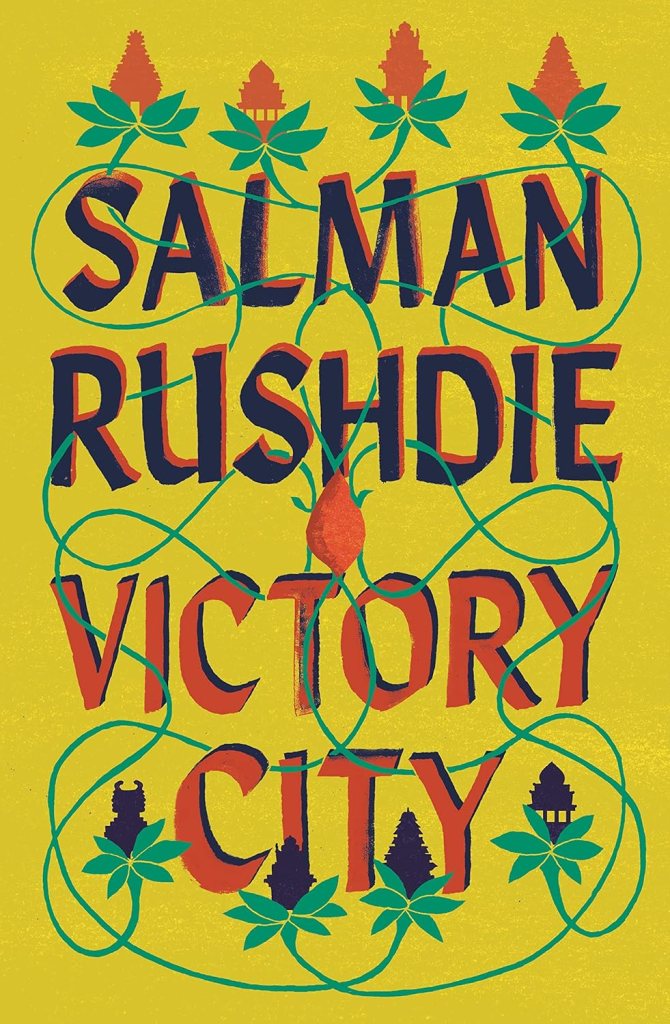
I have not always got on with audiobooks. It’s not that I am sniffy about them, one of my favourite reviewers, Mike Finn, is an excellent advocate for the form, it’s just something about how I prefer to ‘consume’ and ‘digest’ books. For example, I listened with rapt attention to “The Handmaid’s Tale” and its sequel “The Testaments” by Margaret Atwood, spoken by Ann Dowd et al. Despite their huge profile, I hadn’t ‘read’ the books previously and I thoroughly enjoyed the experience….and then went and bought my own copies! Somehow, it didn’t feel like I’d done the work – the reading – and I guess I enjoy it. Imbibing fiction through my ears was not as complete, or satisfying (for me) as poring over the written word. However, I have persevered and in “Victory City” by Salman Rushdie, I can report something of an epiphany.
It may be that I inadvertently alighted on an excellent example, as the book won the AudioFile Earphones Award 2023, but the reader, Sid Sagar, is just perfect to my Anglo-Saxon ears and the 11 hours 49 minutes it takes to recount the epic saga was simply breathtaking at times.
The book relates the 247 years of life divinely granted to the heroine, Pampa Kampana and shares the rise and eventual fall of the city and empire of Bisnaga, the ‘Victory City’, from its mythical foundation, its kings and queens, lavish culture and the familiar human frailties that eventually erode its pre-eminence. Across her two centuries, Pampa Kampana enjoys a ringside seat for the creation of regional history, while her husbands, lovers and children arrive and depart, a necessary consequence of the main character’s accursed longevity.
The sheer scale of the author’s ambition in this tale is extraordinary and must surely endorse Salman Rushdie’s reputation as one of the finest storytellers of his generation. That he should transport a formerly unenlightened audio ‘reader’ so completely is also to be gratefully acknowledged!
 BurfoBookish