It takes a whole village…

1:06 AM 2 JANUARY 2018
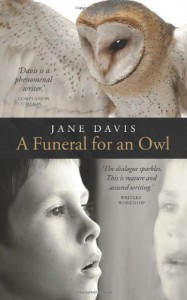
Using a novel to highlight invisible social issues, such as runaway teenagers, taking flight as a consequence of factors such as domestic violence, gang culture and parental rejection is a tricky business. For example, who knew “one in ten run away from home before they reach the age of sixteen, a massive 100,000 every year”? It’s a fairly damning statistic, which says much about British society and an apparent incapacity to protect vulnerable young people. Moreover, “two thirds of children who run away are not reported to the police.” Still, against this rather bleak backdrop, Jane Davis has constructed a subtle plot, which does far more than merely generate pathos. Indeed, JD has also sought to establish that this is not a problem solely besetting some poverty-stricken underclass, but rather an issue that crosses mundane social boundaries and ‘runaways’ might therefore be seen as victims of an extreme degree of family separation.


‘A Funeral for an Owl’ centres on history teacher, Jim Stevens, who works at an inner city high school, but originates from the nearby council estate and though the vagaries of social mobility have enabled Jim to move literally to the other side of the railway tracks, he has not strayed far from his roots. When a violent incident at school sees Jim hospitalised, colleague (‘Ayisha’) is drawn into the clandestine support he has been providing to one of his pupils (‘Shamayal’) and Ayisha’s own integrity, in the face of strict policies and procedures, is challenged.


Ayisha has benefitted from a stable family upbringing and though struggling with the expectations of a distant and demanding mother, she has little insight into the profound hardships experienced by some of her disadvantaged pupils, away from school. And so, while Jim languishes in a hospital bed, the story alternates between examining Jim’s past experience, which culminated in his being stabbed and the very pressing present, which finds Ayisha discovering that doing the ‘right thing’ can take courage and a sense of bewildering isolation.


In spite of his inner city upbringing, ten year-old Jim is into birdwatching and this egregious pastime enables the boy to connect with the troubled Aimee White. Two years his senior, Aimee is destined to attend the all-girls school designated by her wealthy parents, but for the intervening six weeks of the summer holidays, the pair fashion a poignant relationship, which bridges their respective worlds. Almost spookily prescient, Aimee observes that “Indian tribes believe owls carry the souls of living people and that, if an owl is killed, the person whose soul they’re carrying will also die.”


Later, the geekiness of Jim’s birdwatching also captures Shamayal’s imagination and there is symmetry too, in Jim’s burgeoning relationship with Ayisha.


However, what stood out most for me in this book was the crafted writing, in which JD changes gear so smoothly that the journey was simply a pleasure and over all too quickly. The plot was deceptively simple and yet the characterization of the protagonists was insightful and interesting (I especially enjoyed ‘Bins’ the estate eccentric, who is curiously invisible) and made the story eminently plausible and readable. Clearly the book is not targeted solely at young adults and as with a lot of good fiction, the food-for-thought it provides is rightly taxing. As a social worker myself, it would be easy to criticize the rather neat conclusion, which perhaps sanitizes the ‘messiness’ that attends typical family life, but that would be churlish and miss the point. The adage that ‘it takes a whole village to raise a child’ is at the heart of this book and we all need to do our bit…

Rating: 4 out of 5.

We can learn from books…even forgotten ones!

8:42 PM 26 DECEMBER 2017

Occasionally it can fun to take a punt on an ‘unknown’ book, from a public library, charity shop or friend’s shelf, but when such a lottery yields an unexpected pearl it can be all the more rewarding. ‘The Shadow of the Wind’ was one such absorbing read, by an author (Carlos Ruiz Zafόn) unfamiliar to me, but this story is made all the more intriguing by its draw on several genres. Set in post-civil war Barcelona, there are elements of historical drama, echoes of gothic mystery and romance, thriller and even comedic moments. It’s a heady cocktail, yet the layering of the narrative is so expertly written that the reader is skilfully drawn into the complex lives of the interconnected characters. Central among them is Daniel, who, aged ten, is introduced to the strange ‘Cemetery of Forgotten Books’, where he is fated to choose ‘The Shadow of the Wind’ written by Julian Carax.


“…few things leave a deeper mark on a reader than the first book that finds its way into his heart…”and so it proves for Daniel, as his ownership of the rare book triggers his curiosity about the mysterious author and burgeons into an ardent adult need to solve the puzzle that is Carax.


Along the way, Daniel’s relationships with his father, friends, neighbours and those close to Carax offer vivid insight into the dark days of Franco’s Spain. None more so than a vagrant, the ebullient Fermin Romero de Torres, who befriends Daniel and though exposing him to the unwanted attention of his former police torturer (Inspector Fumero), also protects Daniel and infuses him with a romantic verve for life. By contrast, a rather sinister character disfigured by fire is also lurking, bent on relieving Daniel of his book. Peril it seems is never far away.


Still, notwithstanding the well-defined Spanish social strata and the distribution of power across wealth, family and state lines, Daniel navigates a courageous path, which challenges the status quo and unashamedly asserts the capacity of love to breach such man-made boundaries.


The various strands of the plot are woven together seamlessly to create a highly satisfying whole and Zafόn’s attention to the detail of his creation ensures there are no ‘loose ends’, which I rather liked. All in all a very entertaining read, though as Mr Carax suggests, “Books are mirrors: you only see in them what you already have inside you.” I hope not.


As an aside, this novel was translated into English by Lucia Graves, daughter of Robert Graves, whose books about Emperor Claudius are among my earlier reviews. However, we should acknowledge that the quality of Ms Graves work has ensured that this novel seems to lose little in translation.

Rating: 3.5 out of 5.

Modern charades….is it a book? Is it a film?

10:27 AM 26 NOVEMBER 2017

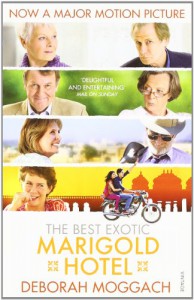
I generally get a sense of foreboding when I read on a book’s cover, “NOW A MAJOR MOTION PICTURE”, even more so when I have seen said movie. “The Best Exotic Marigold Hotel” is a good example, in that it is a glorious ‘feel good’ film, with a host of wonderful actors, setting the bar high for the preceding novel, which I notice was previously entitled, “These Foolish Things”. But, notwithstanding this book has apparently inspired a successful cinema formulation, would it be any good?

The answer is ‘yes’, Deborah Moggach’s original novel is really well conceived and the interplay between the cast of characters is comical, poignant and even touching at times. However, the downside to seeing the movie first is a sense of disappointment that the book has not been faithfully reproduced on the screen. Some parts that have been ‘bigged up’ for the cinema-going public proved to be relatively modest on reading the book. Unsurprising perhaps, when the talents of Dame Judi Dench, Dame Maggie Smith et al are at hand, but the young charismatic Indian entrepreneur (played by Dev Patel) shown on the book’s cover with his beautiful girlfriend, doesn’t actually exist in the intervening pages. Instead, Sonny is middle-aged, rather dull and a ‘bit part’, compared to his central role in the screen version.

In contrast to the Hollywood meets Bollywood makeover, the book is earthier and the characters’ back-stories more authentic, in turn making the plot lines more plausible. At a time when the UK’s National Health Service is creaking under the pressures of an ageing population and traditional family loyalties are equally stressed, the advantages of shipping out to a new retired life in a strange land is a tantalising prospect   The comparing and contrasting of cultures within the book was also arguably more nuanced and the author holds up an interesting mirror on what it is to grow old in modern societies. East and West both have their ‘hidden’ populations of the ‘uncared for’. But, perhaps the message of the book is that for those with an adventurous or courageous spirit and a willingness to share and create new social circles, life retains a wealth of possibilities.

The title is an interesting aside, but for me the book is much more explicitly about the characters and the dilapidated hotel merely a backdrop, albeit a useful metaphor, for which the original title may have better preserved the distinction. Still, despite the apparent temptation to ride the coat-tails of a successful movie, this book is, of itself, worth a read and perhaps for people of a certain age provides important fuel for thought.

Rating: 3 out of 5.

DNF – a first!

12:03 PM 30 JUNE 2018

In an overdue exercise in clearing up some flotsam on my shelf, I have taken the unprecedented  step of declaring this book a ‘DNF’ – ‘did not finish’ and moreover have no intention of finishing…ever! I am not easily discouraged as a rule, but I made it to page 242 (about 25% in) and it struck me as such a dispiriting book that I’ve decided to cut my losses. Life is after all too short.

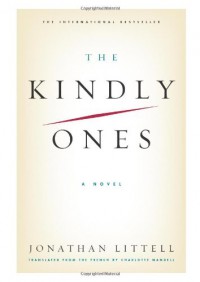
The narrator of the story, Dr Max Aue is a former SS Intelligence Officer and claims he “never asked to become a murderer.” Yet, his proclivity for the function of mass killer leaves the reader with no understanding or empathy for the miserable husk of a man that he becomes, still less for the mindless atrocities in which he was complicit. Indeed, I leave the book rather disappointed that this wretched character goes on to survive the war.

The sleeve notes point out that the book has won literary accolades and I readily acknowledge that Jonathan Littell writes well, but the content is not for me. The notes also add that this is a book, ‘to which no one can be indifferent’ and that too may be true. Unfortunately I disliked it so intensely that it has the distinction of being my first unread shelf occupant. It has also been compared to ‘War and Peace’, though I am confident that Tolstoy’s masterpiece will not get the same response (it’s added to my tbr list, just to be sure). Of course it is eminently possible that I am mistaken, but I’m content with this being ‘one that got away’.

Reading progress update: I’ve read 152 out of 992 pages.

12:24 PM 20 OCTOBER 2017

I’m not usually minded to update on reading ‘progress’, but for this “monument of contemporary literature” I’ve made an exception. Firstly, it’s a fairly impressive tome, weighing in at nearly a thousand pages, which implies a fairly large investment in time. But,  the subject matter is also destined to be harrowing and is likely to be interspersed with some lighter reads, in an effort to stave off emotional exhaustion.

Perhaps, if I explain the book is a fictional memoir of Dr Max Aue, a former SS intelligence officer and the first hundred or so pages has been dominated by the Nazi invasion eastward into Poland in World War II and the central character’s involvement in the attendant atrocities, you will appreciate the nature of the task. Certainly it is not an easy read! Trying to illuminate the seductive nature of evil on such a terrifying scale is ambitious and man’s capacity for inhumanity is frightening! Whether this book enhances the understanding of the horror of war and the tragic consequences is another matter.

My early impression of the novel is that it’s well written, but that Jonathan Littell must have known his approach would be controversial. Notwithstanding the cover sleeve suggests it has been compared to “classics of world literature, including War and Peace”, time will tell whether it was worth the effort. The sleeve also suggests that “this is a book that every thinking person should read and to which no one can be indifferent”. Whatever my ultimate conclusions, I’m sure that will be true. I’m already far from indifferent, but the thinking is perhaps necessarily uncomfortable.

Less Than High Jinks

1:24 PM 16 OCTOBER 2017

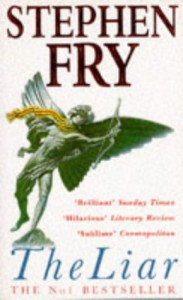
This debut novel by the loquacious Stephen Fry was always likely to be embraced enthusiastically, emanating as it has from the pen of a popular polymath. One also gets the impression that SF has adhered to the old adage of ‘write what you know’, since the book is largely set in the world of public school and Cambridge, as it tracks the journey of Master Adrian Healey from boyhood, through turbulent adolescence, to the nurturing embrace of the middle class establishment. Certainly the writing style is engaging and shows a sure-footedness that the reader might have expected. However, whilst the main character is mildly interesting in his precocious, brash confidence and quick one-liners, Healey is surrounded by rather cliched caricatures of schoolmasters, college dons and the spy-set, which overall destined this novel to disappoint.

Fundamentally I had expected more originality and though there were humorous elements, for me, these were offset by the dependence on the crudely sexualized description of Healey’s experiences, which might equally establish the central character as a victim and perpetrator of abuse. In such territory, light-heartedness is a double-edged sword, even if meant to be tongue in cheek. A very English brand of humour? Possibly. The book may also draw on autobiographical material, but must surely also cast doubt on the character-building qualities of such apparently entrenched institutions, for our youth.

Rating: 3 out of 5.

Chinese Takeaway…

12:01 PM 23 SEPTEMBER 2017

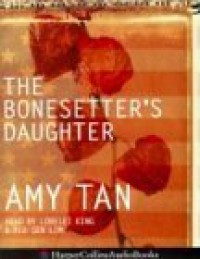
“The Bonesetter’s Daughter” was my first foray into the work of Amy Tan and though the author’s style is quite engaging, it struck me as something of a ‘prawn cracker’ novel. That is, it looked substantial, but melted during consumption, leaving a rather hollow sense of what might have been. Still, insights into the characters’ experience of oriental culture, permeating their origins in rural China, but also conferring a heritage, tenaciously relevant in the modern United States, kept the story interesting.

The book focuses on the experiences of three women, connected by blood (daughter/mother/grandmother), but separated by generational expectations and the disparate influences of vastly different times and places. From pre-war China, through Hong Kong to contemporary San Francisco, the journey of the Liu maternal line is fraught and runs the risk of being forgotten, until Ruth is confronted by her mother’s advancing dementia. Fortunately, Luling Liu had seen the signs earlier and committed her life-story to paper while her memory was relatively intact. Through this device, Ruth becomes the narrator of her mother’s story and is able to review their relationship in the context of Luling’s past. Moreover, Ruth learns about their mutual roots and is able to reconcile a tragic history with a more positive future, amid her mother’s fading recollections of her own upbringing. 

The examination of significant events, which beset the elders and yet percolated through time to deposit consequences on the youngest is a familiar theme and given the similarities in their respective personalities, kept alive the dichotomy of the ‘nature versus nurture’ debate. Yet, by comparison, I found Ruth Lui to be the weak link, locked in a mundane present, in contrast to the steely Luling and her ‘Precious Auntie’, forged in harsh and often brutal circumstances. Perhaps inevitably, there is an additional curiosity value attached to the unfamiliar, but the tantalizing glimpses of the lives of Ruth’s relatives rescued the book from total blandness.

In a wider sense, there is also a perceptible nod to the experience of women, which has seen significant change in some cultures and spheres, but almost glacial evolution in others, most obviously, in this novel, in terms of familial responsibilities. Given the subject matter of course, there is also the possibility that the book may resonate differently between genders, but I don’t think it was necessarily written with solely women readers in mind. Certainly, the spotlight cast on dementia and the sense of loss for sufferers and loved ones alike, is a shared experience that packs a common punch.

On balance, for me, it was an OK read, which didn’t chime with the gushing praise on the cover and promised more than it delivered, but we have another Amy Tan on the shelf and I will give that a go in due course.

Rating: 3 out of 5.

Morse bows out…

9:23 AM 25 AUGUST 2017

The final book (13/13), in the series of crime novels featuring Chief Inspector Morse and a bravura performance from the great detective (and his creator), on which to bring down the curtain. For all his foibles and personality flaws, the irascible Morse stands tall among the pantheon of fictional sleuths and in spite of deteriorating health, he remains the best that Thames Valley CID can put in the field. And, in this tale, a particular focus is shone on the respective relationships between Morse, DS Lewis and Chief Superintendent Strange, which only adds to the feeling of a finale.


The unsolved murder of nurse, Yvonne Harrison, the previous year is a source of bitter regret for Strange and with his retirement looming, he would dearly like to leave a clean slate. However, notwithstanding the determined coercion of his superior officer, Morse is reluctant to take the case, to the point of outright insubordination. Lewis, suspecting that Morse perhaps had an historic entanglement with the victim, gets the re-opened investigation underway, but finds Morse popping up ‘unofficially’, usually ahead of his own inquiries.


Between the family members (husband, daughter, son), a series of lovers and the closed ranks of the local village, the list of suspects is lengthy. However, it is gratifying to see Lewis, unaccustomed to leading proceedings, take up the mantle, as the continued deterioration in Morse’s health hampers his involvement.


Reflections from each of the policemen are also poignant. For example, Lewis observes that “his own service in the CID had been enriched immeasurably because of his close association, over so many years now, with his curmudgeonly, miserly, oddly vulnerable chief”. In his turn, Morse takes to writing down his latest thoughts on the case, almost as a premonition or at least an insurance against his unpredictable health concerns. In the event, the case is chased to an elaborate conclusion, with the author twisting and turning to the last, but the loss of Morse, by comparison, overshadows a rather mundane and tawdry outcome.


For a brief moment, even Lewis has cause to consider the ethics of his hero’s apparent actions, but happily Morse’s reputation for authentic leadership emerges untainted. Moreover, it may speak volumes that as a reader, I also mourn his passing. Still, while television indulges in imagined sequels and prequels, the series of books crafted by Colin Dexter remains the undisputed origin of a truly exceptional literary character. May they both rest in peace.

Rating: 4.5 out of 5.

Colin Dexter still at his peak!

12:13 PM 18 AUGUST 2017

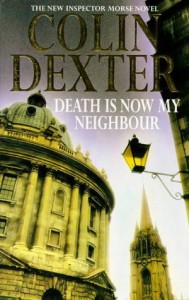
Book 12/13 and the penultimate novel in the series of murder mysteries confronted by Chief Inspector Morse of Thames Valley Police. And after the sombre tone of “The Daughters of Cain”, a more emollient and less emburdened Morse takes to the fray, centred on the race to succeed Sir Clixby Bream, retiring Master of Lonsdale College, Oxford.


There is something immediately intriguing about peering behind the dense curtain surrounding such elites and for the reader it is unsurprising to learn that superficial impressions will prove as important as academic substance. Indeed, for the only two candidates (Julian Storrs and Denis Cornford) the stakes could scarcely be higher, a once-in-a-lifetime opportunity for elevation and preferment expected to culminate in a knighthood. But, for such a prize, ambition and even ruthlessness may be required, to burnish reputations, curry favour with the electorate and suppress unhelpful information.
Both contenders also have the dedicated support of a wife, but a crude ‘SWOT’ analysis might conclude that the ‘strengths’ and ‘opportunities’ conferred by their respective partners are at least balanced by the attendant ‘weaknesses’ and ‘threats’. Certainly the vulnerability to be exploited from past mistakes/experiences looms large in this tale, extending even to Morse. However, notwithstanding the opprobrium directed at ‘blackmailers’, as abusers of power, there is also a dearth of sympathy for the disempowered ‘victim’, or the manipulated.


What endears Morse to the reader is his candid, but paradoxical unwillingness to defer to authority figures and yet clinging to his own superior status. Only DS Lewis, intermittently coveted as a friend, is thus protected, in spite of outbursts of insubordination and frank observations, intolerable from any other quarter. In this book, Morse also continues to experience deteriorating health and the two detectives are inexorably drawn closer together and in the ultimate, touching confirmation of Lewis’ favoured status, the enigmatic Morse shares his Christian name (via correspondence, of course).


Along the way there is the customary flawed hypothesizing, analysis, building and rejigging of the facts, before the final puzzle is expertly revealed. My favourite analogy of Morse’s thought process was of a train passing through a station, too fast to read the nameplate, but as the carriage slows the location may hove into view.
Again, Dexter has deftly juxtaposed the traditional façade of high academic establishment with base human behaviour. That the privileged miscreant can be humbled before the law is reassuring, even satisfying. Still, even Morse has limitations to his moral authority and contemptible characters slip through the net, but at least he makes a positive difference.


Notwithstanding the CWA daggers liberally awarded throughout this series of books, I think this may yet be my most enjoyable read. Perhaps, not the most complex or devious puzzle, but more for the development of the main characters and the masterful set up for the final book. Bring it on!

Rating: 5 out of 5.

‘The Hours’ well spent

9:24 PM 8 AUGUST 2017

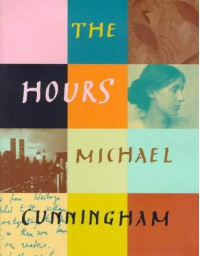
This short book was winner of the Pulitzer Prize for fiction in 1999 and takes as its start point the graphic suicide of Virginia Woolf. The tragic loss of one of the leading lights of the ‘Bloomsbury Group’ in 1941, finally succumbing to the fatal depths of recurrent depression at the age of just 59, conferred a profound loss on the cultural health of a nation, yet posterity has rightly lauded the author’s legacy. In his homage to Woolf, Michael Cunningham interweaves the thoughts and experiences of three female characters: Mrs Woolf (Virginia), Mrs Brown (Laura) and Mrs Dalloway (Clarissa), Located in 1923 London, 1949 L.A. and 1990s New York , respectively. Virginia is mulling over ideas for the fictional character yet to inhabit her most famous novel, while Clarissa and Laura are spending a day in preparation for a celebration in their respective times and place. Successive chapters rotate between the discrete storylines  culminating in an unusual cross-over in the end, but the snapshots also draw on some common themes, which beset each of the protagonists, irrespective of the prevailing social norms in ‘their’ time.

What rescues the book from a sense of cerebral indulgence on the part of the writer though, is the moving beauty of the language and as the reader quaffs down the pages like a smooth, warming liqueur, it is good to savour the interplay of quite sumptuous tones. It also remains consistent with the ‘stream of consciousness’ storytelling deployed by Woolf in ‘Mrs Dalloway’ (published 1925), albeit this example is not entirely satisfying, given its fragmentary nature and slightly bitter aftertaste

Still, the takeaway theme for me from this book is the individual capacity, indeed responsibility, to create and shape one’s life, within the context of the prevailing time and to weigh the personal sacrifices and gains that attend our choices. Some of the metaphors were also interesting, for example, some mistakes such as cake-making are retrievable, others require stoicism to deal with the consequences, but when it comes down to it, life and love is fundamentally fragile…and fickle.

Rating: 4 out of 5.